
Inactive Ingredients: What They Are and Why They Matter in Your Medications
When you take a pill, most of it isn’t the medicine you’re after—it’s inactive ingredients, substances added to pills that have no therapeutic effect but help with manufacturing, stability, or absorption. Also known as fillers, excipients, or binders, these components hold the active drug together, make it easier to swallow, or control how fast it dissolves in your body. You won’t find them listed on TV ads, but they’re in every tablet, capsule, and liquid you take—even the cheap generics. And while they don’t treat your condition, they can still affect how you feel.
Here’s the thing: two pills with the same active drug can behave completely differently because of their inactive ingredients. One might cause stomach upset, another might not dissolve right in your gut, and a third could trigger a skin rash if it contains a dye or preservative you’re allergic to. That’s why switching from a brand-name drug to a generic isn’t always as simple as saving money. generic drugs, medications with the same active ingredient as brand-name versions but made by different manufacturers often use different fillers, coatings, or dyes. For most people, that’s fine. But for someone with a soy allergy, a lactose intolerance, or a sensitivity to FD&C red dye, even a tiny change can mean a bad reaction. That’s not a myth—it’s documented in real cases where patients had new side effects after a pharmacy switched their prescription to a different generic version.
medication safety, the practice of ensuring drugs are taken correctly and without harmful interference from other substances isn’t just about getting the right dose. It’s also about knowing what’s hiding in the pill. The FDA requires all ingredients to be listed on the label, but most people never check. If you’ve ever had unexplained hiccups, a rash, or stomach cramps after switching meds, it might not be the drug—it could be the cornstarch, titanium dioxide, or gluten in the capsule shell. And if you’re on thyroid medication like levothyroxine, certain fillers can block absorption just like soy or coffee. The same goes for bisphosphonates for osteoporosis—some generics use calcium carbonate as a filler, which can cancel out the drug’s effect if taken together.
You don’t need to become a chemist to protect yourself. Just start reading the label. Look for the "inactive ingredients" section on the box or the pharmacy printout. If you see something unfamiliar—especially if you’ve had reactions before—ask your pharmacist. They can tell you if your new generic uses the same filler as your old one. And if you’re switching pharmacies or using mail-order services, remember: quality isn’t just about the active drug. It’s about how those fillers are handled, stored, and blended. Temperature, humidity, and packaging all matter.
What you’ll find below are real stories from people who discovered that their side effects weren’t from the medicine itself—but from what was holding it together. From hidden allergens in creams to fillers that wrecked thyroid levels, these posts show you exactly where to look, what to ask, and when to push back. This isn’t about fear. It’s about control. Your body reacts to everything in that pill. It’s time you knew what’s really inside it.
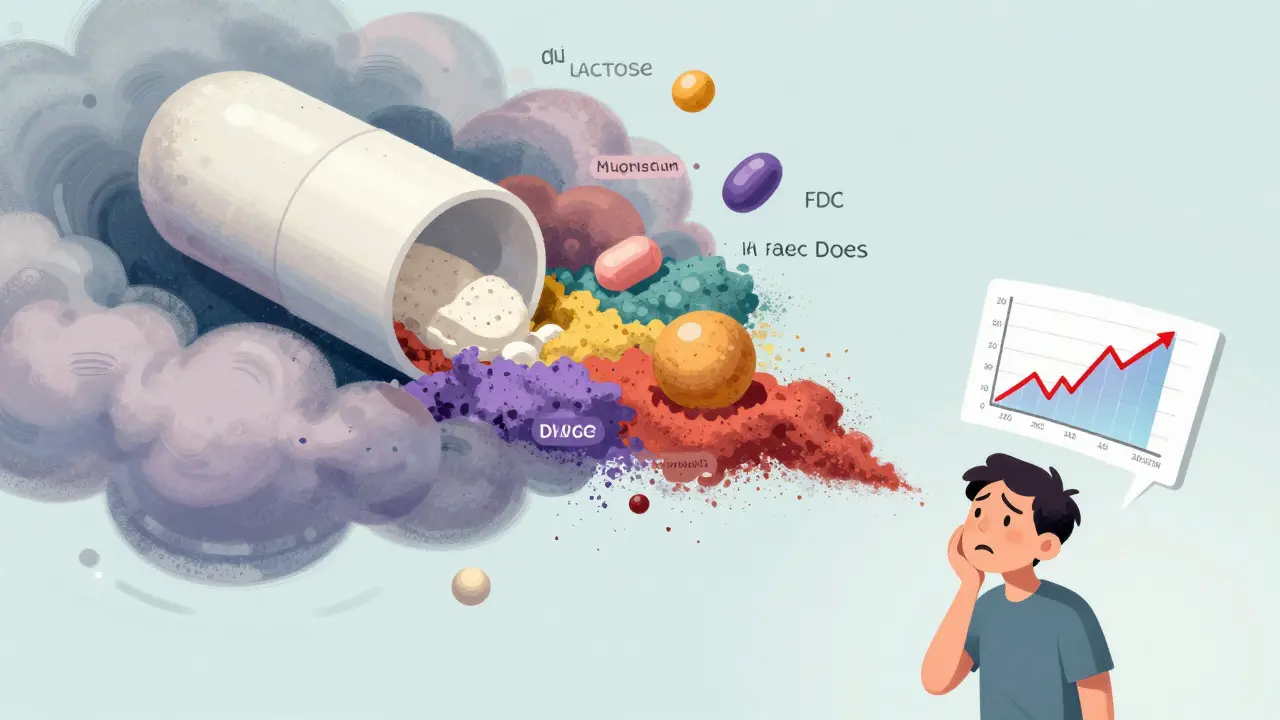
Finding Generic Combinations: When Components Don't Match Brand Formulations
Generic combination drugs save money but can differ in inactive ingredients from brand versions - and for some patients, that leads to serious side effects or loss of effectiveness. Here’s what you need to know.
read more
Active vs Inactive Drug Ingredients: Why the Difference Matters for Your Health
Active ingredients treat your condition, but inactive ingredients make the pill work - and sometimes cause side effects. Learn why every component in your medication matters for your health and safety.
read more