
Statins & Grapefruit Risk Calculator
Medication & Grapefruit Interaction Calculator
Enter your statin medication and grapefruit consumption to see your risk level and safety recommendations.
Your Risk Assessment
WARNING: Your consumption may increase risk of muscle damage or kidney issues. Consult your doctor immediately.
URGENT: Avoid grapefruit completely with this statin. Contact your doctor immediately about medication options.
Why Grapefruit Can Turn Your Statin Into a Risk
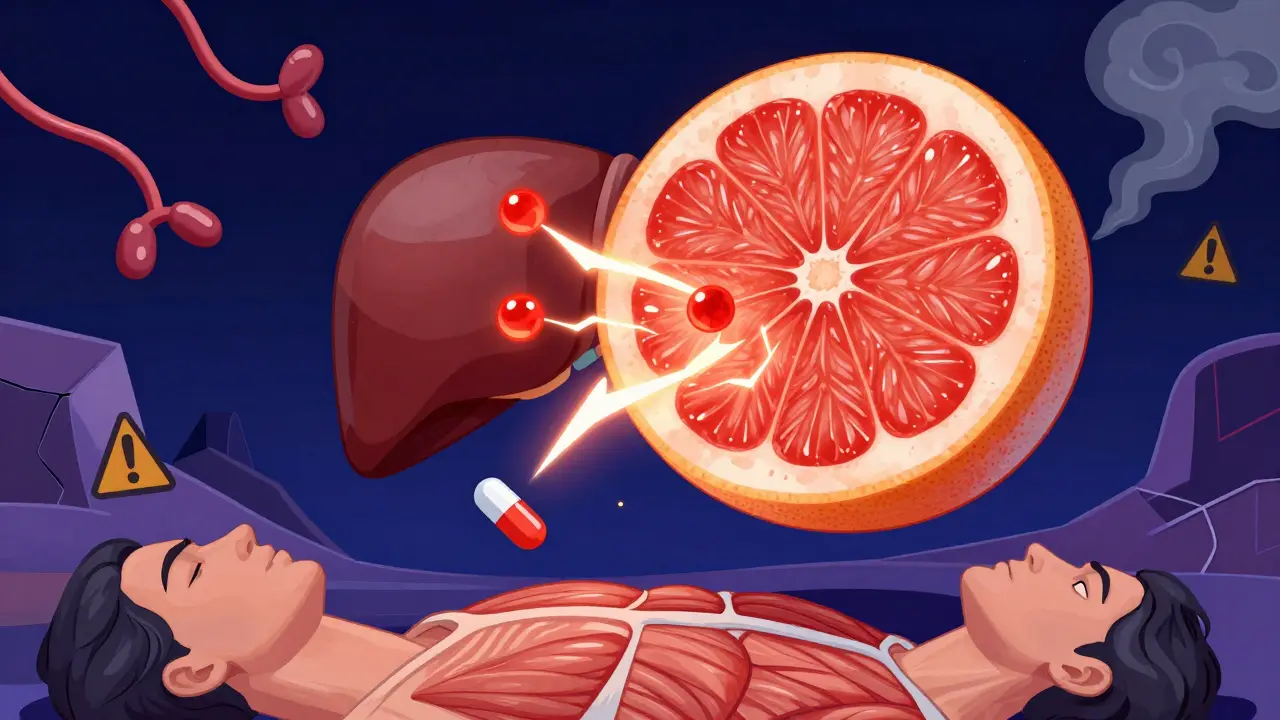
If you’re on a statin to lower cholesterol and you love grapefruit, you’re not alone. But here’s the problem: grapefruit can make your statin dangerously strong - even if you only eat half one a day.
This isn’t a myth or a warning from an overcautious doctor. It’s backed by real science. Back in 1991, researchers in Canada found that grapefruit juice spiked blood levels of a blood pressure drug. Later, they discovered the same thing happened with statins. Since then, dozens of studies have confirmed it: grapefruit doesn’t just interact with some statins - it can turn a safe dose into a toxic one.
The culprit? Furanocoumarins - natural chemicals in grapefruit that shut down an enzyme in your gut called CYP3A4. This enzyme normally breaks down certain statins before they enter your bloodstream. When it’s blocked, your body absorbs way more of the drug than intended. That extra drug doesn’t help your cholesterol - it just raises your risk of muscle damage, kidney failure, or worse.
Which Statins Are Safe? Which Ones Are Dangerous?
Not all statins react the same way to grapefruit. Some are fine. Others? Avoid grapefruit completely.
High-risk statins - the ones grapefruit can turn into a time bomb:
- Simvastatin (Zocor, FloLipid)
- Atorvastatin (Lipitor)
- Loavastatin (Mevacor)
These rely heavily on CYP3A4 to get broken down. When grapefruit blocks that pathway, blood levels can jump 3 to 8 times higher than normal. A 2006 study showed just 200 ml (about 8 oz) of grapefruit juice made simvastatin levels spike by 3.6 times. That’s not a small change - that’s the difference between a moderate side effect and hospitalization.
Low-risk statins - these are much safer with grapefruit:
- Pravastatin (Pravachol)
- Rosuvastatin (Crestor)
- Fluvastatin (Lescol)
- Pitavastatin (Livalo, Zypitamag)
These are processed by other pathways in the liver, not CYP3A4. That means grapefruit doesn’t interfere. If you love grapefruit and are on a statin, ask your doctor if switching to one of these is an option. It’s not just safer - it’s simpler.
How Much Grapefruit Is Too Much?
There’s no single answer. Your body isn’t like everyone else’s. Genetics, age, other meds, and even your gut enzyme levels change how grapefruit affects you.
But here’s what the data says:
- 200-250 ml (8 oz) of grapefruit juice is the minimum amount shown to cause a clinically significant rise in simvastatin and atorvastatin levels. That’s one glass.
- One half of a grapefruit contains roughly the same amount of furanocoumarins as 8 oz of juice. So if you’re eating the fruit, not drinking the juice, you’re still at risk.
- 1.2 liters per day (about 5 glasses) is what the FDA calls "excessive" - the point where interaction becomes almost guaranteed.
Here’s the catch: even one glass a day can be risky if you’re on a high dose. A 2021 study found that daily consumption of 8 oz of grapefruit juice with simvastatin nearly doubled the risk of muscle damage. For someone taking 80 mg of simvastatin - the highest dose - that’s a red flag. The European Medicines Agency recommends avoiding grapefruit entirely in those cases.
But here’s the good news: if you’re on a low dose - say, 10 mg or 20 mg of atorvastatin - and you drink one glass of grapefruit juice in the morning while taking your statin at night, the interaction may be minimal. A 2016 study from Cleveland Clinic found this timing reduces overlap, lowering risk. It’s not zero risk, but it’s manageable.

Real People, Real Risks - What Happens When It Goes Wrong?
Most people who drink grapefruit juice with statins never have a problem. But some do.
Between 1990 and 2021, the FDA recorded only 17 cases of rhabdomyolysis - a rare but deadly muscle breakdown - linked to grapefruit and statins. That sounds low. But each case was preventable.
One 72-year-old man took 40 mg of simvastatin and drank a glass of grapefruit juice every morning. He didn’t feel sick until his muscles ached so badly he couldn’t stand. His creatine kinase (CK) levels were 10 times normal. He ended up in the ICU. He recovered, but he spent two weeks in the hospital.
Another case involved a 65-year-old woman on lovastatin who ate half a grapefruit daily. She didn’t know it was risky. After three months, she developed muscle weakness and dark urine - signs of kidney strain from muscle breakdown. Her doctor found her statin levels were 5 times higher than expected.
These aren’t outliers. They’re examples of what happens when people assume "a little won’t hurt."
What Should You Do If You Love Grapefruit?
You don’t have to give up grapefruit. You just need a plan.
- Check your statin. Is it simvastatin, atorvastatin, or lovastatin? If yes, proceed with caution.
- Ask your doctor about switching. Rosuvastatin or pravastatin are just as effective for lowering cholesterol and won’t interact with grapefruit. Many patients do better on these long-term.
- If you stick with your current statin: Limit grapefruit to one 8 oz glass per day, and take it at least 12 hours before your statin. That gives your body time to clear the enzyme blocker.
- Watch for warning signs. Muscle pain, tenderness, weakness, or dark urine? Call your doctor immediately. Don’t wait. Rhabdomyolysis can damage kidneys fast.
- Don’t assume "natural" means safe. Grapefruit isn’t a supplement. It’s a drug interaction waiting to happen.
The American College of Cardiology’s 2023 guidelines say: if you regularly eat grapefruit, consider switching statins - not just avoiding grapefruit. It’s easier to change your medication than your breakfast habit.
What About Other Citrus Fruits?
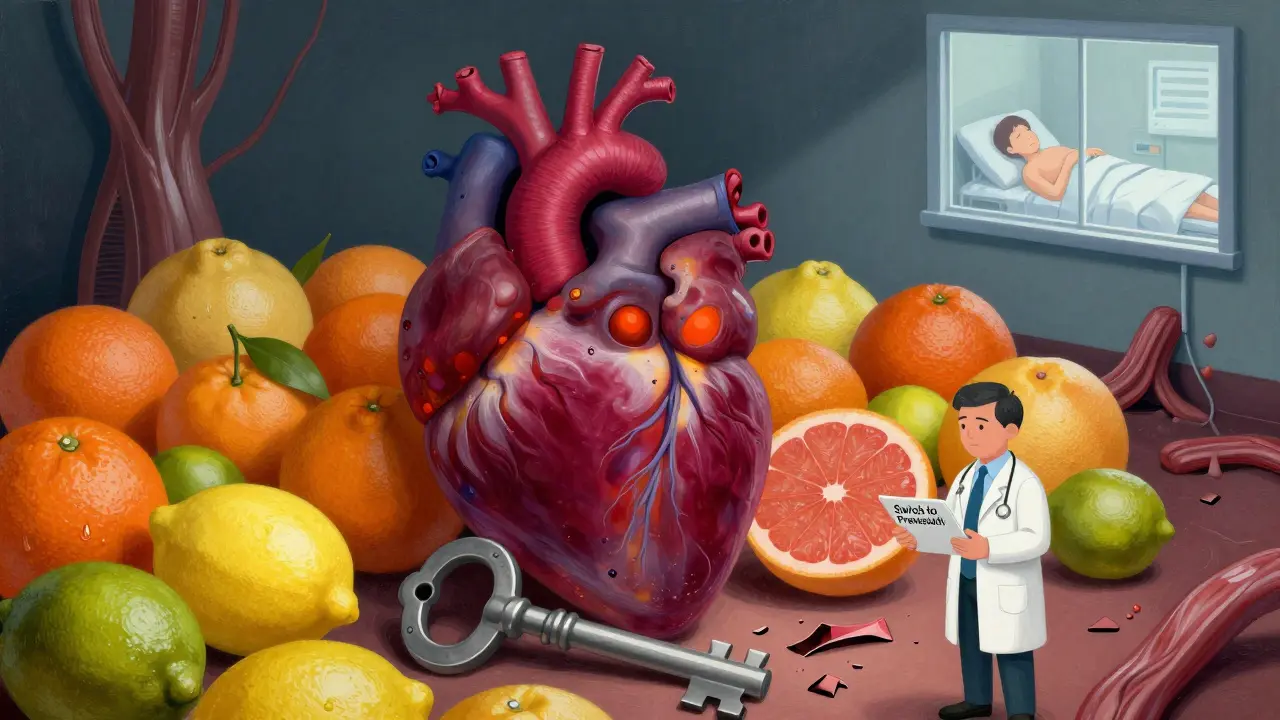
Not all citrus is the same. Seville oranges (used in marmalade), pomelos, and tangelos also contain furanocoumarins. They can cause the same interaction. So if you’re on a high-risk statin, skip those too.
Regular oranges, lemons, limes, and clementines? Safe. They don’t have the same chemicals. You can drink OJ with your statin without worry.
Bottom Line: It’s Not About Fear - It’s About Smart Choices
Statin therapy saves lives. Grapefruit isn’t the enemy. But ignoring the interaction? That’s dangerous.
If you’re on simvastatin, atorvastatin, or lovastatin:
- One glass of grapefruit juice a day = increased risk
- Two or more = high risk
- High-dose statin + grapefruit = avoid entirely
If you’re on pravastatin, rosuvastatin, fluvastatin, or pitavastatin: go ahead. Enjoy your grapefruit. No warning needed.
The goal isn’t to scare you. It’s to give you control. You can still eat healthy, enjoy citrus, and keep your heart safe. You just need to know which choices matter.
Can I drink grapefruit juice if I take my statin at night?
It depends on your statin. If you’re on simvastatin, atorvastatin, or lovastatin, drinking grapefruit juice in the morning while taking your statin at night reduces - but doesn’t eliminate - the risk. The enzyme-blocking chemicals in grapefruit can linger for 24 hours or more. For safety, avoid grapefruit entirely if you’re on one of these statins. If you’re on pravastatin or rosuvastatin, timing doesn’t matter - you’re safe.
Is grapefruit juice worse than eating the fruit?
No. Half a grapefruit has about the same amount of furanocoumarins as 8 oz of juice. Whether you drink it or eat it, the risk is the same. Don’t think eating the fruit is safer - it’s not.
How long does grapefruit affect my statin?
The enzyme-blocking effect of grapefruit can last up to 72 hours. That means even if you drink grapefruit juice on Monday, it can still affect your statin dose on Wednesday. This is why spacing out timing doesn’t fully solve the problem - the enzyme stays blocked for days.
Are there any safe alternatives to grapefruit?
Yes. Regular oranges, lemons, limes, and clementines are completely safe. They don’t contain furanocoumarins. If you want citrus flavor without the risk, go for these. You can also try pomegranate juice - it doesn’t interfere with statins, though it has its own interactions with blood thinners.
What if I accidentally ate grapefruit with my statin?
One time, especially with a low dose, is unlikely to cause harm. But watch for symptoms: unexplained muscle pain, weakness, or dark urine. If you notice any of these, contact your doctor right away. Don’t panic, but don’t ignore it either. Most people who have a single exposure don’t have problems - but it’s not worth the gamble.
Should I stop my statin if I want to eat grapefruit?
No. Never stop your statin without talking to your doctor. Stopping increases your risk of heart attack or stroke. Instead, ask about switching to a statin that doesn’t interact with grapefruit - like rosuvastatin or pravastatin. That way, you get both safety and effectiveness.
Final Thought: Your Body, Your Choice - But Know the Facts
You don’t have to give up grapefruit forever. But you do need to know which statin you’re on, how much grapefruit you’re consuming, and whether the risk is worth it.
For most people, the solution isn’t restriction - it’s replacement. Switch to a safer statin. Keep your grapefruit. Live well. That’s the real win.
Comments (10)
Rory Corrigan
so like... i just ate half a grapefruit with my Lipitor and now i'm just sitting here wondering if my muscles are slowly turning to jelly 😅
Connor Hale
The real issue isn't grapefruit. It's that we've been trained to treat medicine like candy and food like poison. The body isn't a chemical reactor. It's a system. And systems adapt. But we keep treating biology like a math problem with one right answer.
Charlotte N
I switched to pravastatin last year after my doctor mentioned this... i didn't even know grapefruit could do that. i used to have a whole one every morning with my coffee. now i just have oranges. weirdly i don't miss it. but also... i still kinda feel guilty for eating the fruit? like is it *really* that bad? or are we just scared of natural things now?
Catherine HARDY
They don't want you to know this but grapefruit is just a distraction. The real danger is Big Pharma pushing statins to keep you dependent. They knew about the interaction for decades. They just didn't tell you. Why? Because if you stopped taking statins and started eating grapefruit, you'd be healthier. And they can't profit off that.
melissa cucic
It is important to recognize that the pharmacokinetic interaction between furanocoumarins and CYP3A4 substrates is well-documented in peer-reviewed literature, and the clinical implications are not trivial. While some individuals may tolerate minimal exposure, the variability in enzyme expression across populations renders any assumption of safety untenable. The recommendation to substitute with non-CYP3A4-metabolized statins is not merely prudent-it is evidence-based.
Vikram Sujay
In many traditional systems of medicine, citrus fruits are considered cooling and detoxifying. Yet modern pharmacology treats them as dangerous. Perhaps the truth lies somewhere between: respect the science, but do not fear nature. A balanced life includes both medicine and mindful eating. I have taken rosuvastatin for five years and enjoy a small orange daily. No issues. No fear.
Shanna Sung
I read this and immediately thought: the government doesn't want you to know grapefruit cures cancer but they let it kill you with statins because it's cheaper than real medicine
mark etang
If you're on a statin and you're still eating grapefruit, you're not being healthy-you're being reckless. Your heart deserves better than your breakfast habit. Switch statins. Or switch fruit. But don't gamble with your life.
josh plum
You people are so naive. You think it's just about grapefruit? Nah. It's about control. They want you to take pills. They want you to be dependent. They want you to believe that a fruit you've eaten since childhood is suddenly dangerous. Wake up. The system is rigged. And if you're still on simvastatin? You're the target.
John Ross
The CYP3A4 inhibition mediated by bergamottin and 6',7'-dihydroxybergamottin is a well-characterized first-pass metabolic interference. The clinical significance is dose-dependent and genotype-influenced. While pharmacogenomic variability modulates risk, the FDA's advisory remains conservative for good reason: the NNT for rhabdomyolysis is low, and the NNH for grapefruit exposure is non-trivial. Ergo, substitution with rosuvastatin or pravastatin represents a risk-mitigation strategy with high utility-to-burden ratio.