
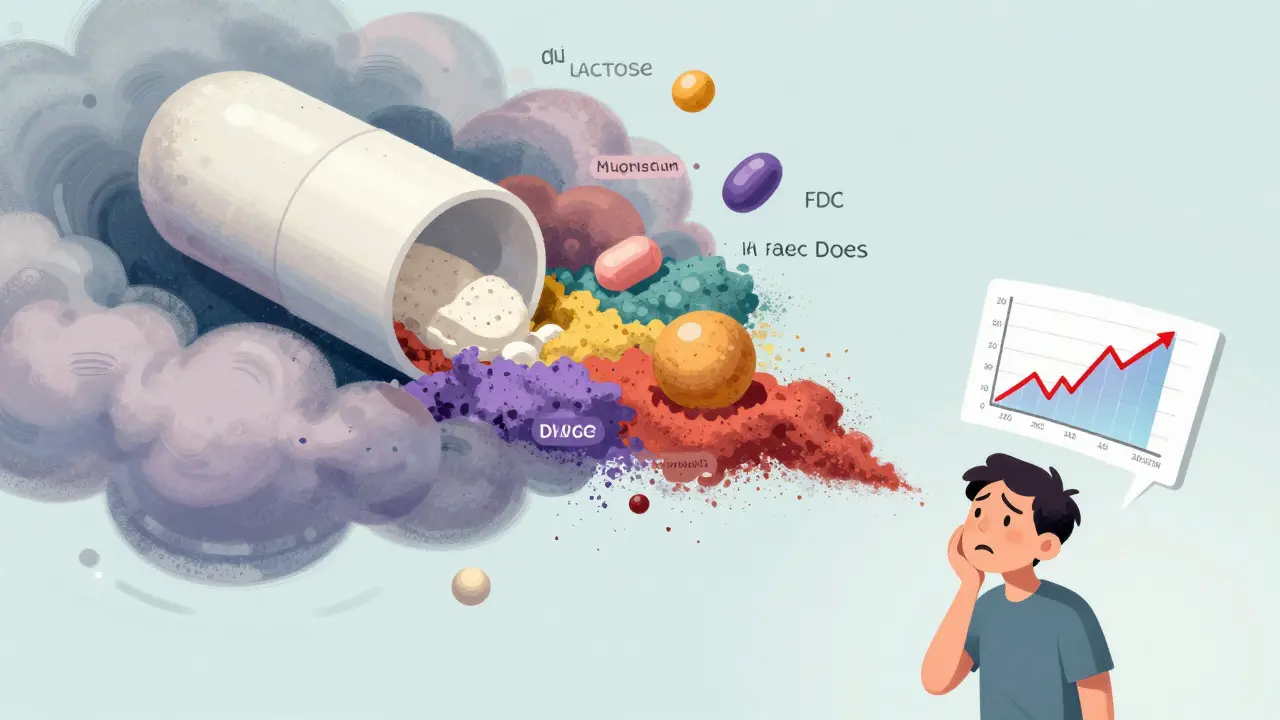
When you pick up a prescription for a combination drug like metformin/sitagliptin or fluticasone/salmeterol, you might assume the generic version is just as good as the brand name. After all, the active ingredients are the same. But here’s the thing: generic combination drugs can have completely different fillers, binders, and coatings - and for some people, that makes all the difference.
Why Generic Combinations Aren’t Always Interchangeable
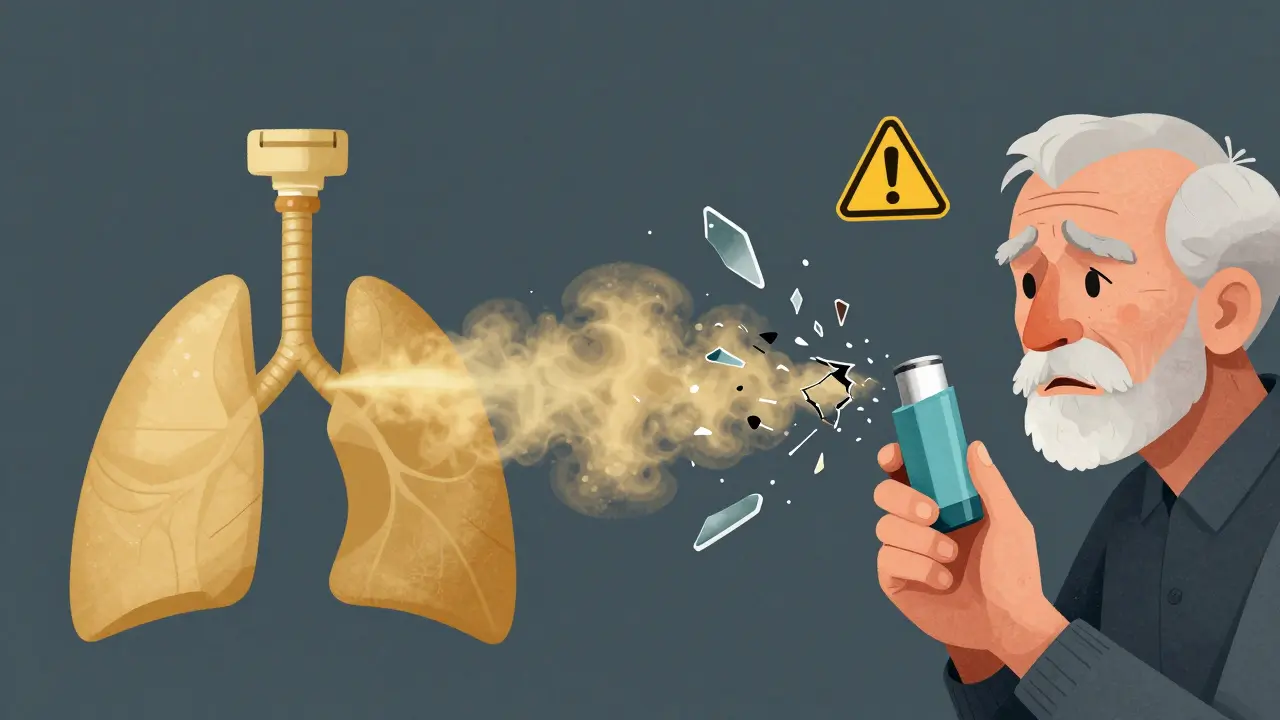
The FDA allows generic drugmakers to copy the active ingredients in a brand-name drug, but they don’t have to match the inactive ones. That’s right - the sugar, dye, preservatives, and even the texture of the pill can change. These ingredients don’t affect how the drug works in most people. But for others - especially those with allergies, digestive issues, or chronic conditions - even small changes can throw off their treatment. Take levothyroxine, a thyroid hormone replacement. It’s one of the most commonly prescribed drugs in the U.S. A 2020 study in JAMA Internal Medicine tracked nearly 90,000 Medicare patients who switched from brand to generic levothyroxine. Over 12% of them had to adjust their dose because their thyroid hormone levels changed. That’s not a fluke. It’s a pattern. The same thing happens with asthma inhalers. When patients switched from Advair Diskus to a generic version, 23% reported using their rescue inhaler more often within 90 days. Why? The generic version had a different powder blend and a slightly different inhaler mechanism. Even though the active ingredients (fluticasone and salmeterol) were identical, the way the drug was delivered to the lungs wasn’t. That’s not a minor issue - it’s a health risk.The Science Behind the Difference
Generic drugs must prove they’re bioequivalent to the brand. That means the amount of drug absorbed into the bloodstream (AUC) and the peak concentration (Cmax) must fall within 80-125% of the brand’s numbers. Sounds strict, right? But here’s the catch: this test doesn’t measure how fast the drug dissolves, how well it’s absorbed in the gut, or whether the inactive ingredients interfere with absorption. For example, a generic version of a time-release pill might use microcrystalline cellulose as a binder instead of the brand’s proprietary polymer. That sounds harmless - until you realize that one might release the drug too quickly, causing a spike in blood levels, or too slowly, leaving the patient underdosed. A 2017 study found that nearly half of all generic combination drugs had different inactive ingredients than their brand equivalents. Magnesium stearate? Changed in 38% of cases. Lactose? Changed in 29%. For someone with a lactose intolerance or a rare sensitivity, that’s not just a detail - it’s a trigger.Who’s at Risk?
Not everyone needs to worry. For most people, generic combinations work just fine. But certain groups are far more vulnerable:- Narrow therapeutic index (NTI) drugs - where the difference between an effective dose and a toxic one is tiny. Think warfarin, lithium, and some seizure medications. A 5% change in absorption can mean the difference between control and crisis.
- Elderly patients - their bodies process drugs differently. Slower metabolism, weaker kidneys, and multiple medications make them more sensitive to formulation changes.
- Patients with chronic conditions - like diabetes, epilepsy, or heart failure - who rely on stable drug levels to stay out of the hospital.
- People with allergies or sensitivities - to dyes, preservatives, or fillers like lactose, gluten, or sulfites.
On PatientsLikeMe, users reported adverse effects after switching to generics at a rate of 23.7%. The worst offenders? Psychiatric meds and endocrine drugs. On Reddit’s r/pharmacy, over 60% of complaint cases involved combination drugs - especially those for diabetes and asthma.
What Pharmacists Are Doing About It
Pharmacists aren’t just filling prescriptions - they’re becoming frontline detectives. The U.S. Pharmacopeia (USP) released guidelines in 2022 recommending a five-point check before substituting a generic combination:- Therapeutic index - Is this an NTI drug? If yes, proceed with extreme caution.
- Patient history - Have they ever had issues switching brands before?
- Bioequivalence data - Not all generics are equal. Some have better dissolution profiles than others.
- Inactive ingredient screening - Does the patient have known allergies? Lactose? Dyes? Gluten?
- Disease stability - Is their condition currently under control? If yes, changing the formulation might not be worth the risk.
A 2023 study showed that when pharmacies followed this protocol, adverse events dropped by 62% over 12 months. That’s not just a number - it’s fewer hospital visits, fewer ER trips, and fewer patients panicking because their meds “stopped working.”
The Hidden Cost of Savings
Generic drugs save the U.S. healthcare system billions. Medicare saved $1.67 trillion between 2006 and 2019 just from using generics. That’s huge. But savings shouldn’t come at the cost of safety. There’s a middle ground: authorized generics. These are made by the original brand company but sold under a generic label. They’re identical in every way - active ingredients, inactive ingredients, even the manufacturing line. Pfizer’s authorized generic of Lyrica, for example, is chemically identical to the brand. The catch? They cost 15-20% more than standard generics. Still, they’re 60-70% cheaper than the brand. For high-risk patients, that extra cost can be worth it.
What You Can Do
If you’re on a combination drug and you notice something’s off - more side effects, less control, weird reactions - don’t assume it’s just "in your head."- Ask your pharmacist - "Is this a generic? What’s different in it from the brand?" They’re trained to know.
- Check the Orange Book - The FDA’s list of therapeutic equivalence ratings. Look for "A" ratings (generally interchangeable) and "B" ratings (caution needed).
- Read the label - Inactive ingredients are listed. If you’re allergic to lactose or FD&C Red 40, you’ll see it.
- Speak up if you feel worse - Your doctor might not know your generic was switched. Tell them. Request the brand if needed.
- Know your rights - In 46 states, pharmacists must document substitutions for NTI drugs. California requires logs for all epilepsy meds. You can ask to see that record.
The Future Is Getting Better - But Slowly
The FDA is starting to catch up. In 2023, they approved Teva’s generic version of Advair Diskus - but only after requiring it to match the brand’s inhaler performance down to the micron. That’s new. That’s progress. The 2022 Consolidated Appropriations Act now requires the FDA to set up a formal system for reporting adverse events tied to formulation differences. That system launches in 2024. And by 2025, manufacturers are committing to clearly label all inactive ingredients in combination generics. Meanwhile, research projects like the NIH’s $12.5 million Formulation Equivalence Initiative are working on better ways to predict which generic formulations might cause problems - before they even hit the shelf.Bottom Line
Generic combination drugs are a win for affordability. But they’re not a one-size-fits-all solution. For most people, they’re perfectly safe. For others - especially those with sensitive conditions - the difference between the brand and the generic isn’t about price. It’s about survival. Don’t let cost be the only factor. Ask questions. Demand transparency. And if your body tells you something’s wrong - listen to it.Are generic combination drugs always safe to substitute?
No. While most generic combinations work just as well as brand-name versions, they’re not always interchangeable. Differences in inactive ingredients - like fillers, binders, or coatings - can affect how the drug is absorbed, especially in drugs with a narrow therapeutic index (NTI), such as levothyroxine, warfarin, or certain epilepsy medications. Patients with allergies, elderly individuals, or those with unstable chronic conditions are at higher risk for adverse effects after switching.
How can I tell if my generic drug has different ingredients than the brand?
Check the drug label - inactive ingredients are listed on the packaging and in the patient information leaflet. You can also ask your pharmacist for the manufacturer’s product monograph or look up the drug in the FDA’s Orange Book, which lists therapeutic equivalence ratings. If the generic has a "B" rating, it means substitution may not be appropriate for all patients.
What should I do if I feel worse after switching to a generic combination?
Contact your prescribing doctor and pharmacist immediately. Don’t assume it’s "all in your head." Document your symptoms - when they started, what you’re feeling, and whether they improved after switching back. Your doctor may need to adjust your dose or switch you back to the brand. In some cases, you may qualify for an exception under your insurance plan if the generic caused a clinical issue.
What are authorized generics, and are they better?
Authorized generics are made by the original brand manufacturer but sold under a generic label. They contain the exact same active and inactive ingredients as the brand-name version. They’re not cheaper than the brand, but they’re typically 60-70% less expensive. For patients with sensitive conditions or prior adverse reactions, authorized generics offer the safety of the brand with the cost savings of a generic - making them a smart middle ground.
Why do some pharmacies switch my medication without telling me?
In many states, pharmacists are allowed to substitute generics automatically unless the prescription says "dispense as written" or the prescriber has opted out. Insurance plans often push for the cheapest option. But since 2020, 46 states require pharmacists to document substitutions for drugs with narrow therapeutic indices. Always ask if a switch was made - and if you’re unsure, request the brand or an authorized generic.
Comments (9)
Judith Manzano
I switched my levothyroxine to a generic last year and didn’t think twice until I started having heart palpitations and brain fog. Went back to the brand-boom, symptoms vanished in a week. It’s not just in your head. Your body remembers. Pharmacies need to be transparent. Ask for the manufacturer code on the bottle. If they can’t give it to you, that’s a red flag.
And yes, I know it’s more expensive-but I’d rather pay extra than end up in the ER again. Your health isn’t a budget spreadsheet.
rafeq khlo
The FDA should not be allowed to approve generics without requiring identical inactive ingredients. This is a systemic failure of regulation. The entire pharmaceutical industry is built on exploiting loopholes. You think you’re saving money but you’re just gambling with your life. This is not healthcare this is corporate negligence dressed up as policy. The system is broken and everyone who benefits from it is complicit. Wake up people.
Morgan Dodgen
LMAO so now we’re supposed to trust Big Pharma’s ‘authorized generics’? 😏 That’s like trusting a fox to guard the henhouse. These are the same companies that patented the original drug then outsourced the generic to their own offshore factory. Same pill. Same machine. Same factory. Just a different label. They’re not doing it to help you they’re doing it to keep the cash flow while pretending they’re being altruistic.
And don’t get me started on the Orange Book. That thing’s a joke. Half the ‘A’ ratings are based on single-dose studies in healthy young men. What about diabetics? Elderly? People with Crohn’s? Nah. Irrelevant. 🤡
Philip Mattawashish
You people are naive. You think this is about health? This is about control. The FDA, the AMA, the insurance companies-they all want you dependent on the system. They don’t want you to know that the same exact pill can be made with different binders. They want you to believe the generic is ‘just as good’ so you don’t question the cost-cutting. This isn’t science. This is psychological manipulation. You’re being gaslit by your pharmacist.
And if you think authorized generics are the answer-you’re still playing their game. They own the brand. They own the generic. They own the label. They own the narrative. Wake up. You’re not a patient. You’re a revenue stream.
Tom Sanders
Bro I just got my generic Advair and I’m fine. No issues. Maybe it’s just me but I think people freak out too much. Like yeah maybe some folks have reactions but most of us are fine. Stop overthinking it.
Jazminn Jones
It is deeply concerning that regulatory bodies continue to prioritize cost-efficiency over pharmacological integrity. The bioequivalence thresholds of 80–125% are statistically inadequate for drugs with narrow therapeutic indices, particularly when considering inter-individual variability in absorption kinetics. Furthermore, the absence of mandatory disclosure of excipient profiles constitutes a violation of patient autonomy. One cannot reasonably consent to a therapeutic intervention if the composition of the delivery vehicle remains opaque. This is not merely a pharmacological issue-it is an ethical failure of medical governance.
Stephen Rudd
Let me be the first to say this: if you're relying on generics for life-sustaining meds, you're already losing. The fact that you're even asking if it's safe means you're already in danger. The system doesn't care if you live or die. It cares about quarterly earnings. The real solution? Stop taking meds altogether. Go primal. Eat raw garlic. Meditate. Your body was designed to heal itself. The pill is a scam. And you're the sucker who keeps paying for it.
Erica Santos
Oh wow. So now we’re all supposed to be terrified of lactose and microcrystalline cellulose? 🤡
Let me guess-you also check the ingredient list on your Advil because you’re ‘allergic to dyes’? Or maybe you cry when you see a pill that’s not exactly the same color as last month’s? This isn’t medicine. This is performative hypochondria wrapped in a lab coat.
For 95% of people, generics work fine. The rest? Yeah, they need special handling. But don’t turn every patient into a paranoid drama queen because a few outliers had bad luck. We’re not living in a horror movie.
George Vou
wait so u r saying the generic might have diffrent sugar in it? like the same sugar as in cookies? 😭 i thought it was just chem stuff not food stuff
also i heard if u switch back and forth the body gets confused? like its like trying to sleep on a new mattress every night? idk just saying