
Birth Defects During Pregnancy: Causes, Risks, and What You Can Do
When we talk about birth defects during pregnancy, structural or functional abnormalities present at birth that affect how the body works or looks. Also known as congenital anomalies, they can range from minor issues like a small gap in the fingers to serious conditions like heart malformations or neural tube defects. These aren’t random accidents—they often link to things you can control, like what you take, eat, or are exposed to while pregnant.
One major factor is teratogens, substances that interfere with fetal development and can cause birth defects. That includes certain medications, alcohol, tobacco, and even some infections like rubella or Zika. For example, taking isotretinoin (Accutane) for acne during pregnancy is known to cause severe heart and brain defects. But it’s not just drugs—high blood sugar from uncontrolled diabetes increases the risk of spine, heart, and limb problems. And folic acid? Taking 400 mcg daily before and during early pregnancy cuts the chance of neural tube defects like spina bifida by up to 70%. It’s not a miracle cure, but it’s one of the few proven, simple actions that actually make a difference.
Not all birth defects are preventable, but many are avoidable with the right info. Some women don’t realize that even over-the-counter painkillers like ibuprofen can be risky in the third trimester, or that herbal supplements aren’t automatically safe. Your doctor doesn’t always bring this up unless you ask. That’s why knowing your risks matters. If you have a family history of congenital heart disease, or if you’ve had a previous pregnancy affected by a defect, genetic counseling can help you understand your odds and options. And timing matters—most major defects happen in the first 8 to 12 weeks, often before a woman even knows she’s pregnant. That’s why preconception care isn’t optional—it’s essential.
What you’ll find below isn’t a list of scary stories. It’s a collection of real, practical articles that connect the dots between medication use, nutrition, and fetal health. You’ll learn how common drugs like metformin or levothyroxine interact with pregnancy, why some antibiotics are safer than others, and how even something as simple as coffee timing can affect your baby’s development. These aren’t theoretical discussions—they’re based on what doctors see in clinics, what studies track, and what mothers have learned the hard way. No guesses. No hype. Just what works, what doesn’t, and what you need to know to protect your baby’s health from day one.
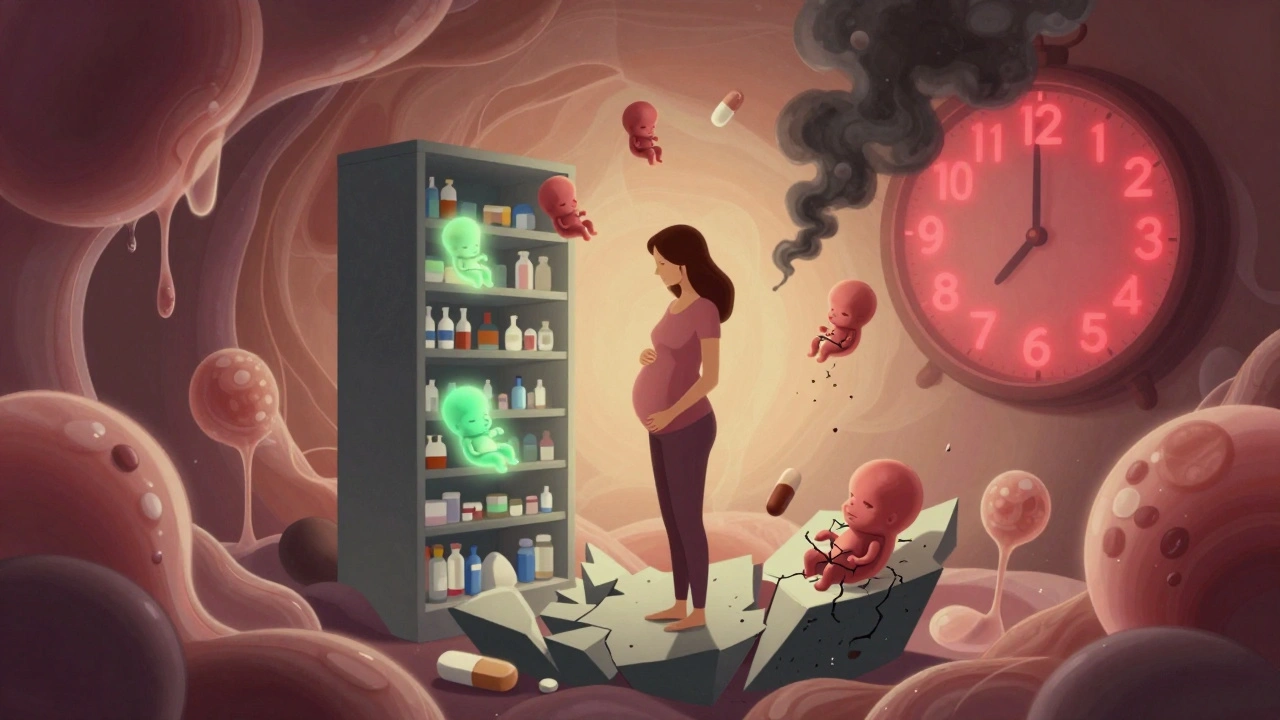
Pregnancy and Medications: What You Need to Know About Teratogenic Risks and Birth Defects
Learn which medications can cause birth defects during pregnancy, when risks are highest, and how to make safe choices. Get clear, evidence-based guidance on teratogens, acetaminophen, and what to do if you took medicine before knowing you were pregnant.
read more