
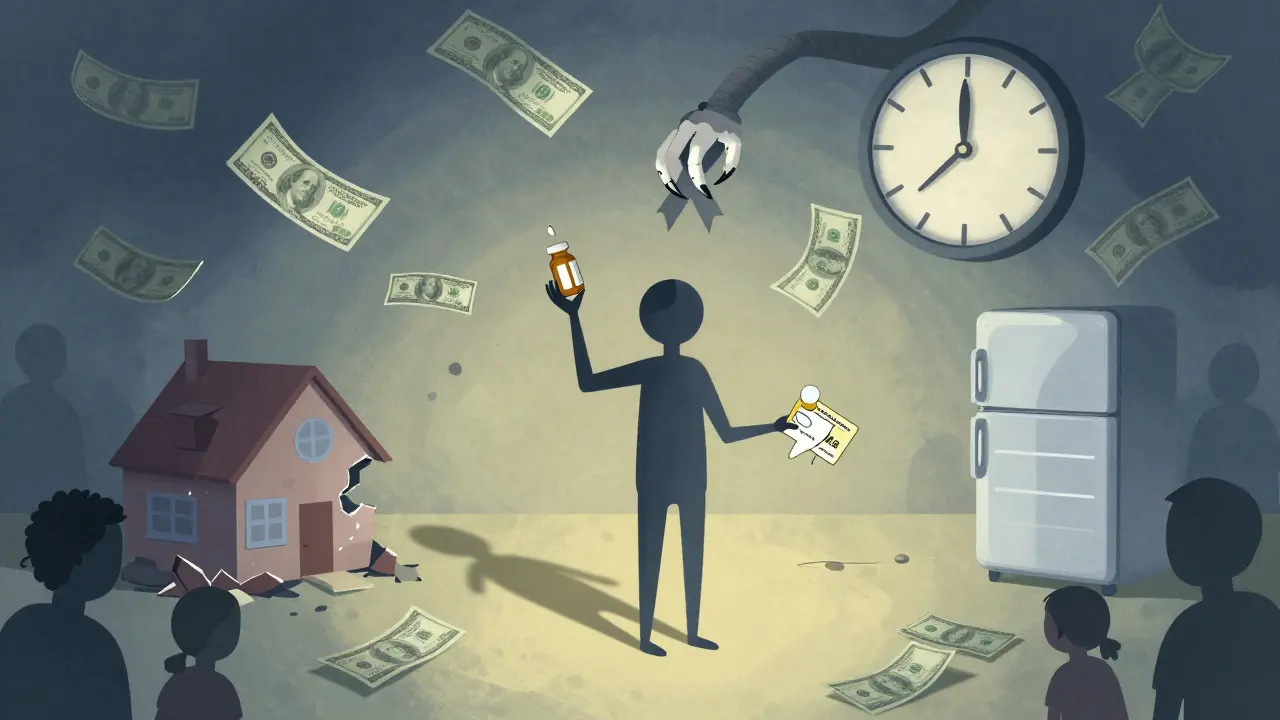
When you’re fighting cancer, the last thing you should worry about is whether you can afford to keep living. But for too many people, that’s exactly the reality. Financial toxicity isn’t a buzzword-it’s a daily struggle. It’s choosing between buying your next round of pills or paying the rent. It’s skipping meals so you can cover your copay. It’s watching your savings vanish while your body fights for survival. This isn’t rare. Financial toxicity affects nearly half of all cancer survivors, and it’s getting worse.
What Financial Toxicity Really Means
Financial toxicity isn’t just about big bills. It’s the crushing weight of medical debt, lost income, insurance gaps, and the silent panic that comes when you realize your treatment might bankrupt you. The term was first used by researchers at Duke University in 2013, and since then, it’s been backed by data from the National Cancer Institute, the American Society of Clinical Oncology, and dozens of peer-reviewed studies. The NCI now defines it as “problems a patient has related to the cost of medical care”-a simple phrase that hides a world of suffering.It includes direct costs: chemotherapy, immunotherapy, hospital stays, lab tests. But it also includes the hidden ones: gas to get to appointments, childcare during treatments, lost wages because you can’t work, and even the cost of special foods your doctor says will help you recover. For some, these costs eat up 98% of their annual income. That’s not a typo. That’s what happens when breast cancer treatment costs more than what a low-income woman makes in a year.
Who Gets Hit the Hardest?
This isn’t an equal-opportunity crisis. Certain groups face far worse outcomes because of their income, age, or insurance.- Younger patients (under 65) are more likely to be underinsured, have less savings, and be in the middle of careers. Losing income during treatment can derail their financial future for decades.
- Low-income families face the most extreme burden. One study found that nearly one in three non-elderly cancer patients spends at least 20% of their income just on out-of-pocket medical costs. That’s more than most people spend on housing.
- Patients with metastatic cancer are stuck in long-term treatment cycles. Immunotherapies can cost $100,000 a year-and sometimes go on for years. That’s not a one-time expense. It’s a financial earthquake.
- Underinsured patients are the most vulnerable. High-deductible plans sound good on paper, but when your deductible is $10,000 and your treatment costs $15,000, you’re paying out of pocket for everything. No safety net.
Even people with Medicare aren’t safe. Half of Medicare beneficiaries with cancer spend more than 10% of their income on out-of-pocket costs. That’s not a small amount. That’s a life-altering burden.
The Real Cost: Beyond the Bill
Money problems don’t just hurt your bank account-they hurt your health.Studies show that patients facing financial toxicity are more likely to:
- Skip doses or stop taking their medication because they can’t afford it
- Delay or refuse necessary scans or tests
- Report higher levels of depression, anxiety, and pain
- Feel worse physically and emotionally than patients with the same cancer stage but no financial stress
One patient told researchers, “I didn’t think the cancer would kill me. I thought the bill would.” That’s not an exaggeration. Financial toxicity has been rated by patients as more severe than physical symptoms, emotional distress, or even fear of dying. That’s how powerful this burden is.
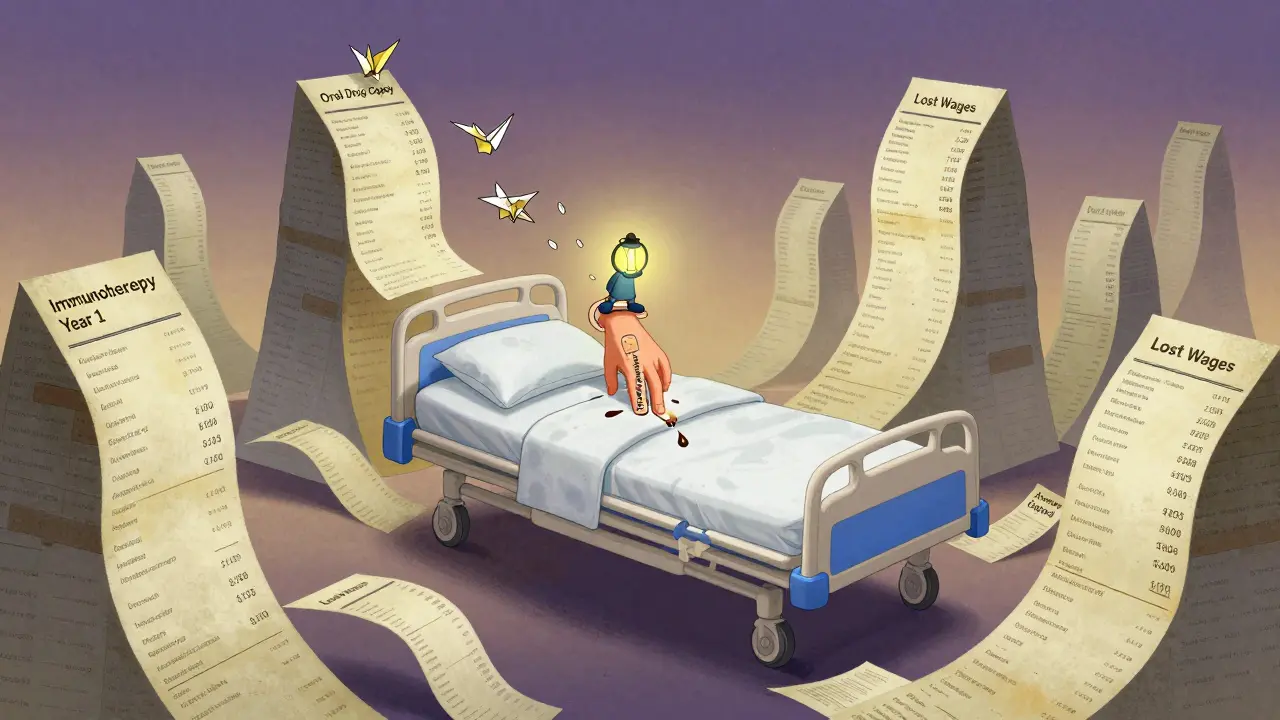
Why Are Treatments So Expensive?
Cancer care has become one of the most expensive areas of medicine. Why?Modern treatments-like targeted therapies and immunotherapies-are revolutionary. They save lives. But they’re also priced like luxury goods. A single course of some drugs can cost over $100,000. And unlike older chemo, which lasted a few months, these newer drugs often need to be taken for years-or even for life. That turns a one-time expense into a lifelong debt.
Insurance doesn’t always help. Many plans have high copays for oral drugs (pills you take at home), while intravenous treatments (given in a clinic) are covered better. That means patients on pills-often the newer, more effective ones-are stuck paying more out of pocket. A bill introduced in 2023, the Cancer Drug Parity Act, tried to fix that. It hasn’t passed yet.
Pharmaceutical companies argue that high prices fund research. But the truth is, many of these drugs were developed with public funding, and their profit margins are among the highest in any industry.
What’s Being Done? Real Solutions That Work
There are ways out of this mess-and they’re already working in some places.Financial navigation programs are the most proven solution. These are trained staff-often social workers or financial counselors-who help patients find assistance. They apply for grants, find drug discounts, help with insurance appeals, and connect patients with food banks or transportation services. Cancer centers that use them report 30-50% fewer patients abandoning treatment due to cost.
Co-pay assistance programs exist too. The Patient Advocate Foundation gave $327 million in help to 67,000 cancer patients in 2022 alone. Drug manufacturers also offer assistance-$12.8 billion worth in 2021. But here’s the catch: most patients don’t know these programs exist. Or they’re too sick to fill out the paperwork. Or they don’t qualify because they make $5,000 too much for the cutoff.
Screening tools are now being used in clinics. The COST questionnaire (Comprehensive Score for Financial Toxicity) asks simple questions: “Have you cut back on food to pay for treatment?” “Have you taken less medicine than prescribed?” “Are you worried about how you’ll pay your bills?” These aren’t just nice-to-haves. A 2022 Mayo Clinic study showed that using these tools increased detection of financial distress by 45%.
State laws are starting to make a difference. California’s 2022 Cancer Drug Affordability Act requires drug makers to justify price hikes and report pricing data. Other states are watching. It’s not perfect, but it’s a start.

What You Can Do Right Now
If you or someone you love is going through cancer treatment, here’s what to do-today.- Ask for a financial counselor. Every major cancer center has one. Don’t wait until you’re in crisis. Ask at your first appointment.
- Know your insurance. Call your insurer and ask: What’s my out-of-pocket max? What’s my copay for oral vs. IV drugs? What drugs are covered? Get it in writing.
- Apply for help immediately. Check the Patient Advocate Foundation, NeedyMeds, and the drug manufacturer’s website. Many have online applications. Even if you think you make too much, apply anyway-some programs have flexible limits.
- Don’t skip doses. If you can’t afford your meds, tell your doctor. There are often cheaper alternatives, samples, or generic versions.
- Track your costs. Keep a simple notebook: medications, travel, lost wages, co-pays. You’ll need this for applications and appeals.
The Bigger Picture: What Needs to Change
Financial toxicity isn’t just an individual problem-it’s a system failure. We treat cancer like a medical issue, but it’s also an economic one.Experts predict that by 2025, 75% of NCI-designated cancer centers will have formal financial toxicity screening. That’s progress. But it’s not enough. We need:
- Price transparency for all cancer drugs
- Equal insurance coverage for oral and IV treatments
- Expanded Medicaid and Medicare coverage for cancer care
- Protection from medical debt ruining credit scores
- More funding for financial navigation programs
The American Cancer Society has committed $15 million over the next few years to tackle this issue. That’s a good start. But with over 1.9 million new cancer diagnoses each year in the U.S. alone, we need far more.
It’s Not Just About Money
At its core, financial toxicity is about dignity. It’s about being able to choose your treatment without being forced into a decision based on your bank balance. It’s about not having to choose between your health and your family’s survival.When you’re told you have cancer, you’re already facing the hardest thing in life. You shouldn’t have to face bankruptcy too. The tools, the programs, and the awareness are growing. But change won’t come from waiting. It comes from asking for help, speaking up, and demanding better.
You’re not alone. And you don’t have to fight this battle alone.
What is financial toxicity in cancer care?
Financial toxicity is the severe financial strain cancer patients face from treatment costs, including out-of-pocket expenses, lost income, and insurance gaps. It’s not just about bills-it’s the stress, anxiety, and life-altering choices forced by medical debt. The National Cancer Institute defines it as problems directly caused by the cost of cancer care, and studies show it affects up to 73% of patients through self-reporting.
How common is financial toxicity among cancer patients?
It’s extremely common. Between 28% and 48% of cancer survivors experience measurable financial hardship, and up to 73% report emotional distress from treatment costs. One in three non-elderly patients spends at least 20% of their income on cancer-related expenses. For low-income women with breast cancer, treatment can consume nearly all of their annual income.
Are newer cancer treatments more expensive?
Yes. Immunotherapies and targeted drugs often cost over $100,000 per year and may be taken for years or indefinitely. These treatments are more effective than traditional chemotherapy, but they come with much higher out-of-pocket costs, especially if they’re taken as pills at home. Insurance often covers IV treatments better than oral ones, forcing patients to pay more for the newer, more advanced options.
Can financial toxicity affect cancer outcomes?
Absolutely. Patients facing financial stress are more likely to skip doses, delay treatment, or avoid necessary tests. Studies show they report worse physical and mental health, higher pain levels, and greater anxiety about recurrence. Financial toxicity is linked to lower survival rates-not because the cancer is more aggressive, but because patients can’t access full treatment.
What help is available for cancer patients struggling with costs?
Many resources exist. Cancer centers offer free financial navigation services. Organizations like the Patient Advocate Foundation and NeedyMeds provide co-pay assistance and drug discounts. Drug manufacturers have patient assistance programs that have given over $12 billion in aid since 2021. State laws, like California’s Cancer Drug Affordability Act, are starting to force price transparency. Ask your oncology team-they’re trained to help you find these programs.
How can I find out if I qualify for financial aid?
Start by asking your cancer center’s financial counselor. Then visit NeedyMeds.org or the Patient Advocate Foundation’s website. You can also search for your specific drug name + “patient assistance program.” Most programs ask for proof of income, diagnosis, and insurance status. Even if you think you earn too much, apply-many have flexible income limits. Don’t wait until you’re in crisis. Apply early.
Does Medicare cover cancer treatment costs fully?
No. While Medicare covers many cancer treatments, patients still pay deductibles, coinsurance, and copays. For example, Medicare Part B covers IV chemo but requires 20% coinsurance. Part D covers oral drugs but has coverage gaps. Half of Medicare beneficiaries with cancer spend more than 10% of their income on out-of-pocket costs. Many need supplemental insurance or assistance programs to manage these expenses.
Is financial toxicity only a problem in the U.S.?
No, but it’s most severe in the U.S. due to its complex, private insurance system. In countries with universal healthcare, out-of-pocket costs are much lower. However, even in places like Australia and Canada, patients report financial strain from travel, lost wages, and uncovered medications. The U.S. stands out because treatment costs are among the highest in the world and insurance coverage is inconsistent.
Comments (10)
pradnya paramita
Financial toxicity in oncology is a multifactorial construct rooted in cost-related non-adherence, catastrophic expenditure, and diminished health-related quality of life (HRQoL). The NCI's operationalization of the term aligns with the WHO’s framework on financial risk protection, yet implementation gaps persist due to fragmented safety nets. Financial navigators, when integrated into multidisciplinary teams, demonstrate a 42% reduction in treatment abandonment (JCO Oncology Practice, 2023). Key leverage points: mandatory COST screening at triage, cap on out-of-pocket oral chemo costs, and parity in CMS reimbursement for oral vs. IV agents.
Wendy Lamb
Ask for the financial counselor at your first visit. Seriously. Do it now.
caroline hernandez
As a clinical financial navigator at a NCI-designated center, I’ve seen this daily. Patients skip doses because they’re choosing between insulin and chemo. We’ve helped folks get $15K in drug discounts just by filling out one form. But most don’t know these programs exist. The system’s broken, but help is out there - you just have to ask. And if you’re too tired to ask, someone on your team should be doing it for you. That’s our job.
Joy Johnston
It’s not just about the meds. It’s the parking. The Uber rides. The missed shifts. The childcare while you’re in infusion. I’ve seen families sell their cars to cover co-pays. The COST tool isn’t optional - it’s clinical triage. If your oncology team isn’t screening for financial toxicity, they’re not providing full-spectrum care. This is a standard of care issue, not a charity problem. We need policy change, but until then, document everything. Receipts. Emails. Notes. You’re not asking for a handout - you’re documenting a medical necessity.
Antwonette Robinson
Oh wow, another article about how cancer is expensive. Shocking. Next you’ll tell me that rockets are expensive to build or that yachts cost money. Meanwhile, the same people who scream about drug prices are the ones who think ‘universal healthcare’ means free stuff. Maybe stop having cancer? Just a thought.
Shelby Price
My aunt went through this last year. She didn’t tell anyone until she got a bill for $42K and had to cash out her 401(k). The financial counselor at her clinic saved her life - literally. She got her meds covered and even found a free ride program. I didn’t know any of this existed until it happened to her. So if you’re reading this and you’re scared - reach out. Someone’s got your back.
Roshan Gudhe
There is a deeper truth here: we have turned healing into a transaction. When your body is breaking down, and the only language the system speaks is ‘co-pay,’ we have lost something sacred. Cancer does not discriminate - but our system does. It rewards those with paperwork skills, social capital, and access to legal aid. Is it moral to demand a patient be an accountant just to stay alive? Perhaps the real cure isn’t in the drug - but in the dignity we restore by making care a right, not a privilege.
Meenal Khurana
Thank you for sharing this. I’ll pass it to my sister’s oncology team.
Justin Fauth
Look, I get it - cancer sucks. But this whole ‘financial toxicity’ thing is just another left-wing scam to get free stuff. In my day, people worked two jobs and paid their bills. No one handed out free drugs. If you can’t afford treatment, maybe you shouldn’t have gotten cancer. Or maybe you shouldn’t have moved to a country with prices like this. Fix your own damn life.
Jesse Naidoo
Wait, so you’re telling me people are actually choosing between food and chemo? I had a friend who got cancer and her insurance covered everything. She even got a free massage and a spa day. I don’t understand how anyone could be this poor. Do they not know about GoFundMe? Or just… not trying hard enough? I mean, I’d do anything for my dog if he got sick. Why can’t they?