
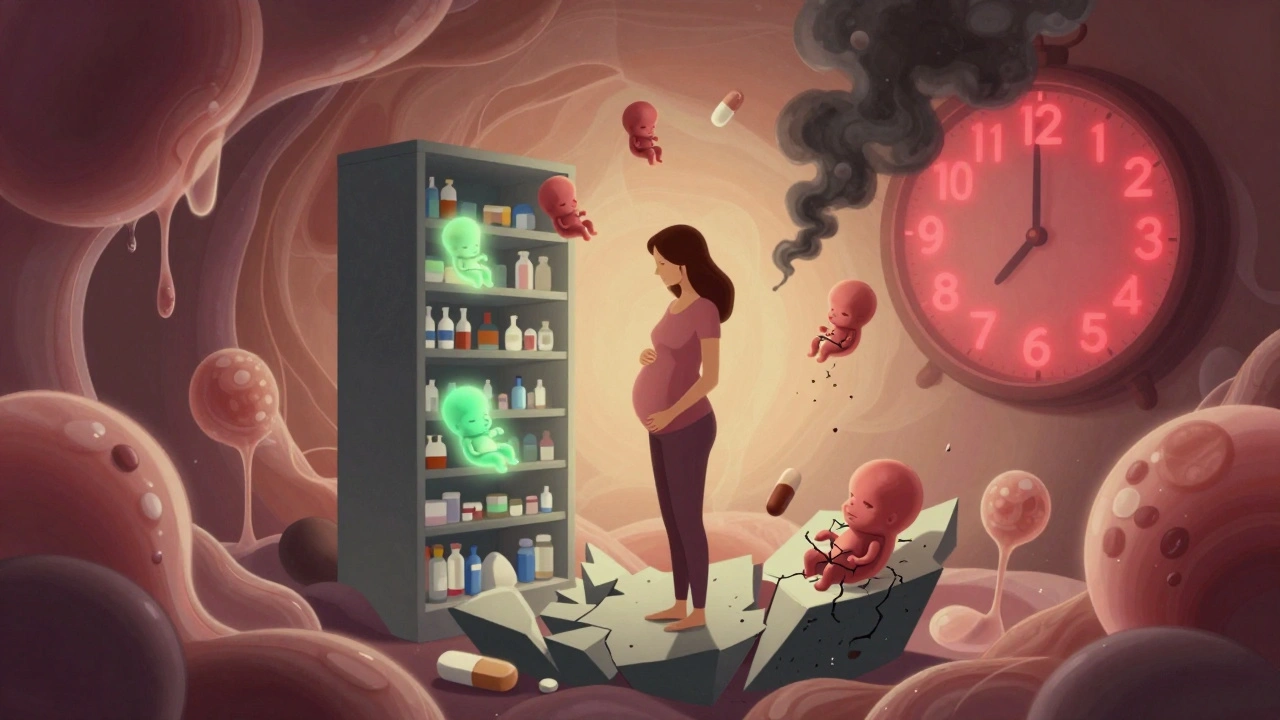
When you’re pregnant, every pill, drop, or supplement feels like a gamble. You didn’t sign up for this kind of stress. You just wanted to feel better - maybe ease a headache, calm nausea, or manage a chronic condition - but now you’re terrified that the medicine you took might hurt your baby. The truth? Most medications don’t cause birth defects. But some do. And knowing which ones, when, and why can make all the difference.
What Exactly Is a Teratogen?
A teratogen is any substance that can interfere with how a baby develops in the womb. It’s not just drugs - it’s also alcohol, certain infections, and even high fevers. But when we talk about medications, we’re looking at prescription pills, over-the-counter drugs, and even herbal products that cross the placenta and affect the growing fetus. The most infamous example? Thalidomide. In the late 1950s, this sleep aid was given to pregnant women for morning sickness. By 1961, over 10,000 babies worldwide were born with missing or shortened limbs. That tragedy changed medicine forever. Today, every drug is scrutinized for fetal risk - but the system isn’t perfect.When Does Risk Happen? Timing Matters More Than You Think
Not all stages of pregnancy carry the same risk. The first trimester - especially weeks 3 to 8 after conception - is when organs are forming. That’s the most dangerous window for teratogens. A drug taken during this time can cause major structural problems like heart defects, cleft palate, or missing limbs. After week 12, the baby’s organs are mostly formed. Medications at this stage are less likely to cause physical deformities but can still affect how those organs work. For example, exposure to certain blood pressure drugs in the second or third trimester can reduce blood flow to the placenta, slowing the baby’s growth. Or, drugs like SSRIs taken late in pregnancy can lead to temporary withdrawal symptoms in newborns - jitteriness, feeding issues, breathing problems. And here’s the thing: if you took a medication before you knew you were pregnant, don’t panic. Most exposures don’t cause harm. The body is designed to filter out a lot of what passes through. But it’s still smart to tell your doctor what you took, when, and how much.Medications With Proven Risks
Some drugs are known to be dangerous during pregnancy. These aren’t guesses - they’re backed by years of data:- Warfarin (a blood thinner): Can cause fetal warfarin syndrome - facial deformities, bone problems, eye damage, and developmental delays. Risk is highest between weeks 6 and 9.
- Methotrexate (used for cancer, rheumatoid arthritis, ectopic pregnancy): Blocks folate, which is critical for neural tube development. Increases risk of spina bifida and other defects by 10-20%.
- Carbamazepine (for epilepsy): Linked to a 1% chance of neural tube defects and can cause bleeding in newborns due to low vitamin K.
- ACE inhibitors and ARBs (for high blood pressure): Can cause kidney damage, low amniotic fluid, and even fetal death if taken after the first trimester.
- Isotretinoin (Accutane for acne): One of the most dangerous - causes severe brain, heart, and facial defects. Women on this drug must use two forms of birth control and test for pregnancy monthly.
- Factor Xa inhibitors (rivaroxaban, apixaban): No safe dose established. They cross the placenta, and there’s no antidote if bleeding happens.
- Cannabis (THC): Even if you think it’s “natural,” THC crosses the placenta. Linked to lower birth weight, preterm birth, and long-term issues like attention problems and learning delays. It stays in breastmilk for days.
The Acetaminophen Debate: Why Experts Disagree
Acetaminophen - or paracetamol - is the go-to pain reliever for pregnant women. It’s been used for decades. But now, some studies suggest a possible link to autism and ADHD when taken long-term during pregnancy. The CDC says: “Some studies show an association.” That’s not proof. But it’s enough to make people nervous. Meanwhile, the American College of Obstetricians and Gynecologists (ACOG) says: “The risks of untreated fever or pain are far greater.” A high fever during early pregnancy increases the chance of neural tube defects by 20-30%. Chronic pain can lead to depression, poor nutrition, and preterm birth. ACOG’s 2025 update reaffirmed that acetaminophen remains the safest option for pain and fever in pregnancy. They argue that avoiding it because of uncertain risks could do more harm than good. So what should you do? Use the lowest effective dose for the shortest time. Don’t take it daily unless you need to. And never self-medicate for chronic pain without talking to your provider.Why So Little Is Known About Pregnancy Medications
You’d think we’d know everything by now. But here’s the hard truth: we don’t. It’s unethical to test new drugs on pregnant women in clinical trials. That means over 95% of what we know comes from watching what happens after the fact - case reports, registries, or animal studies. And animal results don’t always match humans. Only about 2-3% of all research funding for maternal health goes to studying medication safety. Meanwhile, 70-80% of medications used in pregnancy have no solid safety data. That’s not a failure of science - it’s a failure of investment. That’s why you’ll see conflicting advice online. One site says “safe,” another says “avoid.” The truth? It’s complicated. And that’s why you need a professional.What You Can Do Right Now
You don’t need to guess. Here’s what works:- Review all meds before you get pregnant. Even if you’re not trying, use birth control if you’re on something risky. Many pregnancies are unplanned - nearly half in the U.S.
- Don’t stop meds without talking to your doctor. If you have epilepsy, depression, or high blood pressure, stopping your drug could be more dangerous than keeping it.
- Use trusted resources. MotherToBaby (run by experts in teratology) offers free, confidential advice. LactMed and the FDA’s pregnancy labeling are reliable too.
- Ask your pharmacist. Pharmacists are medication experts. They know interactions, alternatives, and what’s safest.
- Check labels. The FDA’s Pregnancy and Lactation Labeling Rule (PLLR) replaced the old A-B-C-D-X categories. Now, labels give real details: risks, data sources, clinical advice. Read them.
What About Supplements and Herbal Products?
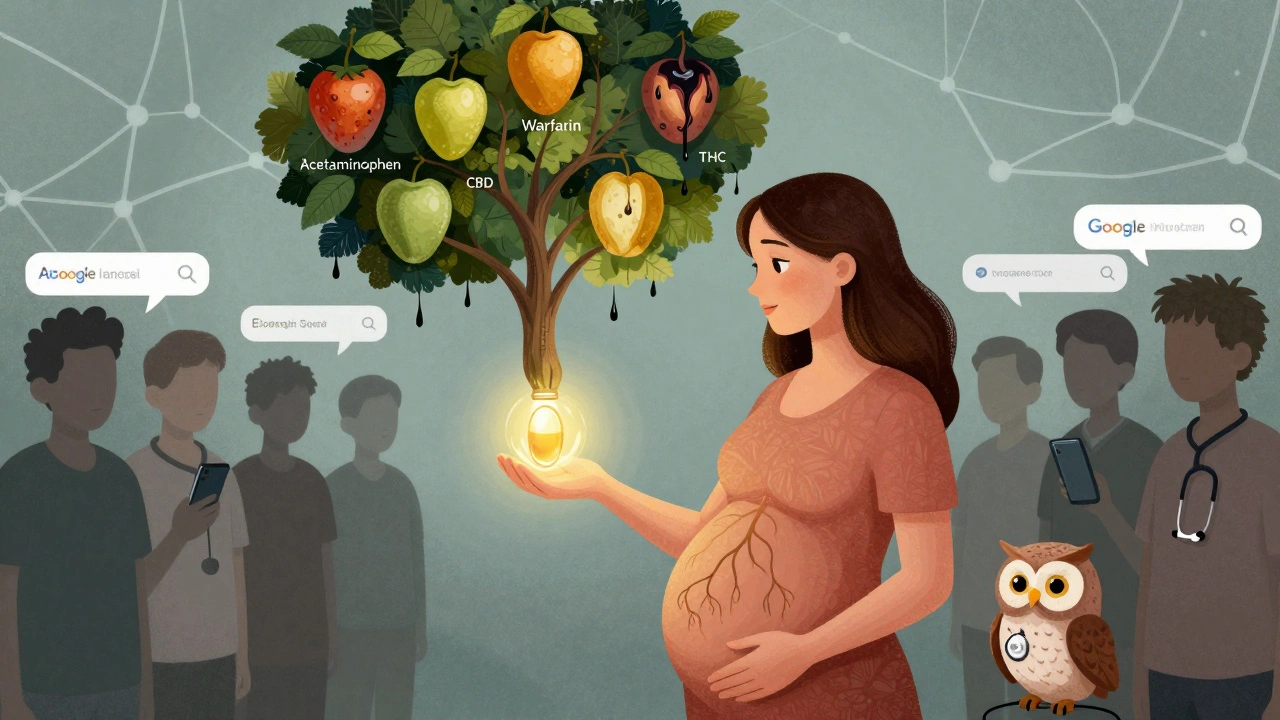
Just because something is “natural” doesn’t mean it’s safe. St. John’s Wort can interfere with antidepressants. Black cohosh may trigger contractions. High-dose vitamin A (over 10,000 IU/day) causes birth defects. Even some prenatal vitamins have too much retinol. Always tell your provider what supplements you’re taking - even if you think they’re harmless.What’s Changing? The Future of Pregnancy Medication Safety
There’s hope. The FDA’s Sentinel Initiative is tracking 10 million patient records to find real-world patterns in medication use during pregnancy. By 2026, we’ll have better data than ever. Researchers are also exploring pharmacogenomics - using your genes to predict how you’ll respond to a drug. That could one day tell you if a certain antidepressant is safe for you, based on your DNA. But until then, the best tool you have is information - and a trusted care team.Final Thought: You’re Not Alone
You’re not the only one stressing over this. Thousands of women every year wonder if that cold medicine, that migraine pill, that anxiety med might have hurt their baby. And many of them feel guilty, even when they did everything right. The goal isn’t perfection. It’s awareness. It’s asking questions. It’s trusting your provider - not Google, not Reddit, not your well-meaning aunt. You’re doing the best you can. And that’s enough.Can I take ibuprofen while pregnant?
Avoid ibuprofen after 20 weeks of pregnancy. It can cause low amniotic fluid and kidney problems in the baby. Before 20 weeks, occasional use under a doctor’s guidance may be okay, but acetaminophen is still the preferred option for pain relief.
Is it safe to take prenatal vitamins with acetaminophen?
Yes. Prenatal vitamins and acetaminophen can be taken together safely. In fact, acetaminophen is often recommended for headaches or fever during pregnancy. Just make sure your prenatal doesn’t contain extra vitamin A (retinol) - aim for less than 5,000 IU per day to avoid toxicity.
What if I took a medication before I knew I was pregnant?
Most exposures don’t cause harm. The embryo is either unaffected or doesn’t survive - a natural process called “all-or-nothing.” If you took a medication in the first two weeks after conception, the risk is very low. Still, tell your provider what you took and when. They can assess the specific drug and timing.
Are antidepressants safe during pregnancy?
Some antidepressants, like sertraline and citalopram, are considered lower risk and are often used during pregnancy. Untreated depression carries its own risks - preterm birth, low birth weight, poor bonding. The decision should be made with your OB and psychiatrist. Never stop abruptly - withdrawal can be dangerous for both you and the baby.
Can I use CBD oil while pregnant?
No. Even if it doesn’t contain THC, CBD crosses the placenta and affects fetal brain development. There’s no proven benefit and clear potential harm. The FDA strongly advises against using CBD during pregnancy or while breastfeeding.
How do I know if a medication is safe?
Don’t rely on websites or social media. Check the FDA’s Pregnancy and Lactation Labeling Rule (PLLR) section on the drug’s official prescribing information. Talk to your OB, pharmacist, or call MotherToBaby at 1-866-626-6847. They’re experts who answer questions for free.
Comments (11)
Francine Phillips
Acetaminophen is fine just don’t overdo it
Makenzie Keely
I’m an OB nurse, and I can’t tell you how many times I’ve seen moms panic because they took ibuprofen once at 18 weeks-then found out the baby was fine. The body’s smarter than we think. Yes, avoid known teratogens, but don’t torture yourself over a single cold pill. You’re not a lab rat-you’re a human being trying to survive pregnancy. The real danger is the guilt you carry from misinformation. Trust your provider, not the internet. You’re doing better than you think.
Joykrishna Banerjee
It’s amusing how Western medicine continues to infantilize pregnant women with this ‘avoid everything’ paradigm. In India, we’ve been using neem, turmeric, and ashwagandha for millennia without randomized controlled trials. The FDA’s obsession with ‘evidence’ is a colonial relic-ignoring traditional pharmacopeias while pathologizing normal physiological states. The real teratogen? The profit-driven pharmaceutical-industrial complex that profits from fear. And don’t get me started on ‘prenatal vitamins’-most are just sugar-coated placebos with synthetic retinol. Real nutrition is food, not pills.
Myson Jones
Hey, I just want to say-this post was really thoughtful. I know it’s easy to get overwhelmed by all the scary info out there, but you laid it out so clearly. I’m a new dad, and my wife was so stressed about her migraine meds last trimester. We called MotherToBaby, and they walked us through everything. No judgment, just facts. It meant the world to us. You’re right-this isn’t about perfection. It’s about being informed and supported. Thank you for that.
parth pandya
hey i just want to say i took ibuprofen for 3 days when i didnt know i was preg and my son is 5 now and he’s super smart and healthy so maybe its not as bad as they say? also i took melatonin for sleep and no issues. just saying
Albert Essel
I appreciate how this post balances risk with realism. Too many sources either terrify or dismiss. The truth is in the middle. I’ve worked with expectant mothers for over a decade, and the ones who thrive aren’t the ones who avoided every substance-they’re the ones who consulted professionals, asked questions, and let go of shame. Your point about acetaminophen is spot-on. The fear of a possible link to neurodevelopmental issues shouldn’t override the very real harm of unmanaged pain or fever. Knowledge is power, but compassion is the medicine we all need.
Charles Moore
Just wanted to say-this thread is exactly why I love this community. No yelling. No shaming. Just facts, care, and a little humanity. I’m a dad whose wife took SSRIs through both pregnancies. We were terrified. But with her OB, her psychiatrist, and MotherToBaby, we made a plan. Our kids are now 3 and 5-happy, healthy, and thriving. The takeaway? You don’t have to be perfect. You just have to be present. And you’re already doing that. Keep going.
Gavin Boyne
Oh wow. So we’ve gone from ‘avoid all drugs’ to ‘avoid all drugs except the ones we say are okay’-all while ignoring the fact that 95% of pregnancy drug data comes from watching women accidentally get pregnant while on meds. That’s not science. That’s a glorified observational study with a $200 million budget. Meanwhile, women in the 1950s were told ‘take thalidomide for nausea’-and now we’re told ‘take acetaminophen for everything.’ Funny how the fear shifts but the structure never changes. Maybe the real teratogen is the medical system’s arrogance. 🤷♂️
Rashi Taliyan
I took isotretinoin for 6 months before I knew I was pregnant. I cried for weeks. I thought I’d ruined everything. I went to a teratologist. They said the timing was before implantation-so it was likely an ‘all-or-nothing’ scenario. My daughter is now 7. She’s a dancer, a reader, and she draws the most beautiful dragons. I still think about it. But I don’t blame myself anymore. You can’t control everything. But you can choose love. And that’s what saved us.
Kara Bysterbusch
As someone who spent years researching maternal pharmacology before conceiving, I want to emphasize this: the absence of evidence is not evidence of absence-but neither is anecdotal fear a valid substitute for clinical insight. The FDA’s PLLR update was a monumental step forward, yet most women still rely on Instagram influencers and Reddit threads. We need better public health literacy, not just better labeling. And yes, cannabis is a teratogen-no matter how many ‘natural wellness’ blogs claim otherwise. THC is a neuroactive compound that alters fetal synaptic pruning. That’s not ‘alternative medicine’-that’s neurobiology. Let’s stop romanticizing risk. Knowledge is power, but only if it’s accurate.
Rashmin Patel
OMG I JUST HAD TO COMMENT BECAUSE THIS IS SO IMPORTANT 🙌 I took melatonin and CBD gummies for sleep during my first trimester because I was SO anxious-then I read your post and panicked for 3 days. Called MotherToBaby and they said ‘the dose was low, timing was early, no red flags’ and I cried with relief 😭 My baby is 8 months old and perfect. I still don’t take anything without checking. But I also don’t let fear rule me anymore. To every mom reading this: you’re not alone. We’ve all been there. You’re not failing. You’re fighting. And you’re doing it with so much love 💕