
Sleep Medications for Seniors: Safe Options, Risks, and What Actually Works
When sleep medications for seniors, prescribed drugs used to treat insomnia in older adults, often carry higher risks than benefits. Also known as hypnotics for the elderly, these drugs include benzodiazepines, Z-drugs, and antihistamines—but many are outdated, dangerous, or overused in people over 65. The body changes with age: metabolism slows, kidneys filter less efficiently, and the brain becomes more sensitive to sedatives. A pill that worked fine at 40 might cause falls, confusion, or memory loss at 70.
benzodiazepines, a class of sedatives once common for sleep, including diazepam and lorazepam. Also known as benzos, they’re linked to increased fall risk, dementia, and dependency—even at low doses. The American Geriatrics Society warns seniors to avoid them entirely. non-benzodiazepine sleep aids, like zolpidem (Ambien) and eszopiclone (Lunesta). Also known as Z-drugs, they’re slightly safer but still raise fall risk and can cause next-day grogginess or sleepwalking. Even melatonin supplements, often seen as harmless, can interact with blood thinners or blood pressure meds. The real issue isn’t just the drugs—it’s that most insomnia in seniors comes from poor sleep habits, chronic pain, nighttime urination, or depression, not a broken sleep system.
sleep hygiene for older adults, a set of daily habits that naturally improve sleep without drugs. Also known as non-pharmacological sleep strategies, this includes consistent bedtimes, avoiding caffeine after noon, getting morning sunlight, and limiting screen time before bed. Studies show these changes work better than pills for most seniors. Medications might help short-term, but they don’t fix the root causes. That’s why the best approach combines smart medication use—only when absolutely needed—with lasting behavioral fixes.
Below, you’ll find real, practical advice from pharmacists and geriatric experts on what sleep meds are still used safely, which ones to avoid, how to spot dangerous side effects, and how to reduce or stop pills without rebound insomnia. You’ll also learn how other medications—like those for blood pressure, asthma, or depression—can quietly wreck your sleep, and what to do about it.
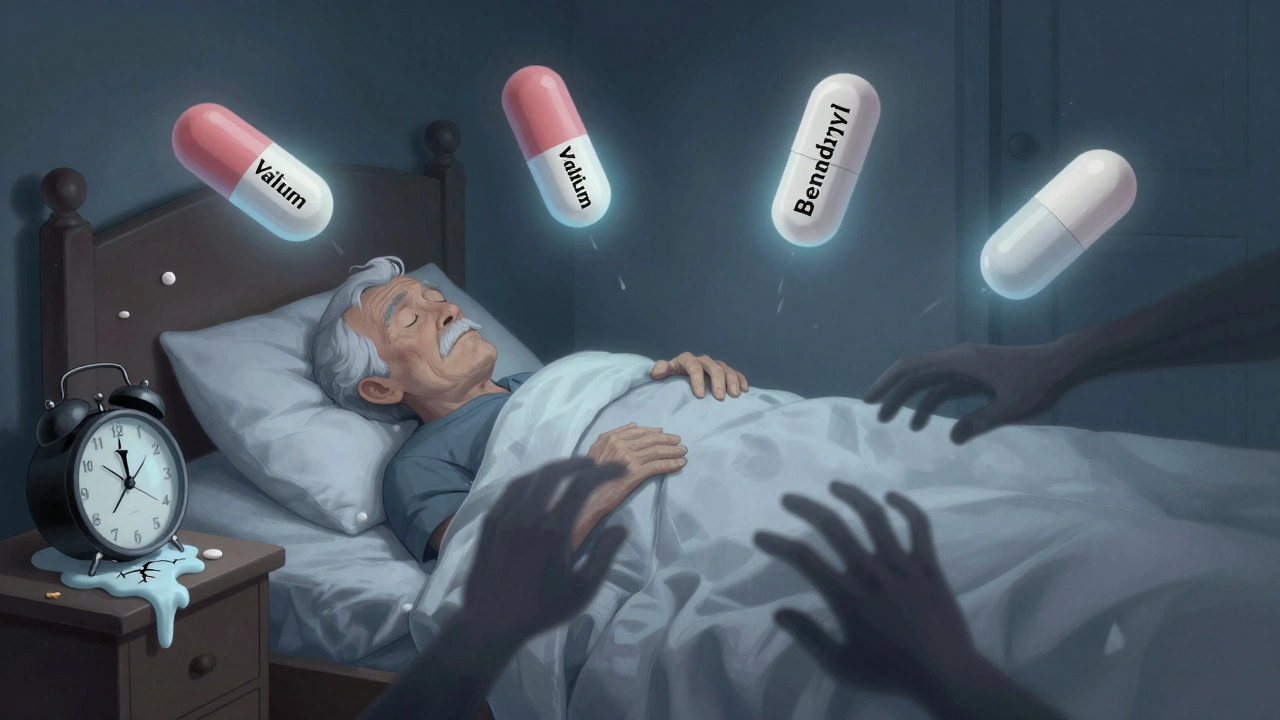
Sleep Medications and Sedatives in Seniors: Safer Sleep Strategies
Most sleep medications are unsafe for seniors, increasing fall and dementia risk. Learn safer alternatives like CBT-I and low-dose doxepin, and how to stop risky prescriptions.
read more