
Medication Adherence: Why Sticking to Your Prescriptions Matters and How to Get It Right
When you take your medicine exactly as your doctor says, that’s medication adherence, the practice of following a prescribed drug schedule to achieve the best health outcome. It’s not about being perfect—it’s about making your treatment work. Without it, even the most powerful drugs fail. And it’s not just you: studies show nearly half of people with long-term conditions don’t take their meds right, leading to worse health, more hospital stays, and higher costs. This isn’t laziness or forgetfulness alone—it’s often because the schedule is confusing, the side effects are rough, or the pills are too expensive to keep buying.
Generic medication safety, how well generic drugs perform compared to brand-name versions plays a big role. Most people switch to generics to save money, and for most, it’s fine. But sometimes, differences in inactive ingredients—like fillers or coatings—can cause unexpected reactions. That’s why you might feel worse after switching, even if your doctor says it’s the same drug. Then there’s drug timing, when you take your medicine in relation to food, other drugs, or daily routines. Taking levothyroxine with coffee or calcium with bisphosphonates can cancel out the effect. Even splitting pills to cut costs, as covered in posts about pill splitting, the practice of dividing tablets to reduce expenses or adjust doses, can be risky if you don’t know which pills are safe to split. Crushing a time-release tablet? That’s not saving money—it’s overdosing.
And let’s not forget medication side effects, unwanted reactions that make people stop taking their drugs. Hiccups from steroids, stomach issues from metformin, drowsiness from clonidine—these aren’t rare. They’re common enough that people quit their meds without telling anyone. But you don’t have to. There are fixes: switching to extended-release forms, changing the time of day you take it, or finding alternatives that don’t wreck your sleep or appetite. The posts below cover real cases: how soy messes with thyroid meds, how coffee blocks absorption, how mail-order pharmacies keep drugs stable, and why some people have bad reactions to generics even when they’re FDA-approved.
You’re not alone in struggling with this. The goal isn’t to be flawless—it’s to find a system that fits your life. Whether it’s using a pill organizer, timing your doses around meals, or talking to your pharmacist about cheaper options, there’s a way forward. The articles here don’t just list problems—they give you the exact steps people used to fix them. You’ll see what worked for someone with gout who couldn’t tolerate NSAIDs, a diabetic who swapped metformin IR for XR, or a transplant patient managing tremors from tacrolimus. No fluff. No theory. Just what actually helps people stick with their meds—and stay healthy doing it.
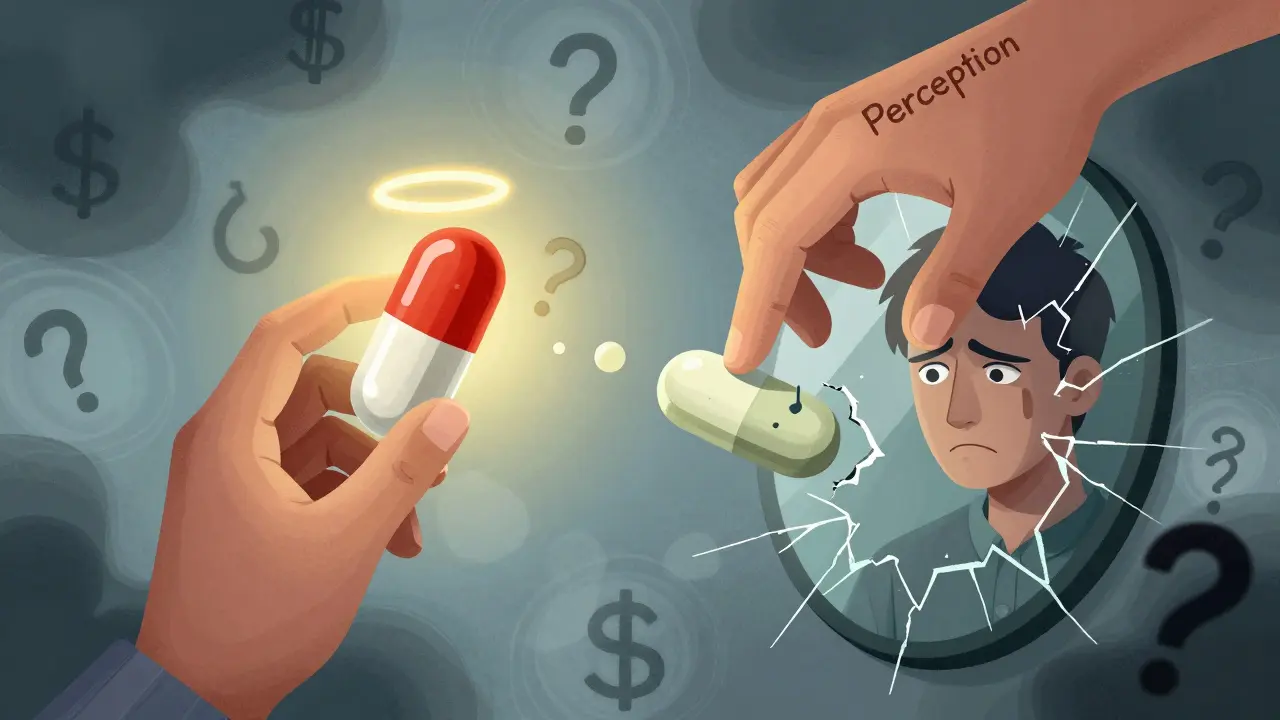
Medication Adherence During Brand-to-Generic Transitions: Best Practices for Patients and Providers
Switching from brand-name to generic medications saves money but often lowers adherence. Learn why patients stop taking generics-and what providers and patients can do to improve compliance with proven best practices.
read more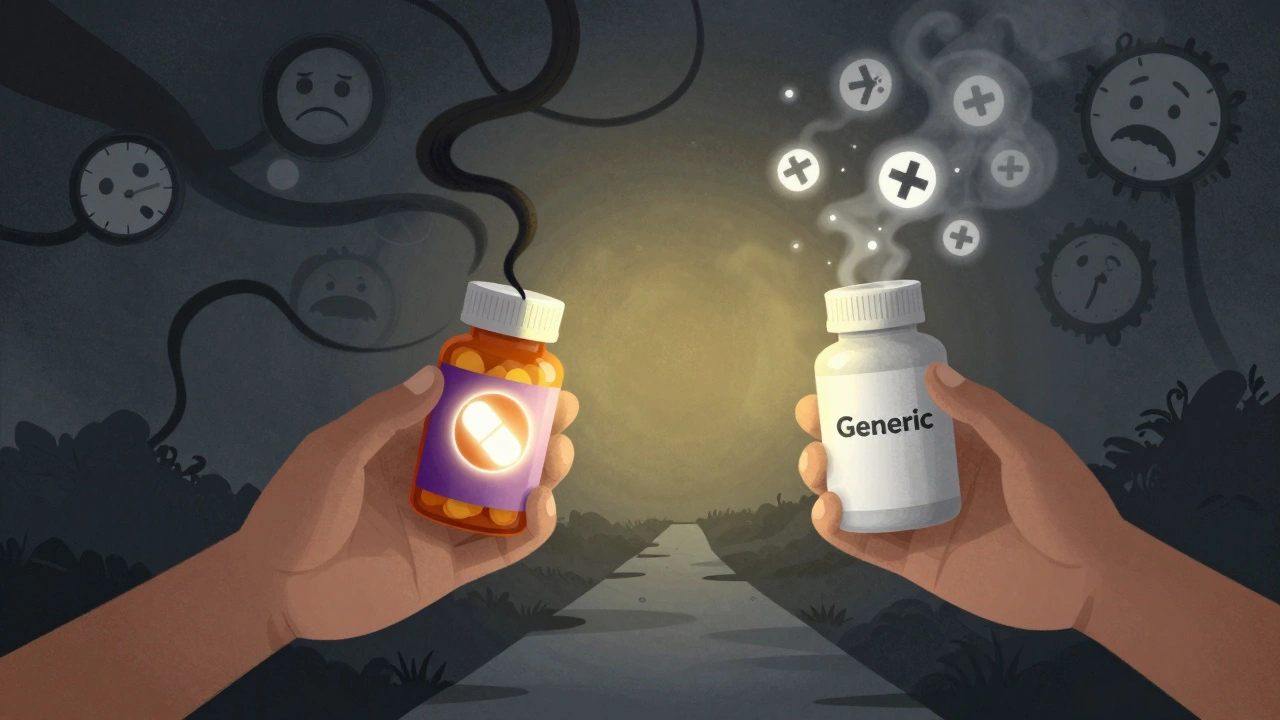
Labeling Effect: How Calling a Drug 'Generic' Changes How Patients Feel and Respond
The labeling effect shows that calling a drug 'generic' can make patients feel it's less effective-even when it's chemically identical to the brand-name version. This psychological bias impacts adherence, side effects, and outcomes.
read more