
Labeling Effect: How Drug Names and Labels Shape Your Health Choices
When you see labeling effect, the psychological impact of how a medication is named, packaged, or described on a patient’s perception and response. Also known as semantic framing, it’s not just about what’s in the pill—it’s about what the label says you’re taking. A drug labeled "strong painkiller" might make you feel more relief than the exact same pill labeled "mild analgesic." This isn’t imagination. Studies show people report fewer side effects when a drug is called by its brand name versus its generic name—even when the chemistry is identical. Your brain doesn’t just process chemicals; it processes meaning.
This matters because medication labeling, the printed information on prescription bottles, including dosage, warnings, and drug names isn’t just a legal requirement—it’s a psychological tool. When your pill bottle says "May cause drowsiness," you’re more likely to feel tired. If it says "Helps you sleep better," you might feel calmer. The same thing happens with drug names, the branded or generic titles assigned to medications that influence patient trust and adherence. A drug called "CortiRelief" sounds more soothing than "methylprednisolone," even if they’re the same steroid. That’s why generic drugs often get blamed for side effects that brand-name versions don’t—even when the active ingredient is identical. The difference? The label.
And it’s not just about how you feel. The labeling effect can change actual outcomes. One study found patients on generic metformin reported more stomach upset than those on the brand version—despite identical ingredients. The only difference? The label. Another showed people taking a placebo labeled "expensive" felt better than those taking the same placebo labeled "cheap." Your expectations, shaped by words on a bottle, can trigger real biological changes. That’s why reading your prescription label isn’t just about safety—it’s about managing your own mind’s response to treatment.
That’s why the posts below dig into real-world examples: how splitting pills changes your perception of risk, why generic drugs sometimes feel "less effective," how coffee or soy on a label can scare you into skipping your thyroid med, and how the way a side effect is worded makes you notice it more. You’ll see how labeling effect shows up in everyday decisions—from choosing between two painkillers to deciding whether to trust a mail-order pharmacy. These aren’t abstract ideas. They’re the quiet forces shaping your daily health choices. What you read on the label might be changing your body before the pill even hits your tongue.
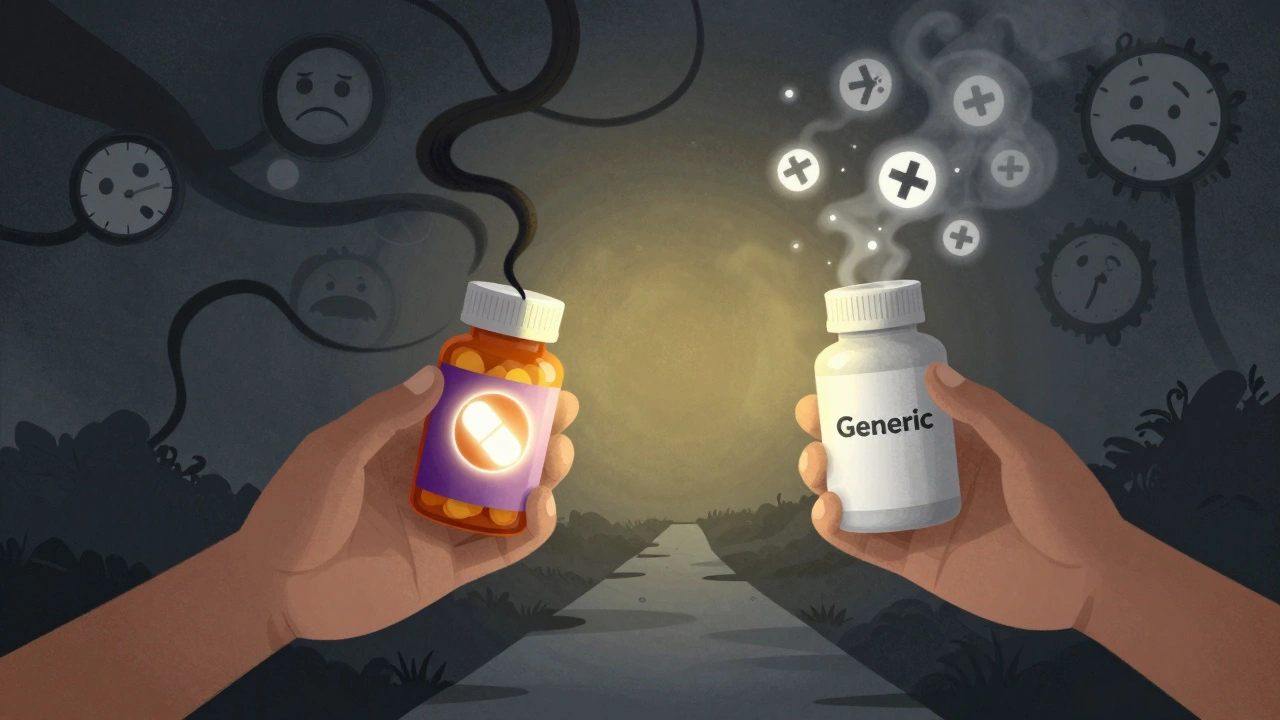
Labeling Effect: How Calling a Drug 'Generic' Changes How Patients Feel and Respond
The labeling effect shows that calling a drug 'generic' can make patients feel it's less effective-even when it's chemically identical to the brand-name version. This psychological bias impacts adherence, side effects, and outcomes.
read more