
Insulin on Plane: Travel Tips, Storage, and Safety for Air Travel
When you're managing insulin, a life-saving hormone used to control blood sugar in people with diabetes. Also known as diabetes medication, it must be kept at the right temperature to work properly. Flying doesn’t mean you have to stop taking it—but you do need to know how to carry it safely. Many travelers worry about X-ray machines, checked luggage, or extreme cabin temperatures. The good news? Insulin is fine through airport scanners, and you don’t need to check it. The insulin on plane rule is simple: keep it with you, in your carry-on.
One of the biggest risks isn’t security—it’s heat. If your insulin sits in a hot car, a checked bag, or near a window on a tarmac, it can break down fast. That’s why insulin storage, the practice of keeping insulin at 36°F to 46°F (2°C to 8°C) when unopened, and below 86°F (30°C) once in use. matters so much. A small insulated bag with a cool pack works better than a regular wallet. You don’t need fancy gear—just something that blocks direct heat. Airlines won’t give you fridge space, but they’ll let you ask a flight attendant to store it in the galley if you’re worried. Just say it’s a medical necessity.
Another common concern is the insulin pump, a device that delivers insulin continuously through a small tube under the skin. during flights. You can wear it through security. TSA agents may ask to inspect it, but they can’t take it off you. Bring a doctor’s note or prescription label—even if you don’t need it, it helps avoid delays. Same goes for syringes or pens. Pack them in their original packaging, and keep them in your carry-on. Never put insulin in checked baggage. Temperatures in the cargo hold can drop below freezing or spike over 100°F, and that’s enough to ruin your supply.
What if your flight is delayed? Or you’re stuck on the tarmac for hours? Always pack extra insulin—enough for at least two extra days. Keep it in different places: one in your purse, one in your backpack. If you use an insulin pump, carry backup pens or syringes. You never know when the pump might fail. And don’t forget to bring glucose tablets or juice boxes. Low blood sugar doesn’t care if you’re 35,000 feet in the air.
International travel adds another layer. Not every country sells the same brands. If you’re flying overseas, bring enough for your whole trip plus a buffer. Some countries require a letter from your doctor in English or the local language. Check the embassy website before you go. Also, know the time zone changes. If you’re on a long flight across multiple zones, adjust your insulin timing carefully. Talk to your doctor before you leave—especially if you’re on multiple daily injections or a complex regimen.
There’s no magic trick to flying with insulin. It’s about planning, not panic. You’ve managed your condition every day—this is just another day, with a different setting. The key is knowing what’s safe, what’s not, and how to speak up when you need help. Airlines are used to this. TSA agents see it all the time. You’re not asking for special treatment—you’re asking for basic medical safety.
Below, you’ll find real-world advice from people who’ve flown with diabetes, tips on handling security, what to pack, and how to avoid the most common mistakes. Whether you’re flying for work, vacation, or family, you don’t have to give up your freedom because of insulin. Just pack smart, stay informed, and keep moving.
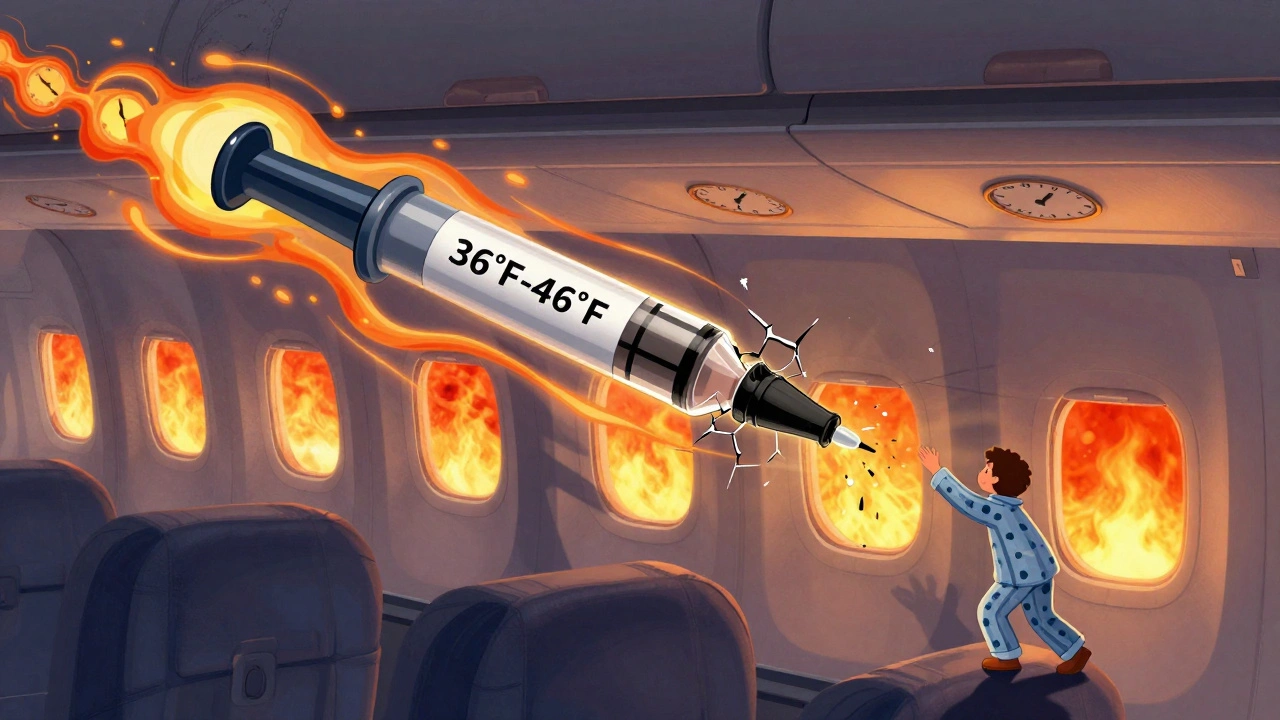
How to Store Insulin and Biologics During Long Flights: A Practical Guide
Learn how to safely store insulin and biologics during long flights to prevent dangerous temperature damage. Essential tips for travelers with diabetes, including cooling wallets, TSA rules, and dosing adjustments for time zones.
read more