
Immunosuppressant Side Effects: What You Need to Know
When your body’s immune system turns against itself—attacking your joints, skin, or organs—immunosuppressant drugs, medications that calm overactive immune responses to prevent damage. Also known as anti-rejection drugs, they’re life-saving for people with autoimmune diseases or after organ transplants. But these drugs don’t just silence the bad actors; they weaken your entire defense system. That’s why immunosuppressant side effects aren’t just possible—they’re expected. And if you’re on one, you need to know what to watch for.
These drugs include azathioprine, a common choice for lupus and Crohn’s disease that can suppress bone marrow, cyclosporine, used in transplants but linked to kidney damage and high blood pressure, and tacrolimus, another transplant staple that can cause tremors and nerve issues. Each has its own pattern of risks. Some make you more likely to catch colds that turn into pneumonia. Others raise your chance of skin cancer or lymphoma. A few can even cause diabetes or high cholesterol over time. And mixing them with other meds—like allopurinol, a gout drug that can dangerously boost azathioprine levels—can be deadly if not monitored.
You can’t avoid all side effects, but you can manage them. Regular blood tests check your white blood cell count and liver function. Skin checks catch early signs of cancer. Avoiding raw eggs, undercooked meat, and sick people reduces infection risk. Even something as simple as skipping live vaccines or delaying dental work can make a difference. Many patients feel guilty for getting sick while on these drugs, but it’s not weakness—it’s biology. The same medication that saves your kidneys or heart also lowers your body’s ability to fight off everyday germs.
The posts below give you real-world guidance on how these drugs interact with other treatments, what symptoms to never ignore, and how to talk to your doctor when things go off track. You’ll find clear advice on managing risks with common drugs like azathioprine, spotting hidden dangers with calcium supplements or antibiotics, and understanding why some side effects show up months after you start treatment. This isn’t theory—it’s what people actually deal with. And you’re not alone in figuring it out.
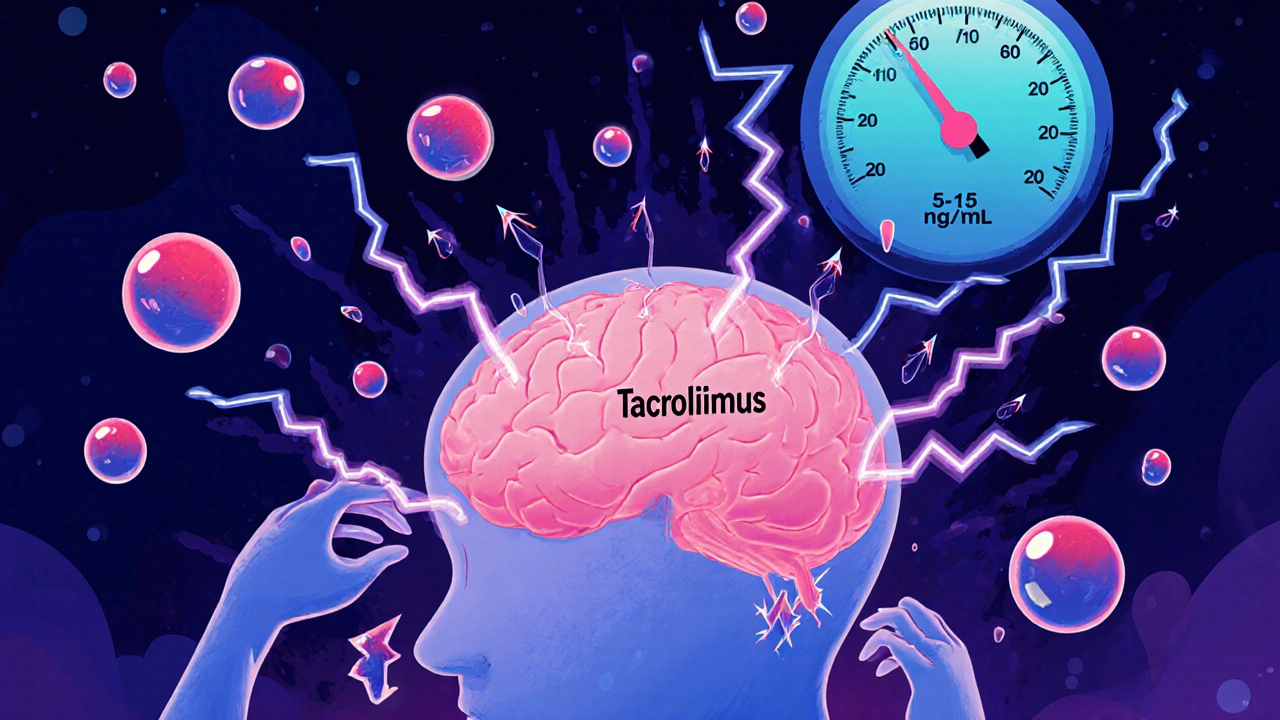
Tacrolimus Neurotoxicity: Understanding Tremor, Headache, and Blood Level Targets
Tacrolimus is vital for transplant patients, but up to 40% experience neurotoxicity like tremors and headaches-even at normal blood levels. Learn why, who’s at risk, and how to manage it.
read more