
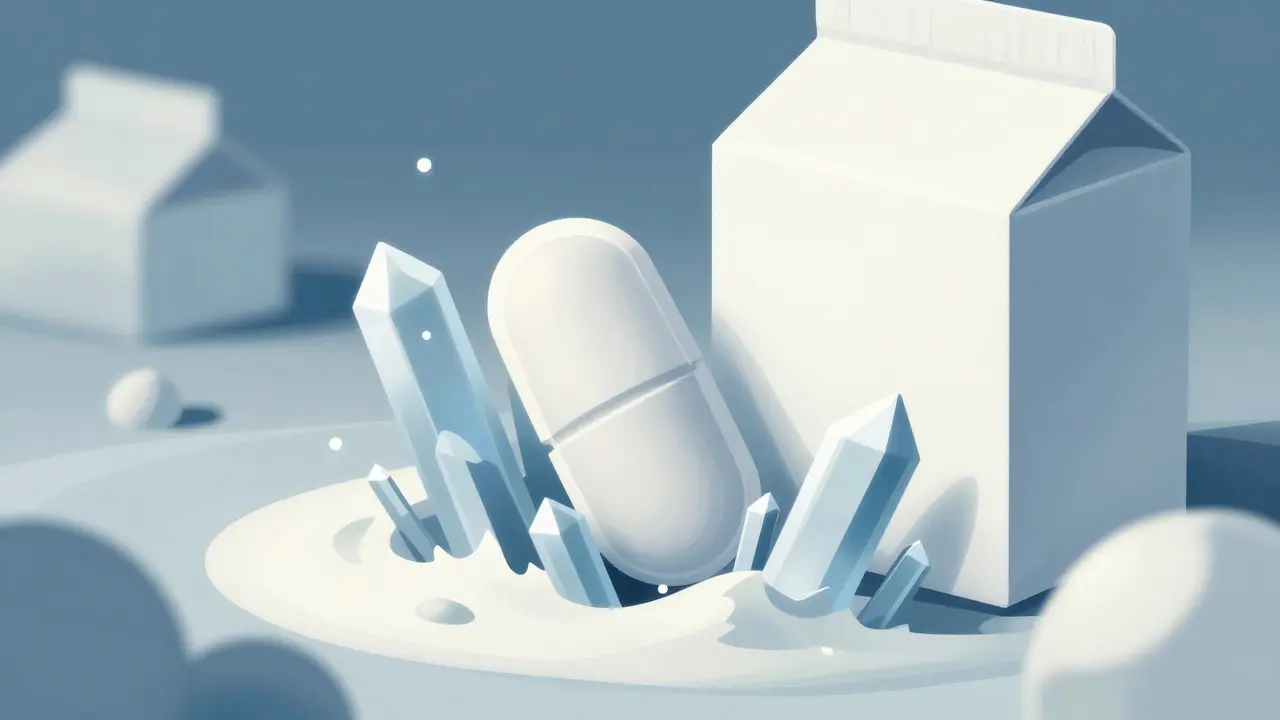
Did you know that improper timing of medications with food causes about food-drug interactions 30% of treatment failures for certain drugs? This isn't just a minor issue-it costs the U.S. healthcare system $300 billion each year. Whether you're taking antibiotics, thyroid medication, or diabetes drugs, what you eat and when you eat it can make your medicine work perfectly or fail completely. Let's break down exactly how food affects your meds and what you need to do to stay safe.
How Food Changes Drug Absorption
When you eat, your stomach empties slower. A high-fat meal (like a burger with fries) can delay gastric emptying by 1.5 to 2 hours compared to a light snack. This matters because most drugs absorb in the small intestine, and food changes how fast they get there. For example, tetracycline antibiotics (used for infections) drop 50-75% in absorption when taken with dairy products. Calcium binds to the antibiotic, making it harder for your body to use. On the flip side, griseofulvin (an antifungal) absorbs 200-300% better with high-fat meals because fat helps dissolve it. The FDA tests all new drugs with a standardized high-fat meal (800-1,000 calories) to see how food affects them. If absorption changes more than 20%, they add specific instructions to the label.
Timing Rules by Drug Type
Not all medications need the same timing. Some require an empty stomach, others need food, and some have specific meal requirements. For thyroid medication like levothyroxine, food cuts absorption by 30-55%. Doctors say take it 30-60 minutes before breakfast with plain water only. If you eat too soon after, you might not get enough medicine in your system. For diabetes drugs like sulfonylureas (e.g., glipizide), taking them before meals prevents low blood sugar. Skipping this step causes 23% of patients to hit dangerous glucose levels below 70 mg/dL. Meanwhile, NSAIDs like ibuprofen should be taken with food to protect your stomach. Studies show stomach pain drops from 42% to 12% when taken with a meal. But for some antibiotics like nitrofurantoin, food actually boosts absorption by 40%-so eat before taking it.
Common Mistakes People Make
Many patients misunderstand "take with food" instructions. A myDr.com.au survey found 45% of people think it means a full meal, but for some meds (like certain HIV drugs), a small snack of 200-300 calories is enough. Another big error is taking tetracycline with milk. Reddit users shared cases where urinary infections returned because they didn't separate dairy and antibiotics by two hours. Even thyroid patients struggle: 62% of Levothyroxine users on Drugs.com say they can't stick to the empty stomach rule. One patient described constant fatigue until they started taking their pill at 6 a.m. before any food or coffee. These mistakes aren't just inconvenient-they can lead to treatment failures or dangerous side effects.
Practical Tips for Getting Timing Right
Setting alarms works wonders. If you need to take levothyroxine before breakfast, set a 6 a.m. alarm to ensure you take it 30 minutes before eating. Pairing meds with regular meals also helps. For drugs like sulfonylureas, take them 30 minutes before lunch or dinner-this builds the habit into your routine. Digital tools like Medisafe or MyTherapy send reminders and track when you eat. Users who activate food-timing features see 27% fewer errors. Pharmacists also help: patients who get specific food-timing advice at pickup have 35% higher adherence after 90 days. For stomach-sensitive drugs like NSAIDs, always take them with a meal. But remember: high-fat meals slow absorption for some drugs (like itraconazole), so check if your medicine needs a light snack instead.
What's New in Food-Medication Science
Recent updates show how much we're learning. The FDA now tests drugs with plant-based meals to reflect modern diets. In 2023, they started including gluten-free and vegan options in food-effect studies. Digital health tools are advancing too-Medtronic's ingestible sensors monitor stomach pH in real time, improving drug absorption consistency by 38% for pH-dependent medications. A Nature Medicine study in March 2024 found that timing meds to your body's natural rhythms (like taking blood pressure drugs at bedtime) can boost effectiveness by 30%. As more people take multiple medications (55% of seniors will by 2030), these details will become even more critical.
Frequently Asked Questions
Can I take antibiotics with milk?
For most antibiotics like amoxicillin or azithromycin, yes. But for tetracycline or doxycycline, dairy products reduce absorption by 50-75%. Take these antibiotics at least two hours before or after consuming milk, cheese, or yogurt.
Why does levothyroxine need an empty stomach?
Food cuts levothyroxine absorption by 30-55%. Even coffee, calcium supplements, or fiber-rich foods can interfere. Take it 30-60 minutes before breakfast with plain water, and wait 4 hours before taking calcium or iron supplements.
What does "take with food" really mean?
It depends on the drug. For NSAIDs like ibuprofen, a full meal protects your stomach. For some HIV drugs, a small snack of 200-300 calories (like a banana) is enough to prevent nausea without affecting absorption. Always check your specific medication instructions.
Can I take blood pressure meds with food?
Most blood pressure medications (like lisinopril or amlodipine) work fine with or without food. But some, like propranolol, absorb better with meals. Always check the label-your pharmacist can clarify if you're unsure.
How do I know if my medication timing is wrong?
Watch for symptoms. If you're on thyroid medication and feel tired or cold despite taking it, absorption may be low. For diabetes drugs, frequent low blood sugar episodes could mean you're taking them too late. Talk to your doctor or pharmacist if you notice changes in how you feel after starting a new med.
Comments (12)
lance black
Tetracycline and dairy products reduce absorption by 50-75%. Take antibiotics at least two hours before or after dairy.
Sam Salameh
For US healthcare, getting drug timing right is crucial. Skipping this step costs us all money. Always check labels!
Cole Streeper
The FDA tests drugs with high-fat meals? That's a setup to keep us dependent on Big Pharma. They want us to eat unhealthy so we need more meds. Wake up, people!
Dina Santorelli
Most people don't even know how to take their meds properly. It's no wonder treatment fails. You're not alone in failing, but you should know better.
Thorben Westerhuys
I've had so many issues with timing! I take my thyroid med at 6 AM, no coffee, no food-so much better! But sometimes I forget, and then I feel awful! Always check the details!
Laissa Peixoto
It's fascinating how our body's rhythms affect drug absorption. Timing meds to circadian rhythms can boost effectiveness by 30%, as per recent studies. It's a simple tweak with big benefits.
Lana Younis
Hey folks, just a heads-up-some meds like itraconazole need a light snack, not a heavy meal. Jargon alert: gastric emptying time is key. Always check with your doc, but for me, a banana works best. 😎
But wait, there's more. Did you know that high-fat meals can delay gastric emptying by 1.5 to 2 hours? That's why some drugs like griseofulvin absorb better with fat. But for antibiotics like tetracycline, dairy is a no-no. Calcium binds to the drug, making it less effective. I learned this the hard way when my UTI came back because I took doxycycline with milk. Now I always wait two hours after dairy.
Also, thyroid meds like levothyroxine need an empty stomach. Food cuts absorption by 30-55%. Even coffee or calcium supplements can interfere. I set an alarm for 6 AM to take mine before breakfast. It's made a huge difference in my energy levels.
For diabetes meds like sulfonylureas, taking them before meals prevents low blood sugar. Skipping this step causes dangerous glucose levels below 70 mg/dL. I've had a few scary episodes because I forgot to time it right.
NSAIDs like ibuprofen should be taken with food to protect your stomach. Studies show stomach pain drops from 42% to 12% when taken with a meal. But for some antibiotics like nitrofurantoin, food actually boosts absorption by 40%, so eat before taking it.
Digital tools like Medisafe or MyTherapy send reminders and track when you eat. Users who activate food-timing features see 27% fewer errors. Pharmacists also help: patients who get specific food-timing advice at pickup have 35% higher adherence after 90 days.
The FDA now tests drugs with plant-based meals to reflect modern diets. In 2023, they started including gluten-free and vegan options in food-effect studies. Digital health tools are advancing too-Medtronic's ingestible sensors monitor stomach pH in real time, improving drug absorption consistency by 38% for pH-dependent medications.
A Nature Medicine study in March 2024 found that timing meds to your body's natural rhythms can boost effectiveness by 30%. As more people take multiple medications (55% of seniors will by 2030), these details will become even more critical.
So yeah, always check the specifics for your meds. It's not just about taking pills; it's about when and how. Your health depends on it!
Samantha Beye
Setting alarms for med timing really helps. I use MyTherapy app and it's been a game-changer. You got this!
Rene Krikhaar
I've seen patients struggle with levothyroxine timing. Taking it before breakfast with water makes a huge difference. Just a small change can improve your health significantly
one hamzah
Lovely how tech is helping! Ingestible sensors track stomach pH and boost absorption by 38% for pH-dependent meds 🌟. Always stay curious and check new research!
Diana Phe
FDA testing with plant-based meals? That's just to push veganism on us. They don't care about real science. Always question what they tell you.
divya shetty
It is imperative that patients adhere strictly to medication timing guidelines. Failure to do so constitutes negligence and endangers public health. Always consult a pharmacist for precise instructions.