
Hemorrhoids: Causes, Treatments, and What Really Works
When you feel that burning, itching, or swelling near your anus, it’s often hemorrhoids, swollen veins in the lower rectum or anus that can become painful or bleed. Also known as piles, they affect nearly half of all adults by age 50—yet most people avoid talking about them.
Hemorrhoids aren’t rare, but they’re often mistaken for something worse. The real triggers? constipation, straining during bowel movements that puts pressure on rectal veins. Sitting for long periods, pregnancy, heavy lifting, and chronic diarrhea can make them worse. You might notice bright red blood on toilet paper or in the bowl—that’s classic. But if you’re also having pain that doesn’t go away after a few days, or if you feel a lump that won’t retract, it could be a prolapsed internal hemorrhoid or even an anal fissure, a small tear in the lining of the anus that causes sharp pain during bowel movements. These two often show up together, and confusing them leads to the wrong treatment.
Most hemorrhoids don’t need surgery. Over-the-counter creams, sitz baths, and fiber supplements like psyllium can shrink them in days. But if you’re still straining because you’re not drinking enough water or eating enough veggies, the problem comes back. And here’s the thing: if you’re using hemorrhoid wipes with alcohol or fragrance, you’re making it worse. The skin around your anus is sensitive. Simple plain water and gentle patting—no rubbing—helps more than any fancy product.
What you won’t find in drugstore ads: some people get relief from cold compresses or even sitting on a cushion that takes pressure off the area. Others find that avoiding spicy food and caffeine for a week makes a noticeable difference. And yes, lifting weights can trigger hemorrhoids if you hold your breath—you need to learn how to breathe through the lift.
This collection of posts doesn’t just list treatments. It shows you what actually works based on real experience and medical evidence. You’ll see how certain medications can worsen constipation, why some home remedies backfire, and when it’s time to see a doctor instead of waiting it out. No fluff. No scare tactics. Just what you need to know to stop the discomfort and keep it from coming back.
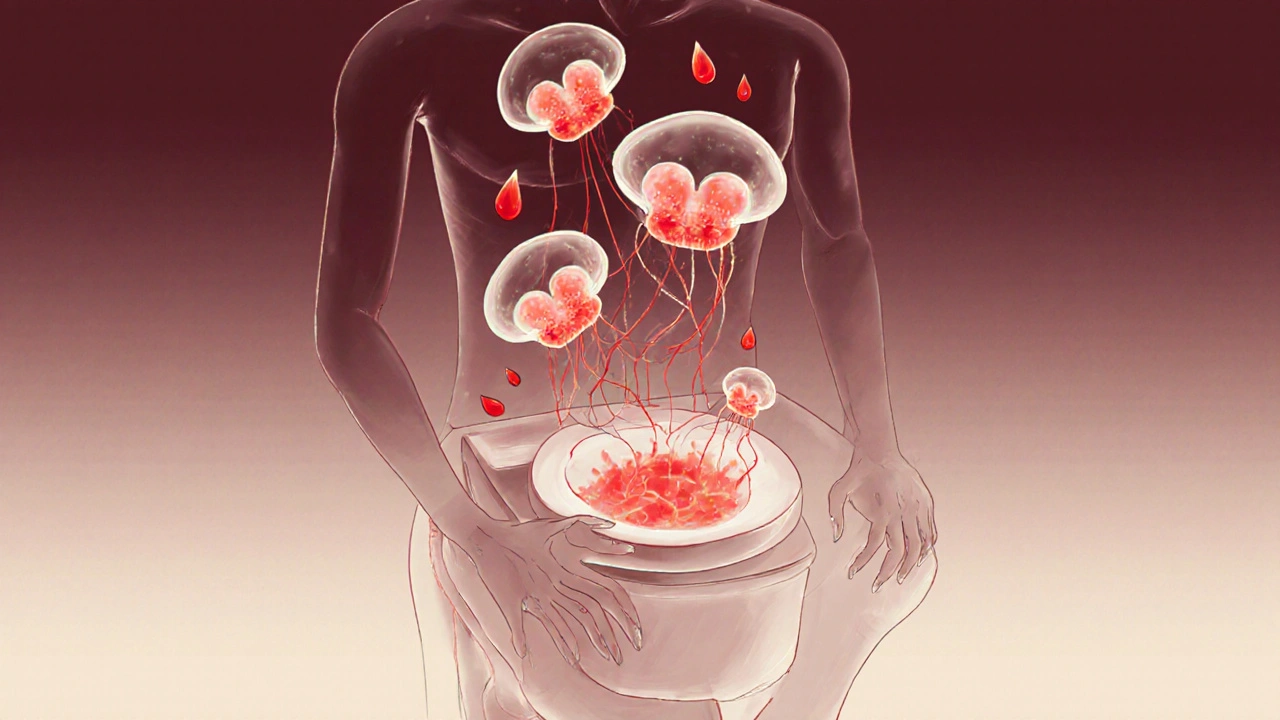
Hemorrhoids: Internal vs. External and What Actually Works for Treatment
Learn the difference between internal and external hemorrhoids, what causes them, and proven treatment options - from home care to surgery. Stop guessing and start managing your symptoms effectively.
read more