
FRAX: Your Personal Risk Score for Bone Breaks
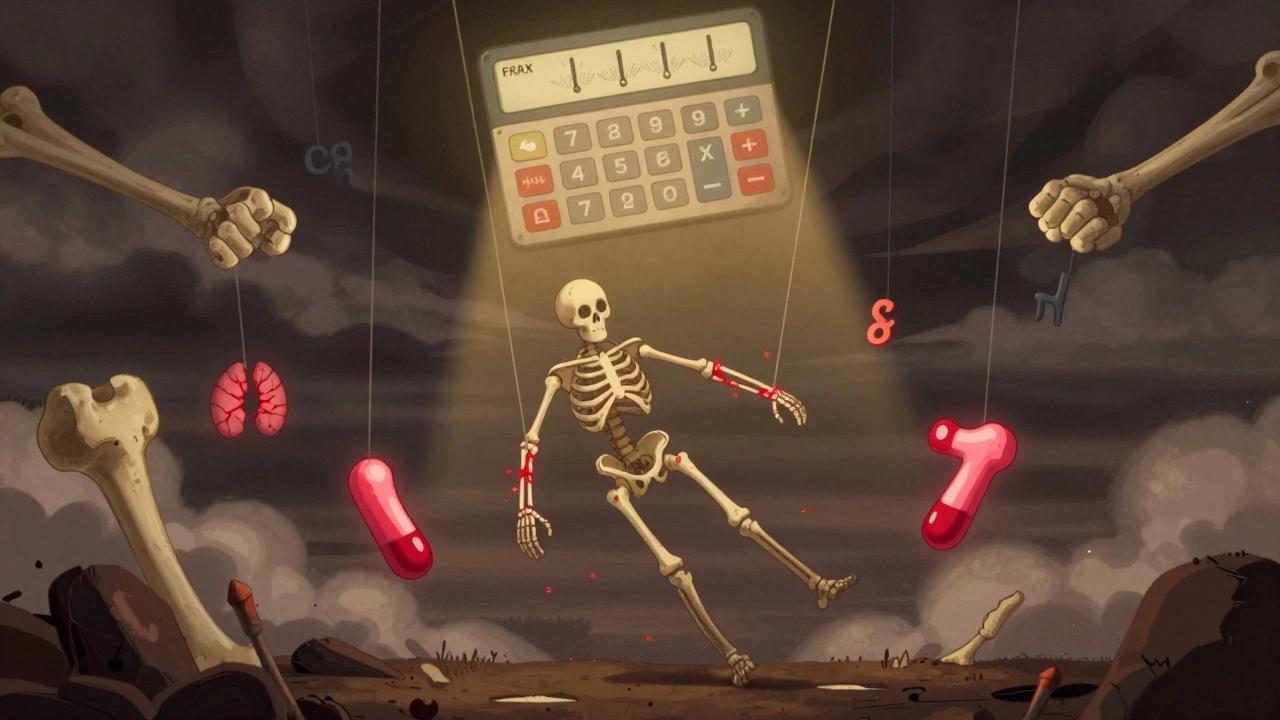
When doctors talk about FRAX, a tool that calculates your 10-year risk of breaking a bone due to osteoporosis. It’s not a scan, not a blood test—it’s a simple online calculator that uses your age, sex, weight, and medical history to tell you how likely you are to suffer a fracture. Think of FRAX as a weather forecast for your bones. It doesn’t tell you if you’ll break a bone tomorrow, but it shows if you’re in a storm zone where one is likely within the next decade.
FRAX doesn’t work alone. It pulls data from things like bone density, a measure of mineral content in your bones, usually from a DEXA scan, and combines it with risk factors you can’t change—like a parent who broke a hip after age 50—or ones you can, like smoking or long-term steroid use. It also considers if you’ve had a previous fracture, which is one of the strongest predictors of the next one. The result? A percentage. If your risk is over 20% for a major fracture or 3% for a hip fracture, treatment is usually recommended. That’s where bisphosphonates, a class of drugs that slow bone loss and reduce fracture risk come in. These are the pills like alendronate or risedronate that many people take for osteoporosis—but they don’t work if you take them wrong. Timing matters. You need to take them on an empty stomach, wait 30 minutes before eating or drinking anything but water, and stay upright. Miss those steps, and the drug won’t absorb. You’re not just wasting money—you’re leaving your bones unprotected.
FRAX also helps explain why two people with the same bone density score might need totally different care. One person might have high density but smokes, drinks heavily, and takes prednisone for arthritis. Their FRAX score could be sky-high. Another might have low density but is active, doesn’t smoke, and has no other risks. Their score might be low. That’s why FRAX changed the game. It moved doctors away from just looking at numbers on a scan and toward seeing the whole person. It’s why you might hear your doctor say, "Your scan looks okay, but your risk is still high."
Below, you’ll find real stories and science-backed advice on how to protect your bones. From how coffee and soy affect thyroid meds that can weaken bone, to why splitting pills or switching generics might change your fracture risk, these posts don’t just talk about osteoporosis—they show you how to live with it safely. Whether you’re on bisphosphonates, worried about side effects, or just trying to avoid a fall, the answers here are practical, clear, and made for people who need to take control—without the fluff.
Osteoporosis in Endocrine Disease: How FRAX and Bisphosphonates Guide Treatment
Osteoporosis in endocrine diseases like diabetes and thyroid disorders requires special attention. FRAX calculates fracture risk accurately, and bisphosphonates are the first-line treatment to prevent breaks. Here’s how to know if you need them.
read more