
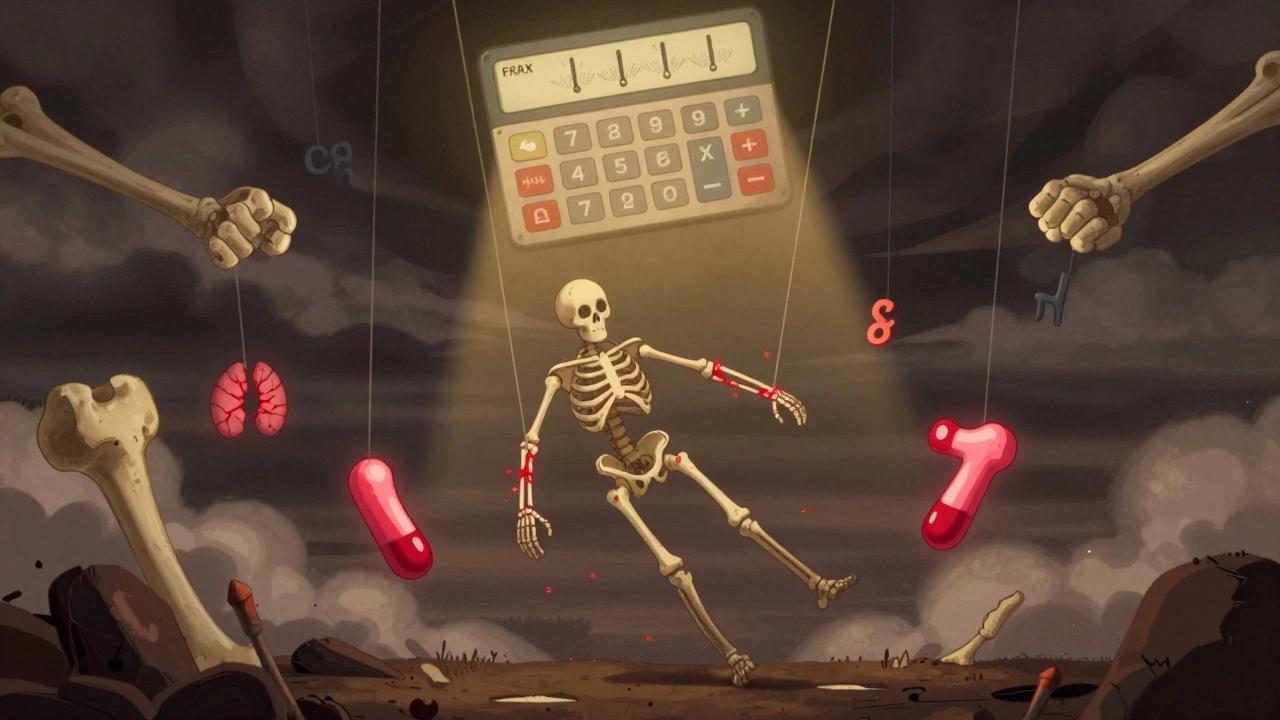
When your hormones are out of balance, your bones pay the price. That’s not just a metaphor-it’s science. Conditions like diabetes, thyroid disease, and low testosterone don’t just affect energy, weight, or mood. They quietly weaken your skeleton, turning everyday slips and falls into broken hips or crushed vertebrae. And here’s the twist: your bone density scan might look fine, but your fracture risk is sky-high. That’s where FRAX and bisphosphonates come in-two tools that are changing how doctors protect bones in people with endocrine disorders.
Why Endocrine Disorders Break Bones
Your bones aren’t just static scaffolding. They’re alive, constantly being rebuilt by cells called osteoblasts and broken down by osteoclasts. Hormones keep this balance. When endocrine diseases mess with that balance, bone loss accelerates fast. Type 1 diabetes is a prime example. People with this condition have a 6 to 7 times higher risk of breaking a bone-even when their bone density scans look normal. Why? High blood sugar damages collagen, reduces bone strength, and impairs healing. The body can’t repair microcracks as efficiently, and nerves may dull sensation, making falls more likely. Untreated hyperthyroidism is another silent bone killer. Too much thyroid hormone speeds up bone turnover. Bone breaks down faster than it rebuilds. Even mild, undiagnosed thyroid overactivity can raise fracture risk by 15-20%. Hypogonadism-low testosterone in men or estrogen in women-causes bone loss at 2-4% per year. That’s faster than natural aging. Premature menopause before age 45? That’s a red flag. And then there’s glucocorticoids. Used for autoimmune diseases or asthma, these steroids are one of the most common causes of drug-induced osteoporosis. They shut down bone-building cells and ramp up bone breakdown. A year on high-dose steroids can cost you 5-10% of your bone mass.FRAX: The Fracture Risk Calculator That Knows More Than Your DEXA Scan
Most people think bone density (BMD) is the final word on osteoporosis. It’s not. A DEXA scan tells you how much mineral is in your bone. FRAX tells you how likely you are to break a bone in the next 10 years. Developed by the University of Sheffield and used in over 120 countries, FRAX is a free, web-based tool that crunches numbers: age, sex, weight, height, smoking, alcohol use, prior fractures, family history of hip fracture, rheumatoid arthritis, and glucocorticoid use. Crucially, it also lets you plug in your endocrine condition. Here’s the key insight: for someone with type 1 diabetes, FRAX without BMD underestimates fracture risk by about 30%. That’s why doctors don’t rely on FRAX alone. They use it to decide whether to order a DEXA scan. If your FRAX score puts you over the 20% major fracture or 3% hip fracture threshold, you get scanned-even if you’re under 65. The tool also works for men. A 55-year-old man with hypogonadism and a history of a wrist fracture? His FRAX score will likely push him into the treatment zone, even if his BMD is only in the osteopenia range. And there’s an upgrade: the Trabecular Bone Score (TBS). It analyzes the texture of your bone on the DEXA scan-something the machine doesn’t normally report. Poor bone structure, common in endocrine diseases, shows up here. TBS helps spot hidden risk when BMD looks okay but your bones are fragile inside.Bisphosphonates: The First-Line Defense
If FRAX says you’re at high risk, bisphosphonates are usually the next step. These drugs-like alendronate (Fosamax), risedronate (Actonel), and zoledronic acid (Reclast)-stick to bone surfaces and tell osteoclasts to calm down. Less breakdown. More stability. They’re not magic. But they work. Clinical trials show they cut vertebral fractures by 40-70% and hip fractures by 40-50%. That’s huge. For someone with endocrine-related osteoporosis, the benefit is just as strong. Treatment duration matters. Oral bisphosphonates are usually taken for 3-5 years. Annual infusions of zoledronic acid last about 3 years. After that, doctors pause treatment and reassess. Why? Long-term use can rarely lead to unusual thigh fractures or jawbone problems. But the risk is tiny compared to the benefit of preventing a hip fracture at age 70. For people with type 1 diabetes, bisphosphonates still work-even though their bones are weak for reasons beyond low density. The drugs reduce fracture risk just as effectively as in people without diabetes.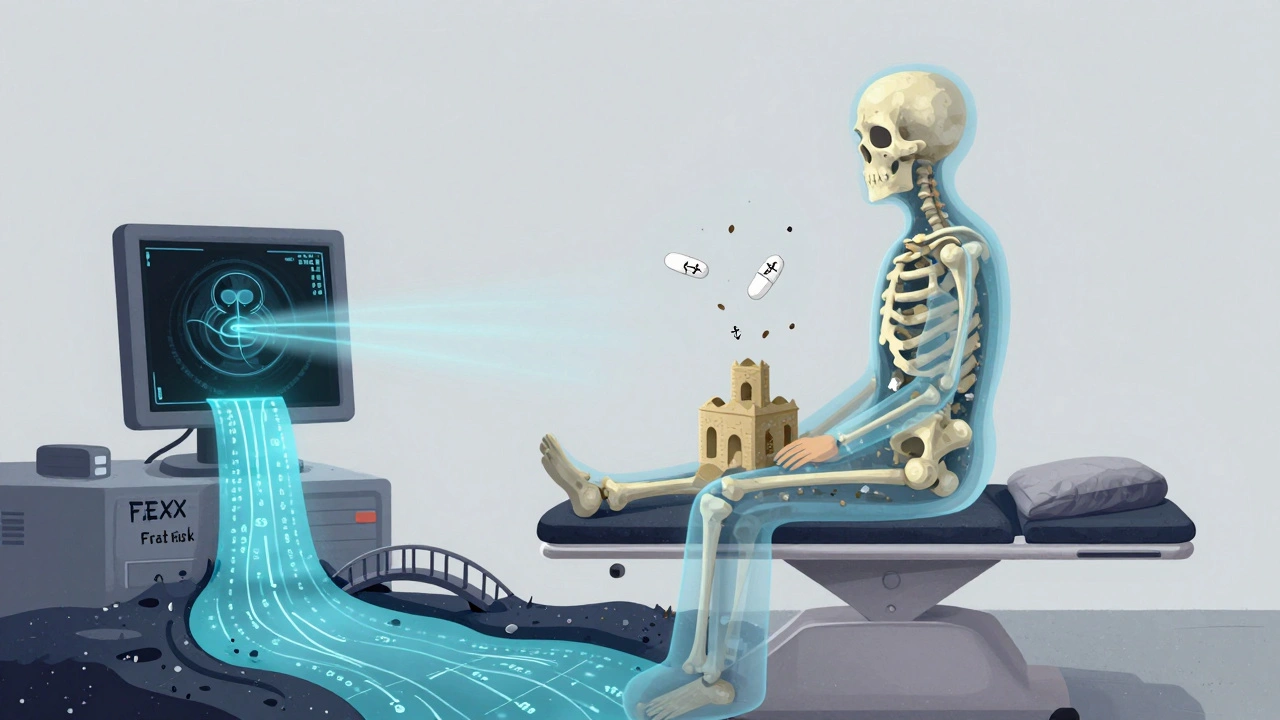
Who Gets Treated? The Numbers That Matter
There’s no one-size-fits-all. Guidelines are clear: treat if you have:- A T-score of -2.5 or lower on DEXA (osteoporosis)
- A history of hip or spine fracture
- Osteopenia (T-score between -1 and -2.5) AND a 10-year FRAX risk of ≥20% for major fracture or ≥3% for hip fracture
What FRAX Can’t Do (And What Doctors Are Doing About It)
FRAX isn’t perfect. It was built on data from the general population. It doesn’t fully capture the unique bone damage caused by some endocrine diseases. Type 1 diabetes is the biggest blind spot. Studies show FRAX misses nearly a third of fracture risk in these patients. That’s why experts are working on fixes. The Bone Health and Osteoporosis Foundation is testing diabetes-specific FRAX adjustments. Early results show they improve accuracy by 25%. That could mean more people with diabetes get timely treatment. Another gap: pediatric endocrine disorders. FRAX isn’t validated for children or young adults. But conditions like congenital hypothyroidism or growth hormone deficiency can cause lifelong bone weakness. Doctors here rely on clinical judgment, serial DEXA scans, and close monitoring. Future tools are coming. AI models are being trained to combine FRAX with blood biomarkers, TBS, and even gait analysis. The goal: predict fracture risk like a weather forecast-personalized, precise, and proactive.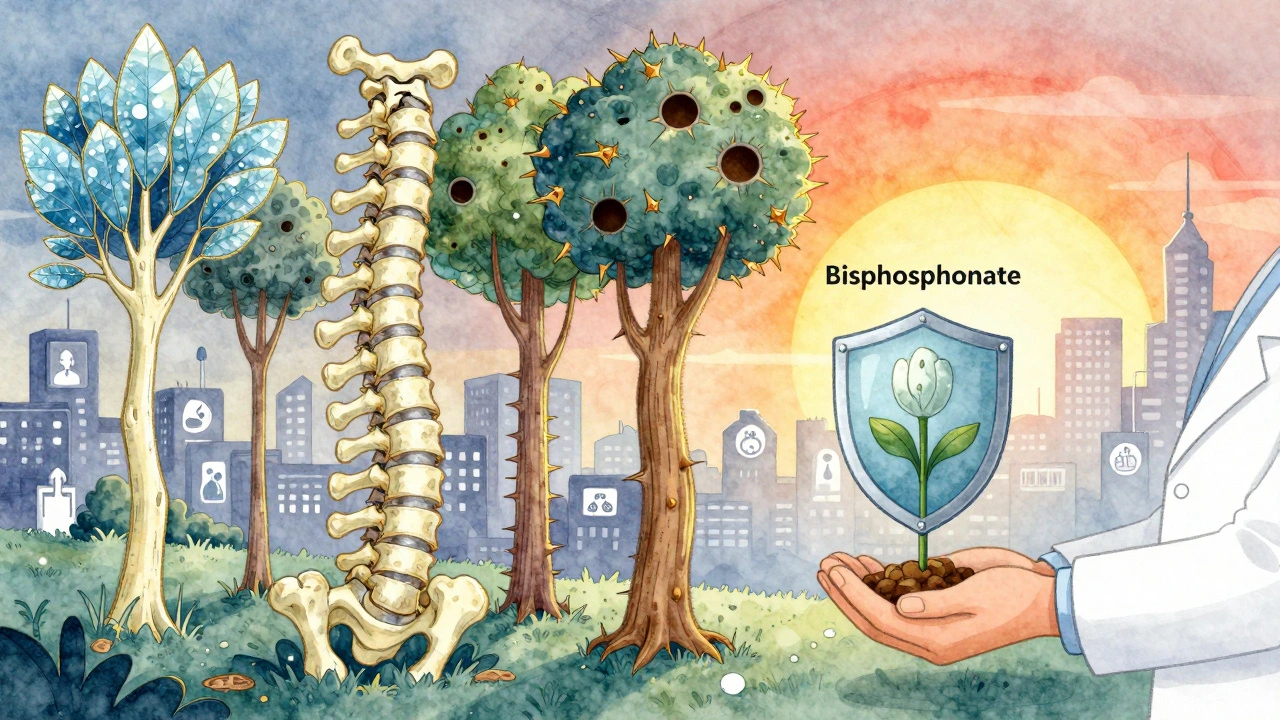
What You Should Do If You Have an Endocrine Disorder
If you have diabetes, thyroid disease, low sex hormones, or take long-term steroids, don’t wait for a fracture to happen. Here’s your action plan:- Ask your doctor for a FRAX assessment. Even if you’re under 65, if you have a known endocrine condition, you’re at higher risk.
- If your FRAX score is above 9.3% for major fracture, get a DEXA scan. That’s the trigger point used by Kaiser Permanente and others.
- Discuss TBS with your provider. It’s not always offered, but it adds valuable info.
- If you’re told you have osteopenia or osteoporosis, ask about bisphosphonates. Don’t assume you’re too young or your condition makes treatment less effective.
- Stop smoking. Cut alcohol to under 3 drinks a day. Get enough calcium (1,200 mg) and vitamin D (800-1,000 IU) daily.
- Do weight-bearing exercise-walking, stair climbing, resistance bands. It helps bone strength even if you’re on medication.
When to See an Endocrinologist
Not every case needs a specialist. But if you have:- Multiple fractures with minimal trauma
- Unexplained bone loss on DEXA
- Complex endocrine conditions (like Cushing’s, Addison’s, or multiple hormone deficiencies)
- Chronic kidney disease along with osteoporosis
The Bottom Line
Osteoporosis in endocrine disease isn’t just about low bone density. It’s about hidden risk, misunderstood scans, and under-treated patients. FRAX cuts through the noise. Bisphosphonates deliver real protection. Together, they turn guesswork into a clear, evidence-based path. You don’t need to wait for a broken hip to act. If you have an endocrine disorder, your bones need attention-not just your blood sugar or your thyroid levels. Ask for FRAX. Ask about bisphosphonates. Your future self will thank you.Can FRAX be used for people with type 1 diabetes?
Yes, but it underestimates fracture risk by about 30% in people with type 1 diabetes. FRAX still helps identify who needs a DEXA scan, but doctors should treat more aggressively in these patients-even if the FRAX score is borderline. New diabetes-adjusted versions of FRAX are in development and could improve accuracy by 25%.
Do bisphosphonates work for people with endocrine disorders?
Yes. Bisphosphonates reduce fracture risk by 40-70% in people with endocrine-related osteoporosis, including those with type 1 diabetes, hypothyroidism, or hypogonadism. The mechanism works regardless of the root cause. Treatment thresholds are the same as for the general population: T-score ≤ -2.5, prior fracture, or FRAX risk ≥20% for major fracture.
Should I get a DEXA scan if I’m under 65 and have an endocrine disease?
Yes, if you have a clinical risk factor like type 1 diabetes, untreated hyperthyroidism, premature menopause, or long-term steroid use. Guidelines recommend screening for postmenopausal women and men over 50 with risk factors. FRAX helps determine if you’re in that high-risk group-even if you’re younger than 65.
What’s the difference between FRAX with and without BMD?
FRAX without BMD uses only clinical risk factors (age, smoking, steroid use, etc.) and gives a general estimate. FRAX with BMD adds your bone density measurement from a DEXA scan, making the prediction much more accurate. For endocrine disease patients, using BMD is strongly recommended because their bone quality may be poor even if density looks normal.
How long should I take bisphosphonates?
Most people take oral bisphosphonates for 3-5 years or get annual infusions for 3 years. After that, doctors pause treatment and reassess fracture risk using FRAX and BMD. Long-term use increases rare risks like atypical femur fractures, so breaks are taken to let bones recover. Not everyone needs lifelong treatment.
Can I rely on calcium and vitamin D alone to treat osteoporosis from endocrine disease?
No. While calcium and vitamin D are essential for bone health, they’re not enough to treat osteoporosis caused by endocrine disorders. If your FRAX score is high or your DEXA shows osteoporosis, you need medication like bisphosphonates. Supplements support treatment but don’t replace it.
Comments (11)
vinoth kumar
Finally, someone laid this out clearly. I’ve been telling my endo for years that my T-score doesn’t tell the whole story-my type 1 diabetes was making my bones brittle as dry toast. FRAX was the missing piece. Took me three years to get a scan because my PCP said I was ‘too young.’ Don’t let that happen to you.
shalini vaishnav
Western medicine continues to overcomplicate simple biology. Bone density scans are enough. FRAX is just a fancy algorithm created by academics who’ve never held a bone in their hands. In India, we treat based on symptoms and history-not spreadsheets.
Kara Bysterbusch
As someone who’s spent a decade managing autoimmune thyroid disease and osteopenia, I can say with absolute certainty: FRAX saved my spine. I was told at 52 that my DEXA was ‘just osteopenia’-no need for meds. But my FRAX score was 24%. My endocrinologist ordered a TBS scan the same day. Turned out my trabecular structure was collapsing like a house of cards. Bisphosphonates didn’t just prevent fractures-they gave me back my mobility. Don’t underestimate the power of data over assumptions.
bobby chandra
Let’s be real-this isn’t just about bones. It’s about reclaiming your autonomy. If you’ve got endocrine chaos, your skeleton is the silent casualty. Bisphosphonates aren’t a cure, but they’re your armor. And FRAX? It’s the radar that spots the storm before the lightning strikes. Stop waiting for a fracture to wake you up. Your bones don’t scream-they just snap.
Archie singh
Of course bisphosphonates work. They work on bone cells, not your thyroid. Why are we pretending this is rocket science? You have a hormone imbalance? Fix the hormone. Stop treating the symptom with a drug that’s been around since the 90s. This whole FRAX thing is just a billing code wrapped in jargon.
Kidar Saleh
I’ve seen this play out in the NHS-patients with long-term steroid use, undiagnosed hypogonadism, or post-menopausal diabetes slipping through the cracks because no one connects the dots. FRAX isn’t perfect, but it’s the first tool that forces us to look beyond the scan. And yes, in the UK, we’re already seeing fewer hip fractures in high-risk groups since we started using it routinely. This isn’t theory-it’s practice saving lives.
Chloe Madison
Just had my first DEXA after my endocrinologist pushed me to get it-turns out I’m osteopenic at 48 because of PCOS and insulin resistance. FRAX score was 21%. I started alendronate last week. Yes, I’m nervous about side effects. But I’d rather take a pill than end up in a wheelchair. Also, walking 8K steps a day and taking vitamin D3 isn’t optional anymore-it’s my new religion.
Gavin Boyne
How many times have we been told that science is objective? Then we get FRAX-a tool built on Western demographics, ignoring ethnic bone density variations, dietary differences, even genetic bone resilience in South Asian populations. And yet, we treat it like gospel. The real tragedy isn’t osteoporosis-it’s that we outsource our health to algorithms while ignoring the human body’s complexity.
Rashi Taliyan
I’m from a small town in Uttar Pradesh. My mother broke her hip at 62 after a fall from standing height. No scans. No FRAX. Just pain, surgery, and years of bed rest. If we had this knowledge here-accessible, clear, free-we could prevent so much suffering. Thank you for writing this. I’m sharing it with every auntie and uncle I know.
sagar bhute
Everyone’s acting like bisphosphonates are the answer. What about the jaw necrosis? The atypical femur fractures? The fact that these drugs bind to bone for DECADES? You’re trading one problem for a slow-motion disaster. And FRAX? It’s a profit machine for pharma. You think they’d invest in better tools if they weren’t making billions off this?
Cindy Lopez
So… just take a pill and walk away?