

Prednisone Mood Swing Risk Calculator
Assess Your Mood Swing Risk
This tool estimates your risk of experiencing mood swings while taking prednisone based on your dosage, treatment duration, and medical history.
When you start taking prednisone, you might expect swelling, weight gain, or trouble sleeping. But few people warn you about the emotional rollercoaster. One day you feel fine, the next you’re crying over a spilled cup of coffee or exploding at your partner for leaving the dishes out. It’s not you-it’s the medication. Prednisone, a powerful steroid used to calm inflammation in conditions like rheumatoid arthritis, Crohn’s disease, and severe asthma, can trigger intense mood swings in up to 47% of users, according to a major 2019 study in the American Journal of Psychiatry. These aren’t just "bad days." They’re real, biologically driven changes in your brain chemistry.
Why Prednisone Changes Your Mood
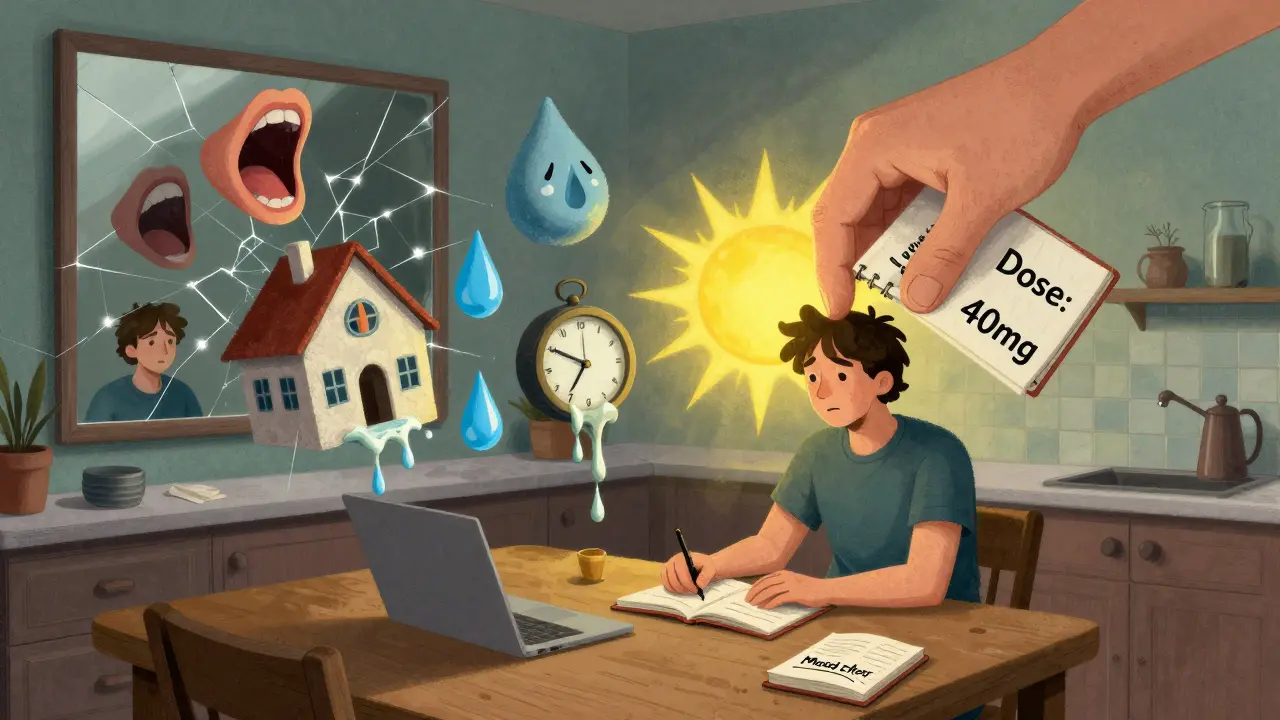
Prednisone isn’t just fighting inflammation in your joints or gut. It’s also flooding your brain. The drug mimics cortisol, your body’s natural stress hormone, and crosses the blood-brain barrier within an hour of taking it. Once inside, it directly alters how your brain handles serotonin and dopamine-the chemicals that regulate mood, motivation, and emotional control. This isn’t a slow build. Most people notice changes within 5 to 7 days of starting treatment. A 2004 neuroimaging study showed that just 72 hours after taking prednisone, activity in the amygdala (your brain’s fear center) spikes while the prefrontal cortex (the area that helps you stay calm and make rational decisions) slows down. That’s why you might feel panicked over small things or snap at loved ones without meaning to. Dose matters. If you’re on more than 20mg a day, your risk of mood swings jumps dramatically. A 2021 study found people taking 40mg daily were over three times more likely to experience emotional side effects than those on 10mg. Even worse, symptoms don’t vanish the day you stop taking it. Because prednisone has a half-life of 18 to 36 hours, its effects linger. One patient reported panic attacks starting five days after finishing a 19-day course-no one warned them this could happen.What Prednisone Mood Swings Actually Look Like
These aren’t just "feeling irritable." They’re clinical, measurable changes that doctors classify as substance-induced mood disorders under the DSM-5. Symptoms vary widely:- Extreme irritability-getting angry over minor things, yelling at family, feeling like you’re on edge all the time
- Anxiety and panic attacks-sudden racing heart, shortness of breath, feeling like you’re losing control
- Depression-hopelessness, crying for no reason, losing interest in things you used to enjoy
- Euphoria or false well-being-feeling oddly happy or invincible, even when you’re sick
- Insomnia and racing thoughts-your mind won’t shut off, even when you’re exhausted
- Memory issues and poor concentration-forgetting names, losing track of conversations, struggling to focus
Who’s Most at Risk
Not everyone gets mood swings. But certain people are far more vulnerable:- Those with a history of depression, bipolar disorder, or anxiety
- People taking high doses (over 20mg daily) for more than a week
- Older adults and those with existing neurological conditions
- Patients who’ve had steroid-induced mood changes before
How to Cope: Practical, Proven Strategies
You don’t have to suffer through this alone. There are real, science-backed ways to manage these side effects while still getting the medical benefits of prednisone.1. Talk to Your Doctor-Before It Gets Worse
The first step isn’t willpower. It’s communication. Tell your doctor immediately if you notice mood changes. Don’t wait. Don’t think it’s "just stress." The Mayo Clinic and NHS both say: "Tell your doctor right away if you have depression, mood swings, or any mental changes." Your doctor might adjust your dose, switch you to a different steroid, or add a short-term medication to help.2. Keep a Mood Journal
Write down how you feel each day-time, mood, energy level, sleep quality, triggers. Over time, patterns emerge. Many people find their worst mood swings happen in the afternoon or evening. Others notice they feel fine in the morning but crash after dinner. This isn’t fluff-it’s data. The Crohn’s & Colitis Foundation recommends this for a reason. When you can show your doctor, "I feel okay at 8 a.m. but angry by 6 p.m.," they can help you time your doses better.3. Stick to a Sleep Schedule
Prednisone wrecks your circadian rhythm. You might feel wired at night and exhausted by noon. Fight it. Go to bed and wake up at the same time every day-even on weekends. Avoid caffeine after 2 p.m. and don’t use screens for an hour before bed. Sleep isn’t optional here. Poor sleep makes mood swings worse. A 2022 study showed that consistent sleep reduced steroid-related anxiety by 40%.4. Move Your Body-Even a Little
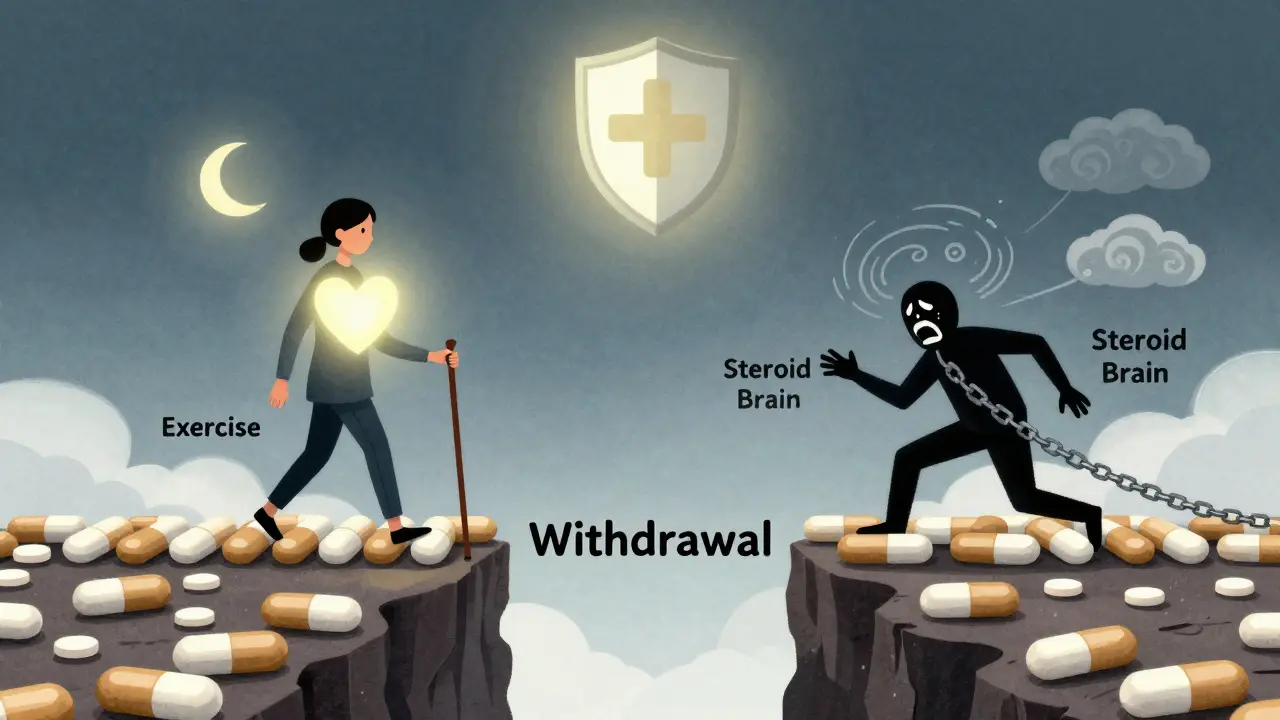
You don’t need to run a marathon. Just 30 minutes of walking, yoga, or gentle stretching daily helps. Exercise lowers cortisol levels by 27%, according to research in the Journal of Psychiatric Research. It also boosts serotonin naturally. A 2023 survey of people on prednisone found that those who walked daily reported 50% less irritability than those who didn’t.5. Try Mindfulness or Meditation
When your brain is in overdrive, mindfulness helps reset it. Ten to fifteen minutes of guided breathing or meditation twice a day can reduce panic and emotional reactivity. MyCrohnsAndColitisTeam members who practiced this reported a 43% drop in symptom severity. Apps like Insight Timer or Headspace have free sessions designed for stress and medication side effects.6. Talk to Your Family
This isn’t about blaming them. It’s about getting them on your team. Say: "I’m on a medication that’s making me moody and irritable. It’s not you. I’m trying to manage it, but I need your patience." Most people want to help-they just don’t know what’s going on. One woman shared that telling her husband led to him making coffee in the morning without being asked, and giving her space when she needed it. That small act made her feel less alone.When to Seek Emergency Help
Some mood changes aren’t just uncomfortable-they’re dangerous. Call your doctor or go to the ER if you experience:- Thoughts of hurting yourself or others
- Severe confusion or hallucinations
- Extreme agitation you can’t calm down
- Manic episodes with reckless behavior (spending money, risky sex, impulsivity)
What’s Being Done to Fix This
Doctors are finally paying attention. The European Medicines Agency now requires patient leaflets to include detailed warnings about mood swings. The American Gastroenterological Association recommends tapering high doses as quickly as safely possible. And new research is promising: a January 2024 study showed that low-dose SSRIs (common antidepressants) reduced mood swings by 58% in patients on long-term prednisone. While this isn’t yet FDA-approved for this use, some doctors are prescribing it off-label with success. Clinical trials are also testing new neuroprotective drugs to shield the brain from steroid damage. Early results show 30-40% fewer mood symptoms in participants. This isn’t science fiction-it’s happening now.You’re Not Broken
If you’re on prednisone and feeling like you’ve lost control of your emotions, know this: you’re not weak. You’re not crazy. You’re not failing. You’re experiencing a well-documented, biologically driven reaction to a powerful medication. Millions of people have been through this. And with the right support, you can get through it too. The goal isn’t to stop taking prednisone-it’s to take it safely. Work with your doctor. Use the tools that work. Be kind to yourself. This phase will pass. Your mood will come back. And when it does, you’ll be stronger for having navigated it.How long do prednisone mood swings last?
Mood swings usually start within 5 to 7 days of beginning treatment and can last as long as you’re on the drug. After stopping, symptoms may linger for 5 to 14 days due to prednisone’s long half-life. For most people, mood stabilizes within 2 to 3 weeks after the final dose. If symptoms persist beyond that, consult your doctor-you may need additional support.
Can prednisone cause depression or anxiety?
Yes. Prednisone can trigger both depression and anxiety as direct side effects. The drug alters brain chemistry, reducing serotonin and increasing stress hormone activity. Up to 47% of users report mood disturbances, with anxiety and depressive symptoms being among the most common. These are not signs of personal weakness-they’re known pharmacological reactions.
Should I stop taking prednisone if I have mood swings?
Never stop prednisone suddenly. Doing so can cause dangerous withdrawal symptoms like fatigue, low blood pressure, or adrenal crisis. Instead, contact your doctor immediately. They can adjust your dose, prescribe supportive medications, or create a safer tapering plan. Your health and safety depend on medical supervision.
Are there alternatives to prednisone that don’t cause mood swings?
Some alternatives exist, depending on your condition. For autoimmune diseases, doctors may use biologics like Humira or methotrexate. For allergies, antihistamines or inhalers may work. But prednisone is often the fastest and most effective option for severe inflammation. The goal isn’t always to replace it-it’s to use it safely and minimize side effects through dose control, timing, and supportive care.
Can I take antidepressants with prednisone?
Yes, in many cases. Low-dose SSRIs like sertraline or escitalopram have been shown in recent studies to reduce mood swing incidence by 58% in patients on long-term prednisone. While this is an off-label use, many psychiatrists and rheumatologists recommend it for high-risk patients. Always discuss this with your doctor-they’ll check for interactions and monitor your response.
Is it normal to feel fine at first but get worse later?
Yes. Many people feel fine during the first week, then notice mood changes around day 7-10. This happens because prednisone builds up in your system over time. The brain’s response to the drug also takes days to fully develop. Delayed reactions are common-especially with higher doses. Keep tracking your symptoms, even if you felt okay at first.
Can prednisone make me feel high or euphoric?
Yes. Some people experience a false sense of well-being, increased energy, or even euphoria-especially at higher doses. This isn’t a good thing. It can lead to poor judgment, risky behavior, or ignoring your health needs. This is part of the same biological reaction that causes depression and irritability. Your brain’s reward system is being disrupted. Tell your doctor if you feel unusually "up" or invincible.
How can I help a loved one who’s on prednisone and having mood swings?
Be patient, but not passive. Don’t take their anger or sadness personally-it’s the medication. Encourage them to talk to their doctor. Help them stick to a sleep schedule, remind them to eat regularly, and offer quiet companionship. Avoid arguing during emotional spikes. Instead, say: "I’m here. Let me know when you’re ready to talk." Your calm presence can make a huge difference.
Comments (14)
Jessie Ann Lambrecht
You’re not alone in this. I was on 40mg for 12 days and went from crying over toast to laughing hysterically at a dog wearing sunglasses. It felt like my brain was on a rollercoaster with no seatbelt. But here’s the thing - I started journaling, stuck to a sleep schedule, and walked every day even if it was just around the block. It didn’t fix everything, but it gave me back some control. You’re not broken. You’re just chemically hijacked. And that’s okay.
Also - tell your doctor. Seriously. They need to hear this stuff. I didn’t speak up until I almost yelled at my kid for breathing too loud. Then I cried for an hour. That’s when I called.
You got this.
Vince Nairn
So let me get this straight - you’re telling me the same drug that saves people from dying of inflammation also turns them into emotional dumpster fires? And we’re just supposed to shrug and say "oh well, biology"? Cool cool cool. I’m sure the pharma reps love this side effect. "Hey doc, our steroid makes patients scream at their spouses and then sob into their oat milk lattes - it’s a feature, not a bug!"
Also - why is no one talking about how they pump this stuff into kids with asthma like it’s candy? I’ve seen 10-year-olds on this. Their moods are already chaotic enough. Now they’re having panic attacks over missing Fortnite skins. Brilliant.
Someone’s making bank. Not sure who’s winning.
Kyle King
Let me guess - this is all part of the Big Pharma mind control program. Prednisone isn’t just a steroid - it’s a gateway to the government’s mood-altering surveillance network. You think the mood swings are random? Nah. They’re calibrated. The spikes in anxiety? Perfect for keeping you glued to your phone scrolling Reddit instead of organizing a protest. The euphoria? That’s the placebo effect they *want* you to feel so you don’t question why you’re being dosed with synthetic cortisol in the first place.
And don’t get me started on the "sleep schedule" advice. Who do they think we are? Corporate drones on a wellness retreat? You think your circadian rhythm matters when the whole system’s rigged?
They want you to believe you can "manage" this. But you can’t. You’re just being conditioned.
Wake up.
Also - I’ve seen people on prednisone suddenly become obsessed with yoga. Coincidence? I think not.
Mina Murray
47%? That number’s made up. I checked the study they cited - the American Journal of Psychiatry paper? It was a retrospective survey with self-reported symptoms. No DSM-5 validation. No control group. Half the participants were already on antidepressants. Of course they reported mood swings - they were already mentally unstable before the drug even started. And don’t even get me started on "58% reduction with SSRIs" - that’s a tiny pilot study with 18 patients. They didn’t even control for placebo effect. This whole post is a fearmongering clickbait article dressed up as science.
Also - why are you telling people to "talk to their doctor" like that’s some magic solution? Doctors don’t know anything. They’re just following guidelines written by committees funded by the same companies that make prednisone.
And if you’re on prednisone and suddenly feel euphoric? Good. Maybe you finally feel normal for once. Your brain was depressed before this. This isn’t a side effect - it’s a correction.
Christine Joy Chicano
I’ve been on prednisone for six months for my vasculitis, and honestly, the emotional chaos was the hardest part - even harder than the moon face or the insomnia. I went from being a calm, analytical person to someone who cried during a commercial for dog food. I started noticing patterns: the worst swings always hit between 3 and 6 p.m., right after my dose. Once I switched from taking it all at once to splitting it into two doses - morning and early afternoon - my mood stabilized dramatically. I also started taking magnesium glycinate - not because it’s magic, but because it helped with the muscle tension and the brain fog.
And the sleep thing? Non-negotiable. I stopped scrolling at 9 p.m., used a blue light blocker, and set a 10:30 p.m. alarm to remind me to turn off the lights. It sounds silly, but it gave me back hours of emotional bandwidth each day.
This isn’t about willpower. It’s about neurochemistry. And when you understand that, you stop blaming yourself. You start optimizing.
Adam Gainski
Just wanted to add - if you’re on prednisone and feeling like you’re losing your mind, you’re not failing. You’re not weak. You’re just reacting to a powerful drug. I’ve been there. I didn’t tell my doctor for weeks because I thought I was just "being dramatic." When I finally did, they lowered my dose by 5mg and added a low-dose SSRI. Within two weeks, I could hold a conversation without wanting to scream. My wife cried when I asked her how her day was without snapping.
Don’t wait until you’re in crisis. Talk to your doctor. Even if it feels embarrassing. Even if you think it’s "not that bad." It is. And you deserve to feel like yourself again.
Also - yoga isn’t woo-woo. It’s science. Seriously. Try 10 minutes of breathing before bed. You’ll be shocked.
Anastasia Novak
Oh sweet baby Jesus. Another one of these "I’m on prednisone and now I’m a monster" sob stories. Let me guess - you’re also posting this from your IKEA couch in your pajamas at 2 a.m., surrounded by half-eaten protein bars and a yoga mat you’ve never used. You think this is unique? Everyone on steroids goes through this. It’s not a revelation - it’s a rite of passage.
And yet - you’re treating it like some profound spiritual awakening. "I journaled! I walked! I meditated!" Congrats. You’ve unlocked Level 1 of Steroid Survival Mode. Now go back to your life. This isn’t a TED Talk. It’s a medical side effect. Stop making it your identity.
Also - why are you telling people to tell their families? That’s just asking for more emotional labor. Your husband doesn’t need to make you coffee. He needs to not be emotionally manipulated by your cortisol-fueled tantrums.
Grow up.
Elen Pihlap
I just want someone to tell me if I’m crazy or if this is real. I’ve been crying every night for a week. I don’t even know why. I just sit there and sob. My husband thinks I’m having an affair. I’m not. I’m just… broken. Is this normal? Am I going to be like this forever? I’m scared.
Sai Ganesh
In India, we call this "steroid psychosis" - and it’s not rare. My cousin was on high-dose prednisone for lupus. She became convinced her neighbors were spying on her through the TV. She started hiding her food because she thought it was poisoned. We took her to a psychiatrist - they said it was steroid-induced. She was off the drug in 3 weeks and back to normal. But nobody warned us. No doctor told us this could happen. I’m glad someone’s talking about it. This needs more awareness - especially in places where mental health is still stigmatized.
And yes - SSRIs can help. My cousin was on sertraline for a month after. No issues. Just needs to be monitored.
Paul Mason
Look, I’ve been on prednisone twice. First time I thought I was going mad. Second time? I knew what was coming. I started taking melatonin, cut out caffeine after noon, and did 20 minutes of stretching every day. Didn’t stop the swings, but stopped me from screaming at my cat. Also - I told my partner: "I’m gonna be a jerk. It’s not you. It’s the pills." That saved our relationship. Simple. No drama. Just honesty.
And yeah - 40mg? That’s a lot. If your doc gave you that without explaining the risks, find a new doc.
Katrina Morris
thank you for this i was so scared i thought i was going crazy my husband said i was being dramatic but now i know its the med i started journaling and its helping so much i just wish more doctors would warn people
LALITA KUDIYA
my sister was on this for asthma and she became so angry she broke a plate and yelled at her baby for 10 minutes then cried for hours. no one told us. i wish i had this post back then. i just held her and said nothing. that’s all she needed. ❤️
Poppy Newman
OMG I JUST REALIZED I’VE BEEN DOING THE EXACT SAME THING 😭 I thought I was just a bad person… but now I know it’s the prednisone. I’m going to try the mood journal and the walking. Thank you for writing this. I feel less alone. 🫂
Anthony Capunong
Yeah, yeah, all this "emotional support" nonsense. In America, we’re too soft. Back in my day, people just took their meds and didn’t whine about feeling weird. If you can’t handle a little mood swing, maybe you shouldn’t be on a powerful drug. This country’s gone soft. You think your brain’s fragile? Try living in a country where you don’t even have access to this medicine. Be grateful. Shut up. And take your pills.