
Flying with Insulin: What You Need to Know About Traveling with Diabetes Medication
When you're flying with insulin, a life-sustaining medication for people with diabetes that must be kept at stable temperatures and carried on board. Also known as injectable diabetes medication, it's not just a pill you can toss in your suitcase—this is something the TSA and airlines treat with serious rules. You can’t risk it freezing in the cargo hold or overheating in a hot car on the way to the airport. Millions of people with diabetes fly every year, and most do it without problems—if they know the basics.
The TSA, the U.S. agency responsible for airport security that allows insulin and related supplies through checkpoints with proper labeling doesn’t require you to put insulin in a clear plastic bag like other liquids. You can carry it in your carry-on, even if it’s more than 3.4 ounces. Just tell the officer you have diabetes medication. You don’t need a doctor’s note, but having one with your name and prescription info helps avoid delays. Keep your insulin in its original packaging with the pharmacy label. That’s your best proof it’s real medicine, not something suspicious.
What about insulin storage, the process of keeping insulin at the right temperature (between 36°F and 46°F when unopened, and below 86°F once in use) during travel? If you’re on a long flight, use a small insulated bag with a cool pack. Don’t let it touch ice directly—freezing ruins insulin. Some travelers use reusable cooling wallets designed for insulin. If you’re flying internationally, check the rules of your destination country. Some places require a letter from your doctor in English or the local language.
You’ll also want to think about insulin pens and syringes, the delivery tools used to inject insulin that are allowed on planes but must be declared at security. Bring extra needles and pens. Always pack at least two times more than you think you’ll need. Delays happen. Lost luggage happens. Don’t rely on buying insulin abroad—availability and brands vary. If you use an insulin pump, bring your doctor’s note and know how to explain it to security. You can keep it on during screening; they won’t make you take it off.
And don’t forget the little things: bring glucose tablets or juice boxes in case your blood sugar drops mid-flight. Airlines will give you water, but not snacks unless you ask. Some travelers carry a small card that says "I have diabetes" in the local language of their destination. It’s a small step that can make a big difference if you need help.
There’s no magic trick to flying with insulin. It’s about preparation, not panic. You’ve managed your condition daily—you can manage it on a plane too. The rules are simple, the tools are proven, and thousands of people do it safely every day. Below, you’ll find real advice from people who’ve been there: how to pack, what to say at security, which coolers work best, and what to do if your insulin gets lost. No fluff. Just what works.
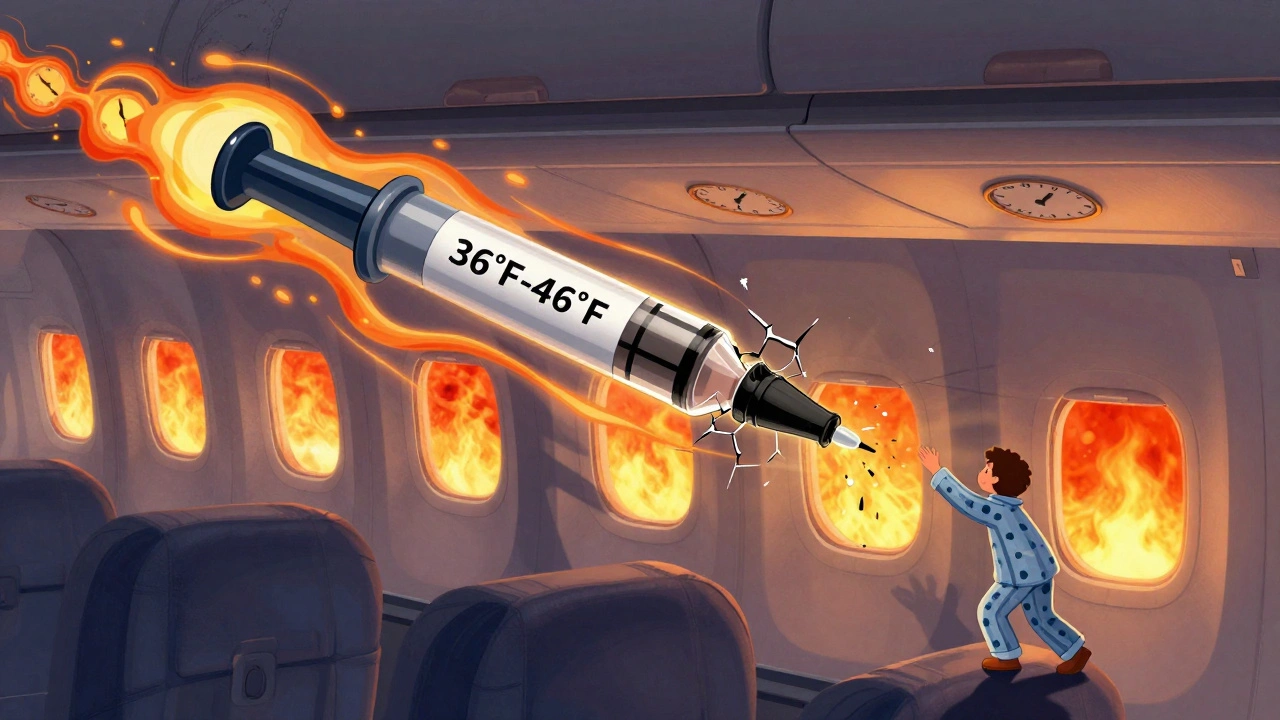
How to Store Insulin and Biologics During Long Flights: A Practical Guide
Learn how to safely store insulin and biologics during long flights to prevent dangerous temperature damage. Essential tips for travelers with diabetes, including cooling wallets, TSA rules, and dosing adjustments for time zones.
read more