
Fetal Drug Exposure: Risks, Common Medications, and What You Need to Know
When a pregnant person takes a medication, that drug can cross the placenta and reach the developing baby — this is called fetal drug exposure, the passage of pharmaceutical substances from mother to fetus during pregnancy. Also known as prenatal drug exposure, it’s not always harmful, but some drugs can interfere with organ development, especially in the first trimester. The key isn’t to avoid all meds, but to understand which ones carry real risk and when.
Not every drug is a teratogen, a substance that can cause birth defects when exposure happens during pregnancy. Some, like folic acid or certain thyroid meds, actually protect the baby. Others — like isotretinoin for acne, lithium for bipolar disorder, or certain antibiotics — are known to cause serious problems. Timing matters too: the first 12 weeks are the most sensitive, when organs are forming. After that, risks shift toward growth issues or brain development effects. Even common painkillers like ibuprofen, if taken late in pregnancy, can reduce amniotic fluid and affect fetal heart function.
What about the meds you’re already taking? Many people panic when they find out they’re pregnant and on a prescription. But stopping suddenly can be more dangerous than continuing — especially for conditions like epilepsy, depression, or high blood pressure. The goal is smart management, not avoidance. For example, levothyroxine, a thyroid hormone replacement critical for fetal brain development is safe and necessary. On the flip side, some antibiotics like tetracycline can stain baby teeth, and certain antidepressants may slightly increase the risk of persistent pulmonary hypertension. The real issue isn’t the drug alone — it’s the combination of dose, timing, and individual health.
You’ll also find that inactive ingredients, the fillers and binders in pills that don’t treat disease but affect absorption and stability can sometimes cause unexpected reactions, especially if you switch from brand to generic during pregnancy. And while we often focus on prescription drugs, over-the-counter remedies — from herbal teas to sleep aids — can also pose risks. A study from the CDC found that nearly 1 in 3 pregnant people take at least one medication not approved for use in pregnancy, often without telling their doctor.
There’s no one-size-fits-all answer. What’s safe for one person might not be for another. That’s why the posts below cover real-world cases: how to read prescription labels for safety, why some generic meds trigger unexpected side effects, how coffee or soy can interfere with thyroid meds during pregnancy, and what to do if you’re on long-term meds and just found out you’re pregnant. You’ll see how experts weigh benefits versus risks, and how small changes — like timing your pill with meals or switching formulations — can make a big difference.
Whether you’re planning a pregnancy, currently pregnant, or just trying to understand what your doctor meant when they said "this drug might affect the baby," this collection gives you clear, practical facts — no fear-mongering, no jargon. Just what you need to make informed choices with your healthcare team.
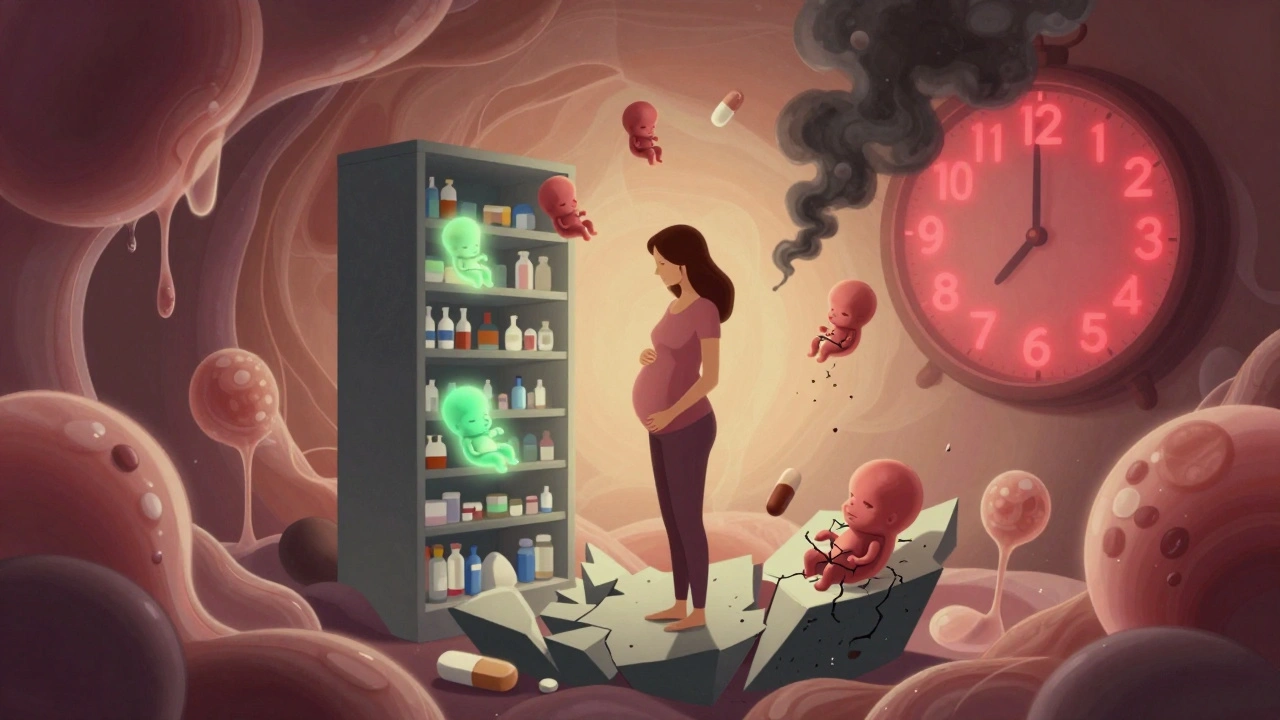
Pregnancy and Medications: What You Need to Know About Teratogenic Risks and Birth Defects
Learn which medications can cause birth defects during pregnancy, when risks are highest, and how to make safe choices. Get clear, evidence-based guidance on teratogens, acetaminophen, and what to do if you took medicine before knowing you were pregnant.
read more