
Imagine a patient taking a life-saving medication, only to find out later that the pill was a fake, containing nothing but chalk or, worse, a toxic chemical. This isn't a movie plot; it's a daily reality in the global medicine trade. The fight against counterfeit drugs isn't won with better chemistry, but with better data. By using a combination of lot numbers and serial codes, pharmacies and manufacturers can create a digital "paper trail" that makes it nearly impossible for fakes to enter the legal supply chain.
To understand how this works, we first need to clear up a common confusion: the difference between a lot number and a serial code. They might look similar on a box, but they do entirely different jobs. If you've ever seen a "Batch No." on a bottle of aspirin, you're looking at a lot number. If you see a unique 12-digit string that is different for every single bottle in the warehouse, that's a serial code.
The Basics: Lot Numbers vs Serial Codes
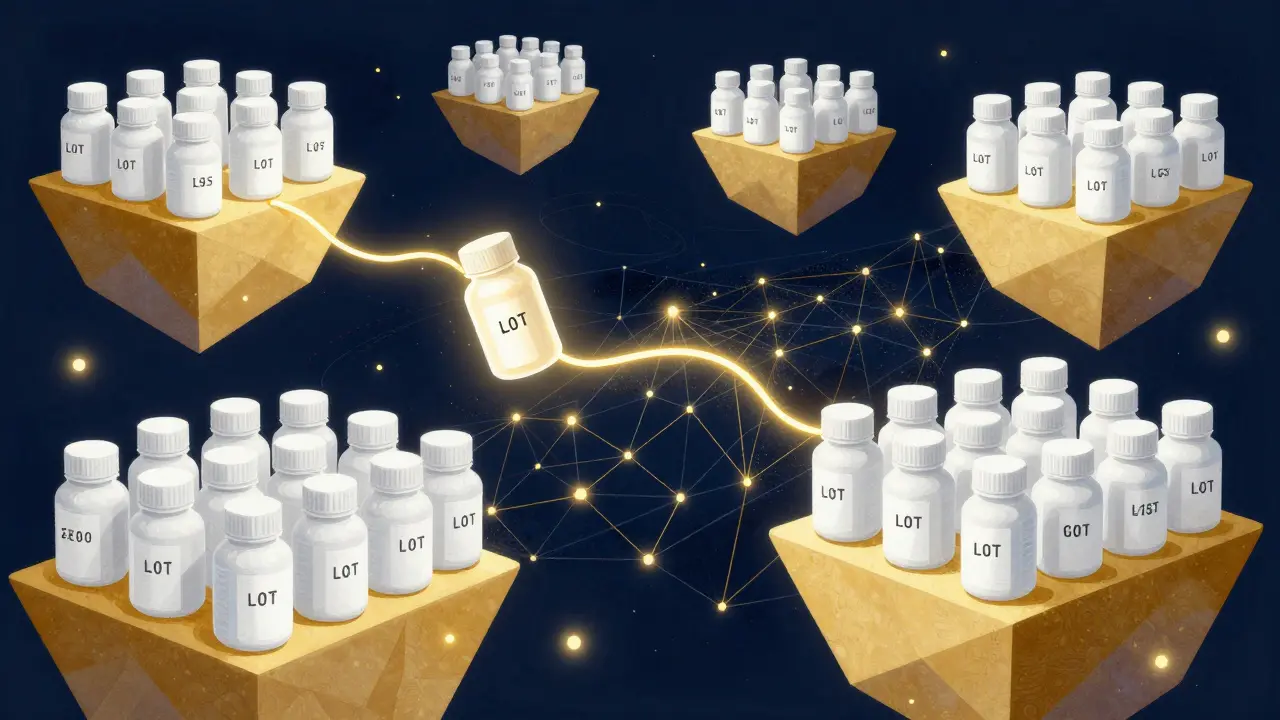
A Lot Number is a unique identifier assigned to a group of products produced under the exact same conditions at the same time . Think of it like a classroom; everyone in that class started at the same time and followed the same lesson. If one student gets sick, you check the whole class. In pharma, if one pill in Lot #A123 is contaminated, every single pill with that number is flagged. This is the gold standard for handling recalls and identifying manufacturing errors.
A Serial Code, on the other hand, is a fingerprint. It uniquely identifies one single unit. While a thousand bottles might share the same lot number, each one has its own serial code. This level of detail is what allows a pharmacist to scan a box and verify that this specific unit was actually shipped from the manufacturer to the wholesaler and then to their store.
| Feature | Lot Tracking | Serial Tracking |
|---|---|---|
| Scope | Group/Batch | Individual Unit |
| Primary Use | Recalls & Quality Control | Anti-Counterfeiting & Warranty |
| Granularity | Medium (Broad) | High (Precise) |
| Complexity | Lower | Higher |
How Track-and-Trace Stops Counterfeits
The process of Track-and-Trace is an end-to-end traceability system that records the movement of a drug from the raw material stage to the patient's hand . This creates an immutable audit trail. When a drug moves from a factory in India to a warehouse in Germany and finally to a pharmacy in Melbourne, each hand-off is digitally recorded.
Here is how this prevents fakes from slipping through:
- Verification at Every Stop: A wholesaler scans the serial code. If that code doesn't exist in the manufacturer's database, the shipment is flagged as a fake immediately.
- Preventing "Ghost' Shipments: Counterfeiters often try to print fake labels using real lot numbers. However, they can't guess the unique serial codes for every unit, meaning their fakes will fail the scan.
- Closing the Loop: By the time the drug reaches the pharmacist, the system knows exactly where that bottle has been. If a serial code is scanned in two different cities at the same time, the system triggers an alert for a potential breach or counterfeit operation.
The stakes for this are incredibly high. Historically, the need for this rigor started after the 1937 Elixir Sulfanilamide tragedy, where a toxic solvent killed over 100 people. That disaster led to the 1938 Food, Drug, and Cosmetic Act, which basically mandated that we keep a strict record of batches so that dangerous products could be pulled off the shelves instantly.
The Tech Behind the Trail
You can't do this with a pen and a clipboard. Modern track-and-trace relies on Barcode Scanning and QR codes that link physical products to cloud-based databases . Manual data entry is a nightmare-it's prone to human error, with error rates reaching around 13%. When companies switch to automated scanning, that error rate typically drops to under 0.5%.
For many pharmaceutical companies, the move to cloud-based Inventory Management Software is the key. These systems allow for real-time updates. If a manufacturer discovers a contamination issue in a specific lot, they don't have to recall every product they've ever made. Instead, they can use the data to target only the affected lot, which can reduce waste by as much as 63% and save millions of dollars per incident.
We are also seeing a shift toward blockchain technology. By using a decentralized ledger, manufacturers can ensure that the data regarding a drug's journey cannot be deleted or altered by a bad actor. This creates a "single source of truth" that regulators like the FDA can trust implicitly.
Common Hurdles in Implementation
If this is so great, why isn't every single drug tracked? For small manufacturers, the cost is a bit of a shock. Implementing a basic lot tracking system can cost around $18,500, and the learning curve for staff can take several weeks. Some smaller players argue that the compliance costs are too high compared to their actual risk profile.
Another big issue is data discipline. If a worker at a warehouse forgets to scan a pallet or enters a lot number incorrectly, the entire chain is broken. A single gap in the record can lead to a warning letter from the FDA, as regulatory agencies have increased their enforcement of lot traceability by over 200% in recent years.
What This Means for the Patient
For most of us, track-and-trace happens behind the scenes. You don't see the pharmacist checking a database; you just get your meds and go home. But that invisible process is what ensures your medication is authentic. In the future, we might see "Digital Product Passports" where you can scan a QR code on your own medication to see its entire journey and verify its authenticity on your phone.
What is the difference between a lot number and a serial number?
A lot number identifies a group of products made under the same conditions (a batch), while a serial number is a unique ID for one specific individual unit. Lot numbers are used for broad recalls; serial numbers are used to track a single item's specific journey.
How do serial codes stop counterfeit drugs?
Because each serial code is unique, a counterfeit drug would need to have a code that exists in the manufacturer's official database. If a pharmacist scans a code that isn't registered or has already been marked as "delivered," the drug is flagged as a fake.
Why is track-and-trace important for patient safety?
It ensures the authenticity of the medication and allows for precision recalls. If a batch is found to be defective, the company can find exactly which pharmacies received that specific lot and alert them immediately, rather than recalling every product in the line.
Are there any downsides to these systems?
The main downsides are the high initial cost of software and hardware, and the need for strict employee training. If data isn't entered correctly at every step, the system becomes useless.
What happens if a lot number is recorded incorrectly?
Incorrect recording creates a "dark spot" in the supply chain. This can lead to regulatory fines, FDA warning letters, and an inability to conduct a precise recall, which puts patients at risk.
Next Steps for Businesses
If you're managing a pharmacy or a medical supply chain, the first step is auditing your current data discipline. Are your staff scanning every single unit, or are they taking shortcuts? Moving to a cloud-based system with mobile scanning is the fastest way to reduce errors and meet modern regulatory standards.