
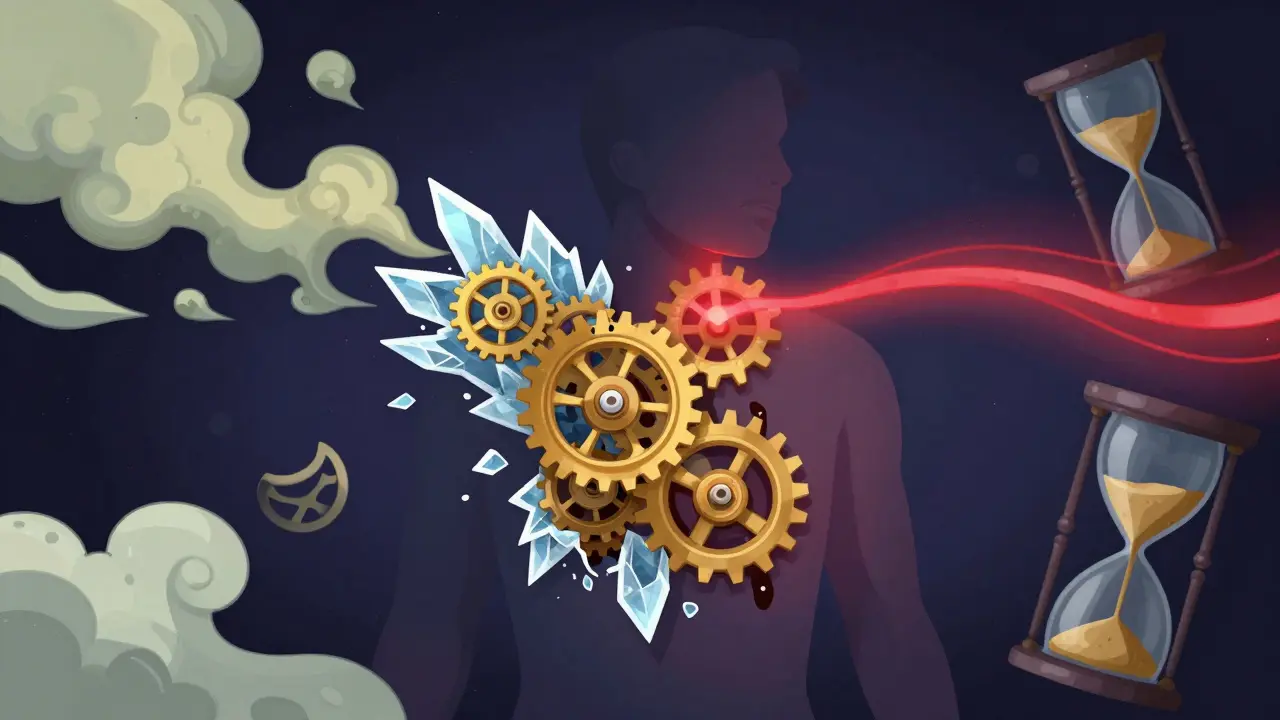
Imagine feeling a bit of indigestion or a strange tightness in your jaw, only to realize hours later that your body was screaming for help. It happens more often than you'd think. A heart attack is a medical emergency, known clinically as a myocardial infarction, where blood flow to the heart muscle is blocked, causing tissue damage or death. Every second counts here. Research shows that for every minute you delay treatment, about 1.5 million cardiac cells die. The good news? If you spot the signs early and act fast, you can cut your risk of death by up to 50%.
The Classic Signs: More Than Just Chest Pain
Most people picture a heart attack as a man clutching his chest and collapsing. While that happens, the reality is often more subtle. The most common sign is chest discomfort. This isn't always a sharp pain; it often feels like uncomfortable pressure, a squeezing sensation, or a feeling of fullness in the center of your chest. It might last for a few minutes, go away, and then come back.
But your heart doesn't always send the signal to your chest. About 65% of patients feel discomfort in other parts of the upper body. You might feel pain or pressure in one or both arms, your back, neck, jaw, or even your stomach. For some, it feels like a bad case of heartburn that just won't quit. If you're experiencing shortness of breath-with or without chest pain-don't ignore it. About 40% of people experience this, and it's a major red flag.
Keep an eye out for these other frequent markers:
- Breaking out in a cold sweat (happens in 30% of cases).
- Nausea or feeling sick to your stomach (25%).
- A rapid or irregular heartbeat (15%).
- Lightheadedness or sudden dizziness (20%).
- Unusual, overwhelming tiredness that doesn't make sense.
Why Women Experience Heart Attacks Differently
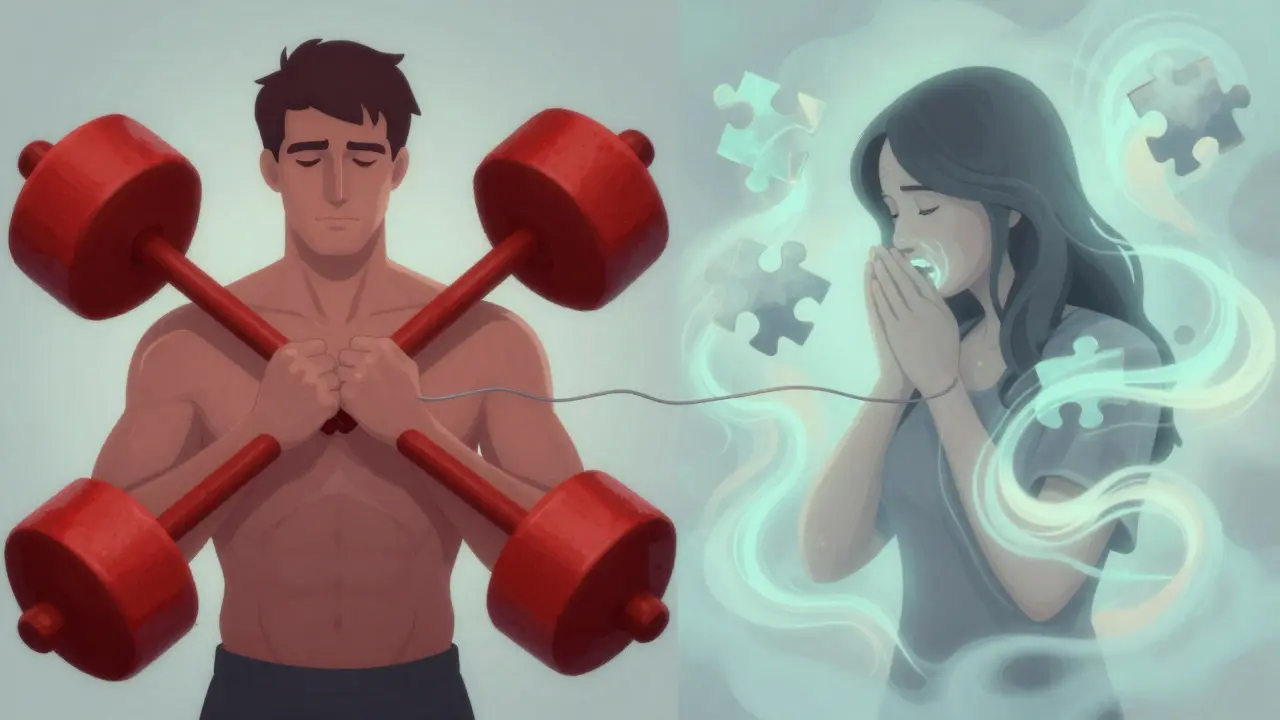
This is where things get dangerous. Men and women don't always experience a heart attack the same way, and these differences often lead to women being misdiagnosed. While 90% of men get the "classic" chest pain, only 64% of women do. This gap is a huge reason why women's heart attacks are misdiagnosed 50% more often than men's.
Women are significantly more likely to experience what doctors call "atypical" symptoms. For example, they are 58% more likely than men to have shortness of breath as their main symptom and 47% more likely to deal with nausea or vomiting. Many women describe the feeling as a tightness or pressure rather than a sharp pain, which often leads them to believe they are just anxious or have a stomach bug. In fact, women over 55 are twice as likely as men of the same age to report overwhelming anxiety or an upset stomach during a cardiac event.
| Symptom | Men | Women | Key Difference |
|---|---|---|---|
| Chest Pain | 90% | 64% | Far more common in men |
| Shortness of Breath | Lower | Higher | 58% more likely in women |
| Nausea/Vomiting | Lower | Higher | 47% more likely in women |
| Anxiety/Stomach Upset | 9% | 19% | Twice as likely in women 55+ |
The Danger of the "Silent" Heart Attack
Age plays a massive role in how your body reacts. If you're over 75, you're at a higher risk for a "silent" heart attack. In about 30% of elderly patients, there is no chest pain at all. This is a terrifying prospect because it means the person might not realize they are in danger until it's too late. For those under 65, this happens in only about 10% of cases.
It's also worth noting that signs can appear long before the actual event. Some people report unexplained weakness or heart palpitations as early as a month before a heart attack. While these can be caused by many things, in the context of heart health, they are worth mentioning to a doctor.
What to Do When You Suspect a Heart Attack
When the signs hit, your brain might try to convince you it's just indigestion or stress. This is a survival instinct gone wrong-denial. About 33% of people wait more than two hours to seek help because they're embarrassed or afraid they're "making a scene." Don't do that. It is better to have a false alarm at the hospital than a fatal mistake at home.
The most critical rule is: Call emergency services immediately. Do not try to drive yourself to the hospital. Why? Because ambulance crews are trained medical professionals who can start treating you the moment they arrive. They can provide oxygen, monitor your heart rhythm, and alert the hospital so the surgical team is ready for you. Using an ambulance can get you to the hospital 25% faster than a private car.
While you wait for the sirens, there is one thing you can do if you aren't allergic to it: chew a 300mg aspirin. Chewing it helps it enter your bloodstream faster, which can help break down the blockage in your artery. However, only do this if a doctor hasn't previously told you to avoid aspirin.
The Window for Recovery
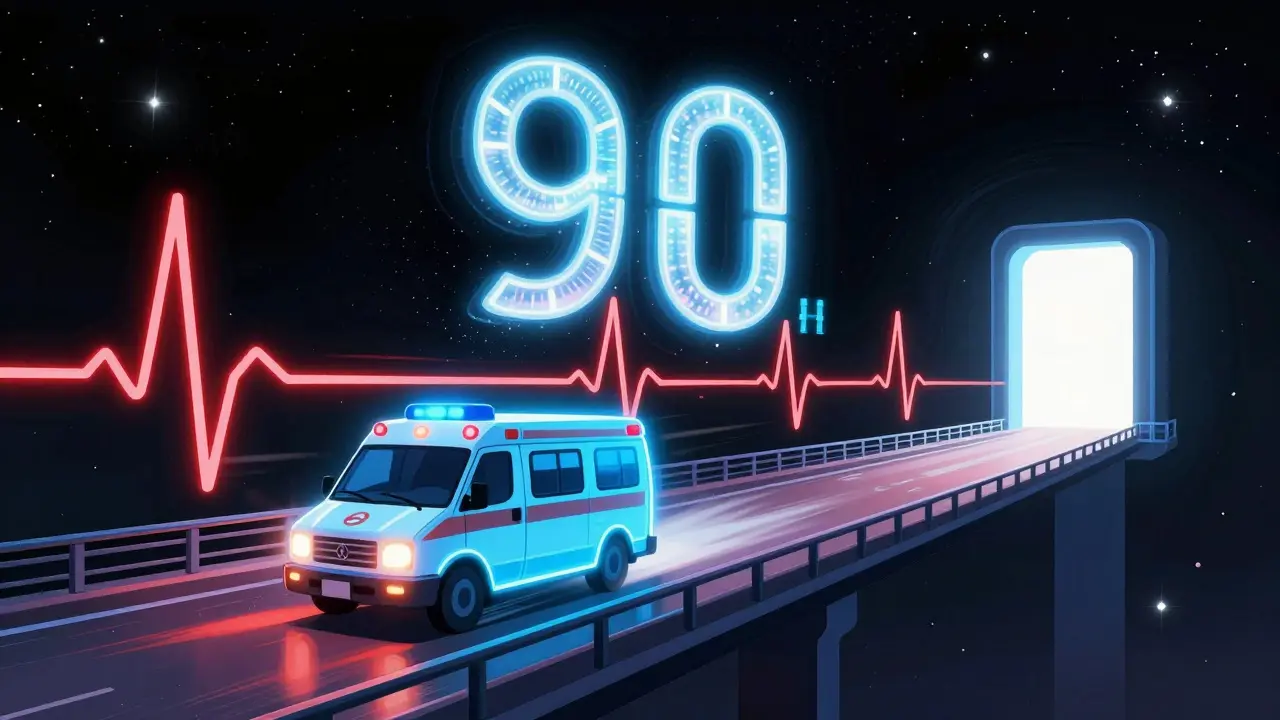
In the world of cardiology, there is a "golden window." Experts emphasize that the optimal window for treatment is within 90 minutes of the first symptom. Unfortunately, the average person waits about three hours before calling for help. This gap is where permanent heart damage happens.
Modern technology is trying to close this gap. We've seen a massive rise in mobile EKG devices and AI-powered algorithms that can predict a heart attack with over 92% accuracy shortly before symptoms appear. While these tools are great, they don't replace the need for basic symptom awareness. The most effective tool we have is still a person who knows the signs and isn't afraid to call 911 or 000.
Can a heart attack feel like indigestion?
Yes, absolutely. About 24% of heart attacks involve symptoms that mimic indigestion, particularly pain or pressure in the upper abdomen. This is especially common in women and can lead to dangerous delays in seeking care because patients assume they just have a stomach issue.
What is a silent heart attack?
A silent heart attack occurs when someone has a myocardial infarction without experiencing the classic symptoms, like chest pain. This is most common in people over 75, affecting about 30% of that age group, and can also occur in people with diabetes due to nerve damage.
Should I take aspirin during a suspected heart attack?
If you are not allergic to aspirin and haven't been told by a doctor to avoid it, chewing a 300mg aspirin while waiting for emergency services is generally recommended. Chewing it allows the medication to be absorbed more quickly, which can help reduce the size of the blockage.
Why are women more likely to be misdiagnosed?
Women often experience "atypical" symptoms such as jaw pain, extreme fatigue, nausea, or shortness of breath without the hallmark chest pain. Because medical training has historically focused on male symptoms, these signs are often mistaken for anxiety or gastrointestinal problems.
How long does it take for heart muscle to die during an attack?
Heart muscle damage begins almost immediately once blood flow is blocked. On average, approximately 1.5 million cardiac cells are lost every single minute that the blockage persists, which is why the "90-minute window" for treatment is so critical.
Next Steps and Troubleshooting
If you've had a "near miss" or are worried about your risk, the first step is a comprehensive cardiovascular screening. Ask your doctor about a calcium score test or a stress test if you have a family history of heart disease.
For those living in rural areas, be aware that emergency response times can be significantly longer. In these cases, having a home defibrillator (AED) or having family members trained in CPR can be the difference between life and death. If you are caring for an elderly parent, watch for subtle changes in their energy levels or breathing, as they may not be able to tell you they are experiencing chest pain.