
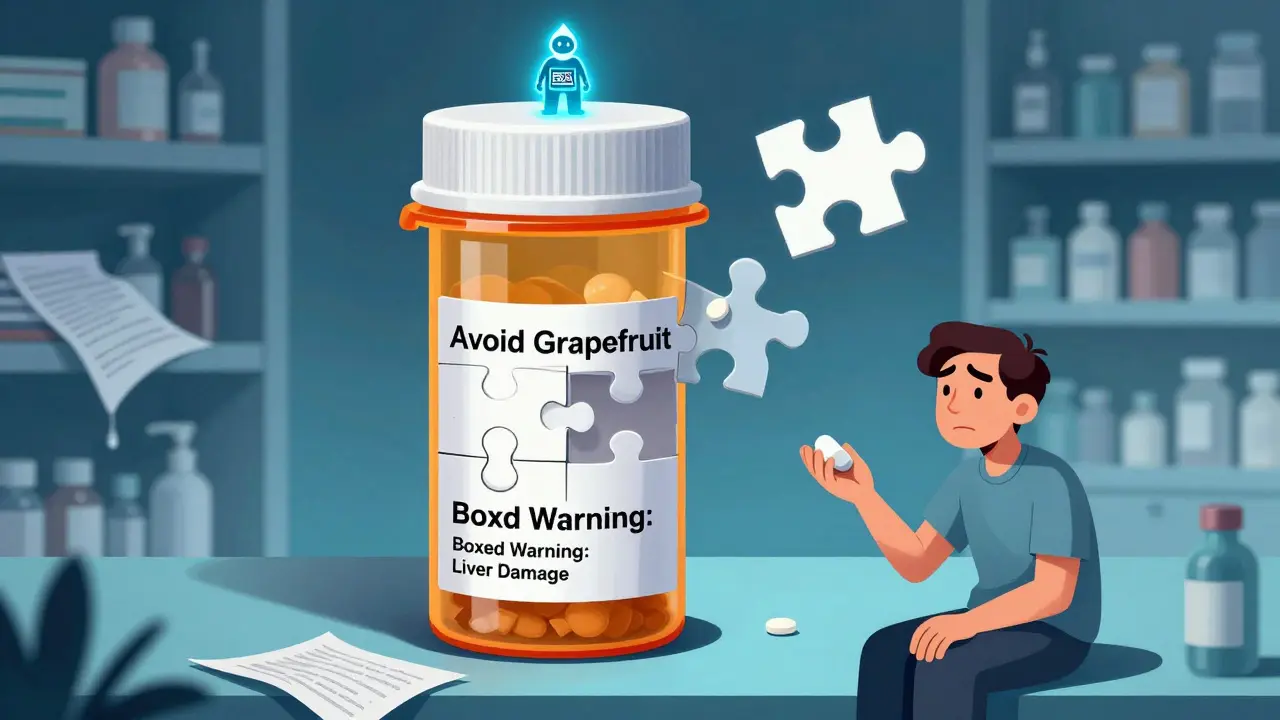
When you pick up a generic pill at the pharmacy, you expect it to work just like the brand-name version. But what about the label? The tiny print on the bottle, the patient information sheet, the warnings - those matter just as much. The FDA doesn’t just require generic drugs to be bioequivalent. It demands their labeling be identical to the brand-name drug’s - with very few exceptions. This isn’t about paperwork. It’s about safety.
Why Identical Labeling Isn’t Optional
Under Section 505(j)(2)(A)(v) of the Federal Food, Drug, and Cosmetic Act, generic drug makers must submit an Abbreviated New Drug Application (ANDA). One of the strictest conditions? The labeling must match the Reference Listed Drug (RLD) exactly. That means every warning, every dosage instruction, every contraindication. If the brand-name drug says "avoid with grapefruit juice," so must the generic. If the RLD adds a boxed warning for liver damage, the generic must follow - no exceptions.This isn’t just a rule. It’s the foundation of trust. Patients, doctors, and pharmacists rely on consistent information. Imagine if one version of metformin warned about lactic acidosis and another didn’t. That’s not hypothetical. It’s dangerous.
What’s Allowed to Change
The FDA does allow a few minor differences - but they’re limited to administrative details. You can change:- The manufacturer’s name and address
- The National Drug Code (NDC) number
- Minor formatting changes required by packaging or printing processes
That’s it. No rewording. No softening warnings. No removing sections because "it’s too long." The FDA’s Division of Labeling Review (DLR) reviews about 1,200 ANDAs each year. In 2024, labeling issues were the #1 reason for complete response letters - meaning 37% of rejections were because the label didn’t match the RLD.
The Physician Labeling Rule (PLR) and Standardized Format
Since 2006, all prescription drug labels must follow the Physician Labeling Rule. This means every label - brand or generic - must be organized into 24 standardized sections:- Highlights of Prescribing Information
- Recent Major Changes
- Indications and Usage
- Dosage and Administration
- Contraindications
- Warnings and Precautions
- Adverse Reactions
- Drug Interactions
- Use in Specific Populations
- Drug Abuse and Dependence
- Overdosage
- How Supplied/Storage and Handling
- Client Counseling Information
Generic manufacturers must adopt the PLR format as soon as the RLD does. There’s no grace period. If the brand updates to PLR, the generic must follow - or risk non-compliance. Many small manufacturers struggle with this. Converting old labels to PLR format requires reformatting dozens of pages, retraining staff, and updating databases. One generic company told the FDA’s Industry Labeling Listserv that it took nine months just to restructure a single product’s labeling.
How Generic Manufacturers Track Changes
The FDA doesn’t call you when the RLD label changes. You have to find out yourself. That’s why companies use Drugs@FDA, the official database of approved labeling documents. As of January 2025, it contained over 2,850 reference listed drugs, updated weekly.Leading generic manufacturers assign 3 to 5 full-time regulatory staff per 50 approved products just to monitor these updates. Most rely on CDER’s email alerts - which notify subscribers when labeling changes affect specific drug classes. Eighty-two percent of surveyed companies say this is their primary tool.
But it’s not foolproof. A 2024 FDA audit found that 17% of RLD entries in the Orange Book had temporary mismatches with Drugs@FDA during transitions. That means manufacturers had to cross-check both systems - or risk missing a critical update.
The Dangerous Delay in Safety Updates
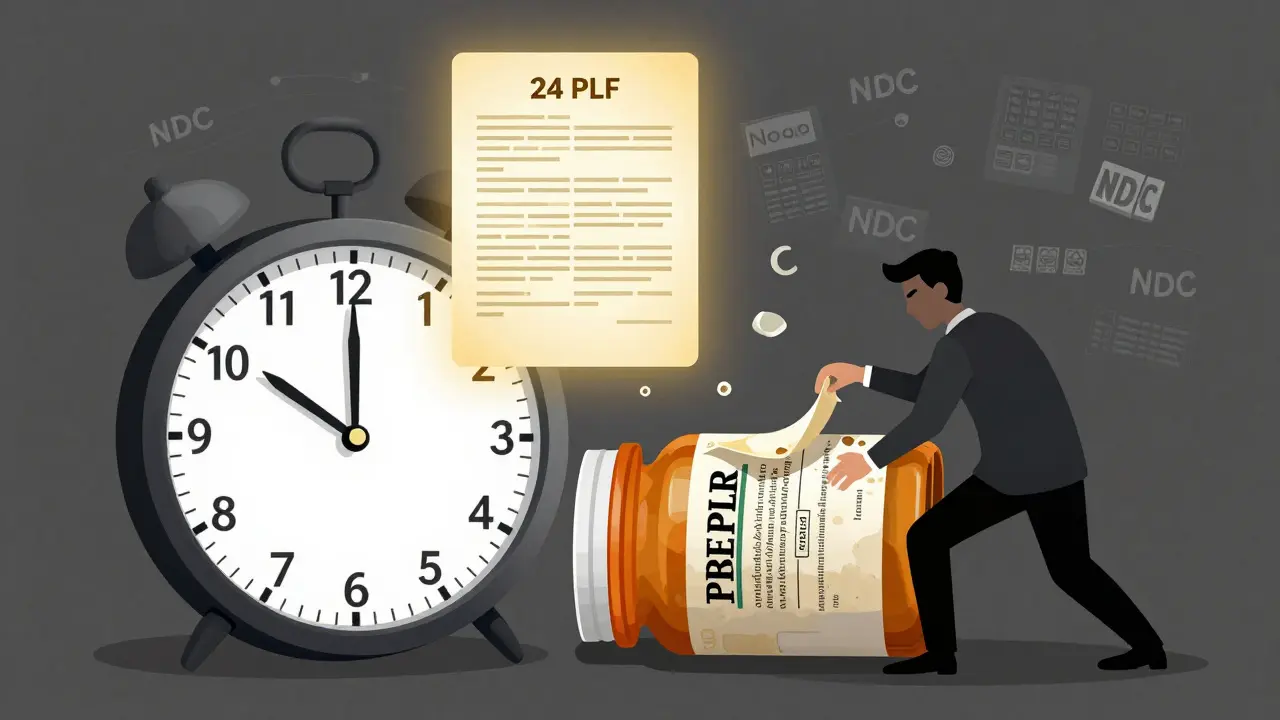
Here’s the biggest problem: brand-name companies can update their labels quickly. They can file a "Changes Being Effected" (CBE) supplement and start using new labeling after 30 days - even before FDA approval. Generic manufacturers can’t. They must wait for the RLD to update, then wait for the FDA to approve their own labeling change.This creates a dangerous gap. A 2024 study in JAMA Internal Medicine found that 89% of all prescriptions in the U.S. are for generic drugs. When a safety warning emerges - say, a new risk of kidney injury - patients on generics may go 6 to 12 months without updated labels. Meanwhile, patients on the brand-name version get the warning immediately.
The 2022 valsartan recall is a textbook example. Contamination risks were identified in the brand-name version. Generic manufacturers couldn’t update their labels until the RLD’s warning was approved - months later. During that time, thousands of patients were unaware of the risk.
What Happens If You Don’t Comply?
The FDA doesn’t just send a letter. It takes action. Between January 2023 and December 2024, it issued 47 warning letters specifically for labeling discrepancies. These aren’t gentle reminders. They’re formal notices that your product is misbranded and could be seized or pulled from the market.Companies that ignore these warnings risk enforcement actions - including injunctions, fines, or even criminal charges. One manufacturer lost its approval for three generic products after failing to update labels for 14 months.
The MODERN Labeling Act and Withdrawn RLDs
What happens when the brand-name drug is discontinued? The RLD disappears. But the generic remains on shelves. For years, this created a labeling black hole - no one could update the label because there was no reference.The 2020 MODERN Labeling Act fixed this. It gave the FDA authority to designate a new reference for discontinued products. In January 2025, the FDA released draft guidance on how to handle these cases. It’s a big step - but there are still over 1,200 withdrawn RLDs affecting 3,500 generic products. Many of these labels are outdated, missing critical safety info, or still in pre-PLR format.

What’s Coming Next
The FDA is building a new system - the Next Generation Generic Drug Labeling System - set to launch in Q3 2025. It will use AI to automatically detect labeling changes in the RLD and notify generic manufacturers within hours. Beta testing began in April 2025 with 15 major companies.Also coming: mandatory electronic labeling. The FDA now requires medication guides to include a URL or QR code linking directly to the current FDA-approved label in PDF format. The link must use HTTPS. No more paper inserts with outdated info.
Who’s Paying the Price?
Generic drugs make up 92.6% of all prescriptions in the U.S. but only 23.4% of drug spending. That’s $647 billion saved every year. But compliance costs are rising. Labeling compliance now accounts for 18-22% of total ANDA maintenance costs. Small manufacturers spend an average of $147,500 per product annually just to keep labels up to date. Large companies, with better systems, spend about $89,200.Companies like Teva, Viatris, and Sandoz have dedicated labeling teams of 50 to 120 people. Smaller firms? They’re scrambling.
Bottom Line
Generic drug labeling isn’t about copying and pasting. It’s a high-stakes regulatory dance. The FDA demands precision, timeliness, and total alignment with the brand-name product. One missing warning can put lives at risk. One delayed update can trigger a recall. One wrong NDC number can cause billing errors that delay patient access.For patients, it means confidence. For manufacturers, it means heavy responsibility. For the system, it means balance - between cost savings and safety. The rules are clear. The stakes? Higher than ever.
Can a generic drug have different warnings than the brand-name version?
No. Under FDA regulations, generic drug labeling must be identical to the Reference Listed Drug (RLD) in all safety, dosage, and usage information. The only permitted differences are the manufacturer’s name, address, and National Drug Code (NDC) number. Any deviation in warnings, contraindications, or adverse reactions is a violation and can lead to enforcement action.
How often do generic drug labels need to be updated?
Generic labels must be updated immediately after the Reference Listed Drug (RLD) receives FDA approval for a labeling change. Generic manufacturers have no authority to update their labels independently. They must wait for the RLD to change, then submit a labeling supplement. Timelines depend on the type of supplement - Prior Approval Supplements take up to 10 months, while CBE-30 supplements allow immediate implementation with 30-day notification.
What is the Physician Labeling Rule (PLR), and does it apply to generics?
The Physician Labeling Rule (PLR), implemented in 2006, requires all prescription drug labels to follow a standardized 24-section format, including Highlights, Recent Major Changes, and detailed sections on dosage, warnings, and use in specific populations. Generic drugs must adopt the PLR format as soon as the RLD does. There is no exemption for generics - compliance is mandatory.
What happens if a generic drug’s label doesn’t match the brand-name label?
The FDA considers this a labeling violation and classifies the product as misbranded. Consequences include complete response letters during ANDA review, warning letters, product seizures, or even removal from the market. Between 2023 and 2024, the FDA issued 47 warning letters specifically for labeling discrepancies. Failure to correct the issue can lead to legal action.
Can generic manufacturers update their labels if the brand-name version is discontinued?
Yes - but only under the MODERN Labeling Act. If the Reference Listed Drug (RLD) is withdrawn from the market, the FDA can designate a new reference product or allow the generic manufacturer to update labeling based on the most current safety data. Draft guidance issued in January 2025 outlines this process, but it only applies to about 1,200 withdrawn RLDs affecting 3,500 generic products. Many labels in this category remain outdated.
How do generic manufacturers track changes to the brand-name label?
The primary tool is Drugs@FDA, the FDA’s official database of approved labeling documents, which is updated weekly. Leading manufacturers also subscribe to CDER’s email alerts for labeling changes in specific therapeutic classes. Some use third-party monitoring services. However, a 2024 FDA audit found that 17% of RLD entries had temporary inconsistencies between Drugs@FDA and the Orange Book, requiring manufacturers to verify updates across multiple sources.
Are electronic labels required for generic drugs?
Yes. As of 2025, the FDA mandates that medication guides for generic drugs must include a URL or QR code linking directly to the current FDA-approved label in PDF format. The link must use HTTPS and point to the official document on Drugs@FDA. Paper inserts alone are no longer sufficient. This change aims to ensure patients always have access to the most up-to-date safety information.
Comments (12)
Bret Freeman
This is a disaster waiting to happen. The FDA lets brand-name companies update warnings in 30 days while generic manufacturers sit and wait? That’s not regulation, that’s negligence. People are dying because some bureaucrat thinks consistency matters more than lives. And don’t even get me started on the 17% mismatch rate between Drugs@FDA and the Orange Book. How is this still a thing in 2025?
EMMANUEL EMEKAOGBOR
It is indeed a matter of profound importance that the labeling of generic medications remains identical to that of the reference listed drug. The integrity of patient safety depends upon this uniformity. While the administrative burden on manufacturers is considerable, the ethical imperative to preserve clarity in dosage, contraindications, and warnings cannot be compromised. This is not merely regulatory compliance-it is a moral contract with the public.
CHETAN MANDLECHA
Been working in pharma compliance for 12 years. The PLR format? Total nightmare for small shops. We had to reformat 87 labels in 6 months after one RLD updated. No help from FDA. No training. Just a deadline and a warning letter if we missed it. And now they want QR codes? Good luck getting rural pharmacies to scan them.
Jillian Angus
I never realized how much goes into those tiny labels. My mom takes six generics. I always thought they were just cheaper versions. Turns out they’re locked into whatever the brand decides to put on the bottle. That’s terrifying.
Gray Dedoiko
My uncle got hit with a kidney injury from valsartan because his generic label didn’t update. He didn’t even know there was a risk. The brand had the warning for months. He was just trusting the system. That’s not just a gap-it’s a canyon. And the FDA’s response? ‘We’ll fix it when we fix it.’
Lu Jelonek
As someone who works with international drug regulators, I can tell you the U.S. system is unusually rigid. In the EU, generics can propose label updates based on emerging data-even without the RLD. The FDA’s dependency on the brand-name company creates dangerous delays. It’s bureaucratic inertia disguised as safety.
siddharth tiwari
They say the FDA is protecting us but what they’re really doing is protecting Big Pharma. The brand companies control the RLD. They delay updates. Then the generics get blamed. And you think the QR code thing is for safety? Nah. It’s so they can track you. Every scan. Every click. Your data. They’re building a database of who takes what. You think that’s not surveillance? Wake up.
Adarsh Dubey
The MODERN Labeling Act is a step forward, but it’s not enough. The FDA needs to grant generics the authority to issue CBE supplements when the RLD is withdrawn. Waiting for a new reference product to be designated can take years. In the meantime, patients are being given outdated labels with no safety warnings. This isn’t just inefficient-it’s unethical.
Bartholomew Henry Allen
America leads the world in drug safety because we demand precision. No compromises. No shortcuts. If you can’t match the brand label exactly then you don’t belong on the market. This isn’t about cost. It’s about American standards. The FDA gets it. The rest of the world should too.
Andrea Di Candia
There’s something beautiful about this system, even with its flaws. We’ve built a framework where a $0.10 pill can carry the same life-saving warnings as a $10 one. That’s equity. That’s science. That’s what makes American healthcare remarkable-even when the bureaucracy stumbles. The real problem isn’t the rules. It’s the delay in updating them. Let’s fix that, not tear the system down.
bharath vinay
They say the AI system launching in Q3 will fix everything. Bullshit. The FDA can’t even keep their own database straight. Why would you trust a machine trained on broken data? And who’s coding it? Big Pharma contractors. Of course they’ll design it to favor the brand-name companies. This is just another way to lock out small generics. Watch.
Dan Gaytan
Just want to say thank you for writing this. I work in a community pharmacy and I see patients confused every day because their generic label looks different from what they remember. This post explains why it’s not a mistake-it’s the law. And honestly? It’s kind of beautiful that we care enough to make sure the tiny print saves lives. 🙏