
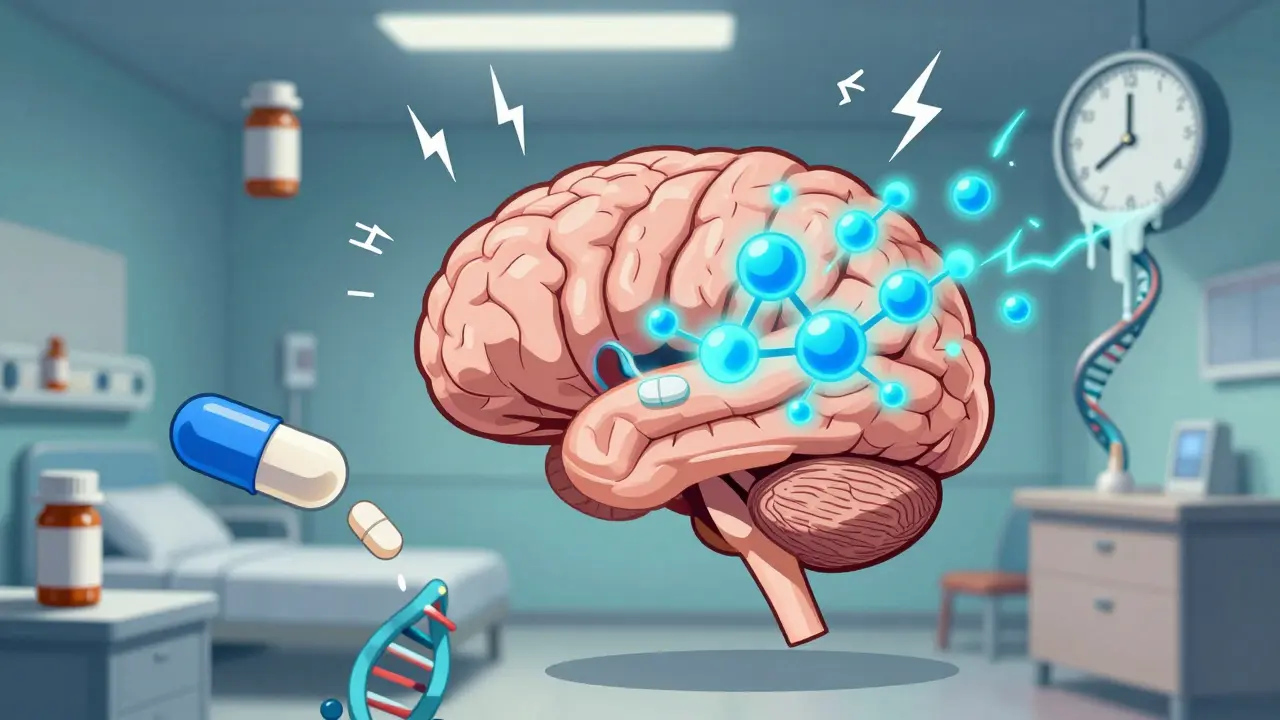
Serotonergic Drug Interaction Risk Calculator
Understanding Risk
This tool helps assess serotonin syndrome risk when combining antiemetics with serotonergic medications like SSRIs. Risk levels are based on clinical evidence from the article and reflect relative danger, not absolute probability. Always consult your healthcare provider for personalized medical advice.
5-HT3 Antagonists
Why? Weak off-target effects on serotonin reuptake; highest documented cases with SSRIs. Risk increases with age and CYP2D6 poor metabolism.
Precautions: Dose reduction by 50% when combined with strong CYP2D6 inhibitors like fluoxetine; avoid in elderly without monitoring.
Dopamine Antagonists
Why? Slight serotonin reuptake inhibition. FDA logged 17 confirmed cases with SSRIs between 2004-2018.
Precautions: Avoid in elderly; monitor for early symptoms; consider alternatives like dexamethasone.
NK1 Antagonists
Why? No direct serotonin receptor interaction, but interferes with CYP3A4 metabolism (SSRI breakdown). Risk increases when combined with strong CYP3A4 inhibitors.
Precautions: Monitor for CYP3A4 interactions; consider lower doses with SSRIs.
Alternative Options
Why? Steroid with no serotonergic activity; commonly used in cancer care.
Precautions: Consider as first-line alternative for patients on SSRIs; effective for chemo-induced nausea.
Alternative Options
Why? Newer 5-HT3 antagonist with reduced serotonin interaction risk. 2023 study shows 60% lower risk compared to ondansetron with SSRIs.
Precautions: Preferred over ondansetron for patients on SSRIs; limited availability in some settings.
Genetic Factors
Why? 7-10% of European descent are poor metabolizers, leading to 2.3x higher ondansetron levels.
Precautions: Consider CYP2D6 testing if using ondansetron with SSRIs; adjust doses accordingly.
Key Prevention Tips
- Always disclose all medications - including OTC drugs, supplements, and painkillers.
- Consider alternatives - Dexamethasone or palonosetron when on SSRIs.
- Dose adjustments - Reduce ondansetron by 50% when combined with strong CYP2D6 inhibitors.
- Wait periods - At least 2 weeks between stopping SSRIs and starting antiemetics.
- Monitor for symptoms - Tremors, hyperreflexia, confusion, fever.
Important Warning
Serotonin syndrome is rare but life-threatening. If you experience tremors, confusion, fever, or muscle stiffness after starting a new medication combination, seek emergency medical help immediately. Do not wait for symptoms to worsen.
When you’re feeling nauseous from chemotherapy, surgery, or even a bad stomach bug, antiemetics like ondansetron (Zofran) can be a lifesaver. But if you’re also taking an antidepressant like fluoxetine or citalopram, there’s a quiet risk lurking in the background: serotonin syndrome. It’s rare, but when it happens, it can turn a routine treatment into an emergency. And most people - even some doctors - don’t realize how easily this can happen.
What Is Serotonin Syndrome?
Serotonin syndrome isn’t just a side effect. It’s a dangerous overload of serotonin in your brain and nervous system. Serotonin is a chemical your body naturally makes to help regulate mood, sleep, and digestion. But when too much builds up - usually because of how drugs interact - it overstimulates receptors and throws your whole system out of balance.
This isn’t new. Doctors first noticed it in the 1960s when people took MAOIs (old antidepressants) with other drugs. Today, it’s more common than you think. About 85% of cases happen when two or more serotonergic drugs are used together. The number of reported cases has gone up 14% every year since 2004. And while most people think of SSRIs as the main culprit, antiemetics are showing up more often in these stories.
Why Do Antiemetics Matter?
Not all antiemetics are the same. There are three main types, and they interact with serotonin in very different ways.
5-HT3 antagonists like ondansetron, granisetron, and dolasetron are the most commonly used. They block serotonin receptors in the gut to stop nausea. On paper, they shouldn’t cause serotonin syndrome because they’re blockers, not activators. But real-world data tells a different story. Case reports, including one from 2017 in the Journal of Medical Toxicology, show patients developing serotonin syndrome after taking ondansetron along with an SSRI. How? Scientists think these drugs might have weak, off-target effects on serotonin reuptake or metabolism - especially in people with certain genetic traits.
Dopamine antagonists like metoclopramide (Reglan) are a bit different. They don’t directly affect serotonin, but they can slightly block serotonin reuptake. The FDA logged 17 confirmed cases between 2004 and 2018 where metoclopramide combined with SSRIs led to serotonin syndrome. It’s not common, but it’s documented.
NK1 antagonists like aprepitant (Emend) are newer and used mainly for chemo-induced nausea. They don’t touch serotonin receptors at all. But they can interfere with liver enzymes (CYP3A4) that break down SSRIs. If your body can’t clear the antidepressant, levels build up - and that’s when trouble starts.
Who’s at Highest Risk?
It’s not just about what drugs you take - it’s about who you are.
Older adults are especially vulnerable. Data from the FDA and ProPublica shows that people over 65 made up 41.3% of serotonin syndrome cases involving ondansetron and SSRIs, even though they’re only 18.7% of users. Why? Aging slows down liver and kidney function. Your body can’t process drugs as fast. Plus, many older patients take multiple medications, increasing the chance of bad interactions.
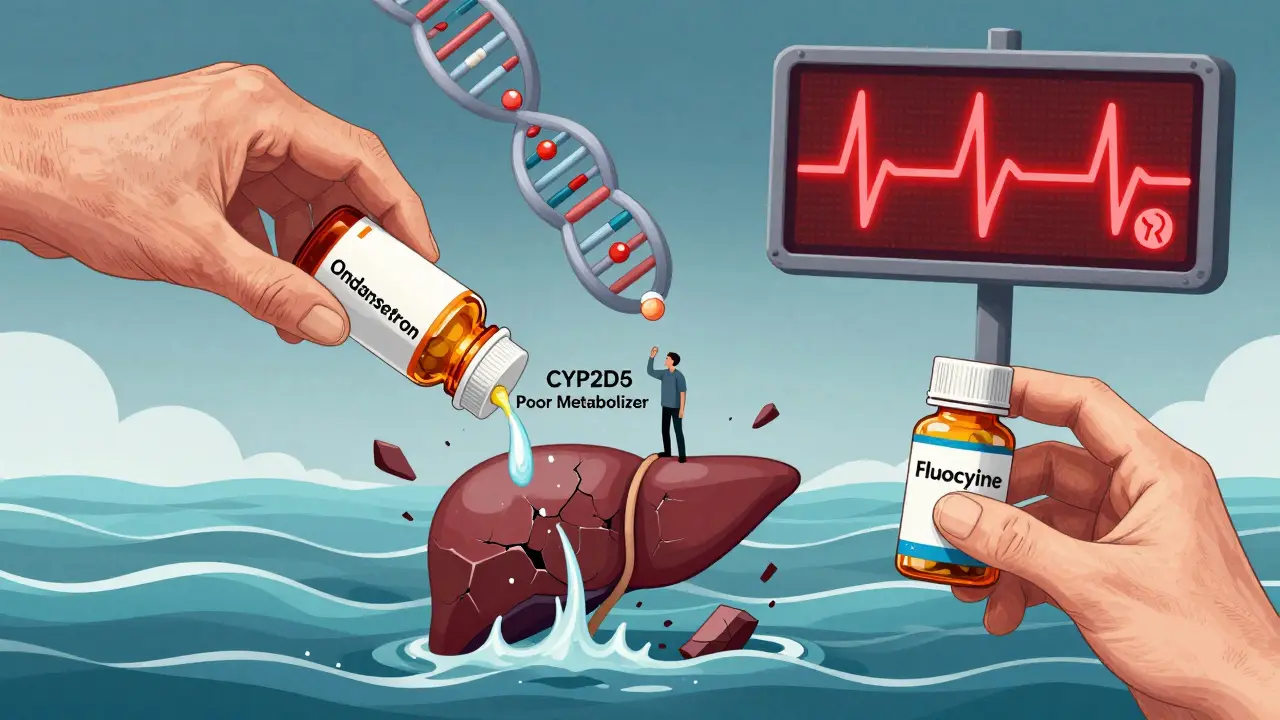
Genetics also play a role. About 7-10% of people of European descent are “poor metabolizers” of CYP2D6 - a liver enzyme that breaks down ondansetron and some SSRIs. If you’re one of them, even normal doses can build up to dangerous levels. A 2020 study from the Mayo Clinic found these patients had 2.3 times higher ondansetron levels than others.
And it’s not just prescription drugs. Some herbal supplements like St. John’s Wort, tryptophan, or even certain painkillers can add to the risk. If you’re on an SSRI and taking anything else - even something “natural” - you should talk to your pharmacist.
What Are the Warning Signs?
Serotonin syndrome doesn’t sneak up. It hits fast. Symptoms usually show up within hours of a new drug or dose change. The classic trio is:
- Tremors - uncontrollable shaking, especially in the hands
- Hyperreflexia - exaggerated reflexes (like your knee jerking too hard)
- Mental status changes - confusion, agitation, restlessness, or even hallucinations
Other signs include high fever, fast heart rate, sweating, diarrhea, and muscle stiffness. If you’re taking an antiemetic and an SSRI and start feeling off - like your body is buzzing or you can’t sit still - don’t wait. Go to the ER.
The Hunter Serotonin Toxicity Criteria is the gold standard doctors use to diagnose this. It’s 84% accurate at spotting real cases and 97% good at ruling out false alarms. If you have tremor plus hyperreflexia, or muscle rigidity plus fever, it’s almost certainly serotonin syndrome.
How Do You Prevent It?
Prevention is simple - if you know what to look for.
First, always tell your doctor or pharmacist every medication you’re on - including over-the-counter drugs, supplements, and even occasional painkillers. Many people don’t think of ondansetron as a “serotonergic” drug, so they forget to mention it.
Second, if you’re on an SSRI and need an antiemetic, ask about alternatives. Dexamethasone (a steroid) works well for nausea and has zero serotonin activity. It’s often used in cancer care for this reason.
Third, if you must use ondansetron, ask about your dose. The American Society of Health-System Pharmacists recommends cutting the dose by 50% if you’re also taking a strong CYP2D6 inhibitor like fluoxetine or paroxetine. Some hospitals now check your CYP2D6 gene type before prescribing ondansetron - especially if you’re over 65 or taking multiple serotonergic drugs.
And if you’re switching antidepressants? Wait at least two weeks after stopping an SSRI before starting ondansetron. The same goes for MAOIs - never combine them with any antiemetic. That’s a recipe for disaster.
What If It Happens?
If you suspect serotonin syndrome, stop all serotonergic drugs immediately. That includes the antiemetic, the antidepressant, and anything else that might be contributing.
Go to the hospital. Treatment is mostly supportive: fluids, cooling if you’re overheating, and sedation if you’re agitated. The first-line antidote is cyproheptadine - an old antihistamine that blocks serotonin receptors. It’s given orally in 4-8 mg doses every 2 hours until symptoms improve. In severe cases, doctors may use dexmedetomidine, a drug that reduces serotonin release by calming overactive brain signals. It’s not widely available yet, but early studies show it works better than benzodiazepines.
Most people recover fully within 24 to 72 hours if treated quickly. But delays can lead to seizures, kidney failure, or death. There’s no room for hesitation.
The Bigger Picture
Here’s the reality: 22.3 million ondansetron prescriptions were filled in the U.S. in 2022. Nearly 40% of those went to people already on SSRIs. The FDA reports a 29% increase in emergency visits involving antiemetics and serotonin syndrome between 2018 and 2022. But the absolute risk? Still low - only 4.2 cases per 100,000 prescriptions.
That’s why drug makers still say the benefits outweigh the risks. Ondansetron works. It prevents vomiting. It improves quality of life for cancer patients, post-op patients, and people with severe nausea. But “low risk” doesn’t mean “no risk.” And when the consequences are life-threatening, even rare events matter.
Newer antiemetics like palonosetron may be safer. A 2023 study showed switching from ondansetron to palonosetron cut serotonin syndrome risk by over 60% in patients on SSRIs. It’s not widely used yet, but it’s a sign that the field is evolving.
Bottom line: Don’t panic. But do pay attention. If you’re on an antidepressant and your doctor prescribes an antiemetic, ask: “Could this interact?” Don’t assume it’s safe just because it’s common. Your life depends on that conversation.
Can ondansetron cause serotonin syndrome by itself?
No, ondansetron alone is extremely unlikely to cause serotonin syndrome. It’s a 5-HT3 receptor blocker, not a serotonin booster. All documented cases involve at least one other serotonergic drug - usually an SSRI, SNRI, or MAOI. The risk comes from combinations, not single use.
Is serotonin syndrome common with antiemetics?
No, it’s rare. Out of millions of antiemetic prescriptions each year, only about 4 in 100,000 lead to serotonin syndrome. But it’s serious enough that doctors now treat it as a real risk - especially in older adults or those on multiple medications. The key is awareness, not avoidance.
What antiemetics are safest with SSRIs?
Dexamethasone is the safest option - it has no serotonergic activity and is commonly used for nausea in cancer patients. Metoclopramide carries moderate risk due to weak reuptake inhibition. Among 5-HT3 antagonists, palonosetron appears safer than ondansetron based on recent studies. Always discuss alternatives with your doctor.
Should I get tested for CYP2D6 gene variations?
If you’re of European descent and plan to take ondansetron with an SSRI, especially if you’re over 65, genetic testing for CYP2D6 may be worth considering. Poor metabolizers have much higher drug levels and increased risk. While not routine yet, this is becoming part of best practice in some hospitals.
How long should I wait between stopping an SSRI and starting ondansetron?
Wait at least two weeks after stopping an SSRI before starting ondansetron. Some SSRIs, like fluoxetine, stay in your system for weeks. Starting an antiemetic too soon can trigger serotonin syndrome. Always follow your prescriber’s guidance - never guess.
Comments (9)
Haley DeWitt
Oh my gosh, I had no idea ondansetron could do this!! I’ve been on fluoxetine for years and took Zofran after my surgery last year-thank you for this post!! I’m so glad I didn’t have symptoms, but now I’m paranoid about every little twinge in my body 😅
John Haberstroh
Wild how something so common-like a nausea pill-can turn into a silent grenade when paired with antidepressants. It’s like your body’s chemistry is a Jenga tower and someone just pulled the wrong block. I’ve seen ER docs scramble over this and never even ask about OTC stuff. People take St. John’s Wort like it’s tea. It’s not. It’s a chemical handshake with disaster.
Sam Pearlman
Wait wait wait-so you’re telling me the same drug that saved me from puking during chemo might’ve almost killed me? 😏 I’m all for awareness, but this feels like fearmongering. 4.2 cases per 100k? That’s less likely than getting struck by lightning while winning the lottery. I’ll keep my Zofran and my Lexapro, thanks. The real danger is overthinking everything.
Steph Carr
Let’s be real: if you’re on an SSRI and taking anything for nausea, you’re basically playing Russian roulette with your neurotransmitters. And yet, the medical system treats this like a footnote. ‘Oh, just tell your doctor!’ Like doctors have time to memorize every obscure drug interaction. We’re living in an era where ‘natural’ means ‘unregulated poison’ and ‘prescription’ means ‘trust me, I went to med school.’ 🤦♀️
Brenda K. Wolfgram Moore
This is exactly why we need better patient education. I work in a clinic and see this every week. Elderly patients on three meds, grab Zofran at the pharmacy without telling anyone, then show up confused and sweaty. It’s preventable. Please, if you’re on an antidepressant, keep a list of everything you take. Write it down. Show it to your pharmacist. Your life isn’t a guessing game.
Dennis Santarinala
Thank you for writing this. I’ve been on paroxetine for 12 years and got ondansetron last month for a stomach bug. I didn’t think twice-until now. I’m going to call my doctor tomorrow and ask about switching to dexamethasone. Also, I had no idea palonosetron was safer. That’s a game-changer. Maybe we need a ‘serotonin risk score’ like we have for heart disease.
Tony Shuman
Oh here we go again-another ‘dangerous drug’ scare. Next they’ll say aspirin causes brain explosions. This isn’t a crisis, it’s a statistical blip. The real problem? People panic over tiny risks and ignore the bigger picture: Zofran lets cancer patients eat. It lets post-op folks sleep. It lets people live. Stop scaring folks into avoiding treatments that save lives.
James Lloyd
There’s a critical gap in clinical practice: we don’t routinely screen for CYP2D6 status before prescribing ondansetron, even though the pharmacogenomic data is robust. In high-risk populations (e.g., elderly, polypharmacy, European descent), preemptive genotyping reduces adverse events by over 60%. This isn’t futuristic-it’s actionable now. Hospitals like Mayo and Kaiser are implementing it. Why aren’t we all? Because cost and inertia. But patient safety shouldn’t be negotiable.
PRITAM BIJAPUR
As someone from India where SSRIs are often prescribed without full counseling, this is eye-opening. Many patients here take herbal tonics alongside antidepressants-ashwagandha, brahmi, even ayurvedic nausea remedies. No one connects the dots. We need awareness campaigns in local languages. Knowledge shouldn’t be a privilege of English-speaking countries. A life saved is a life saved-no matter the border.