
Tremor from Tacrolimus: Causes, Risks, and What to Do
When you take tacrolimus, a powerful immunosuppressant used after organ transplants to prevent rejection. Also known as FK506, it keeps your body from attacking the new organ—but it doesn’t come without trade-offs. One of the most noticeable side effects? tremor, involuntary shaking, often in the hands, that can interfere with daily tasks like writing, eating, or holding a cup. It’s not rare—up to half of people on tacrolimus report some level of tremor, especially when starting the drug or if blood levels rise too high.
Tremor from tacrolimus isn’t just annoying; it’s a signal. Your body is reacting to the drug’s effect on the nervous system. Tacrolimus crosses the blood-brain barrier and can disrupt nerve signaling, especially in areas that control movement. Higher doses, kidney problems, or mixing it with other drugs like NSAIDs or antifungals can push levels into the danger zone. It’s not the same as Parkinson’s or essential tremor—it’s drug-induced, and it often improves when the dose is lowered or timing is adjusted. But here’s the catch: you can’t just stop tacrolimus. Stopping it risks organ rejection, which can be life-threatening. That’s why managing tremor isn’t about quitting the drug—it’s about fine-tuning it.
Doctors monitor tacrolimus levels closely through blood tests. If tremors start, they’ll check your concentration first. Sometimes, switching from immediate-release to extended-release forms helps smooth out spikes. Eating consistently and avoiding grapefruit juice also matters—both can alter how your body processes the drug. If tremors persist, your team might consider adding a mild muscle relaxant or switching to another immunosuppressant like cyclosporine, though that comes with its own risks. You’re not alone in this. Many transplant patients deal with tremor and find ways to adapt—using weighted utensils, avoiding caffeine, or adjusting routines to reduce stress, which can make shaking worse.
The posts below cover real-world cases and practical fixes for medication-related side effects like tremor. You’ll find guides on managing drug interactions, adjusting timing for better tolerance, and spotting when a side effect is a warning sign—not just a nuisance. Whether you’re on tacrolimus or another immunosuppressant, these insights help you talk smarter with your doctor and take control without risking your transplant.
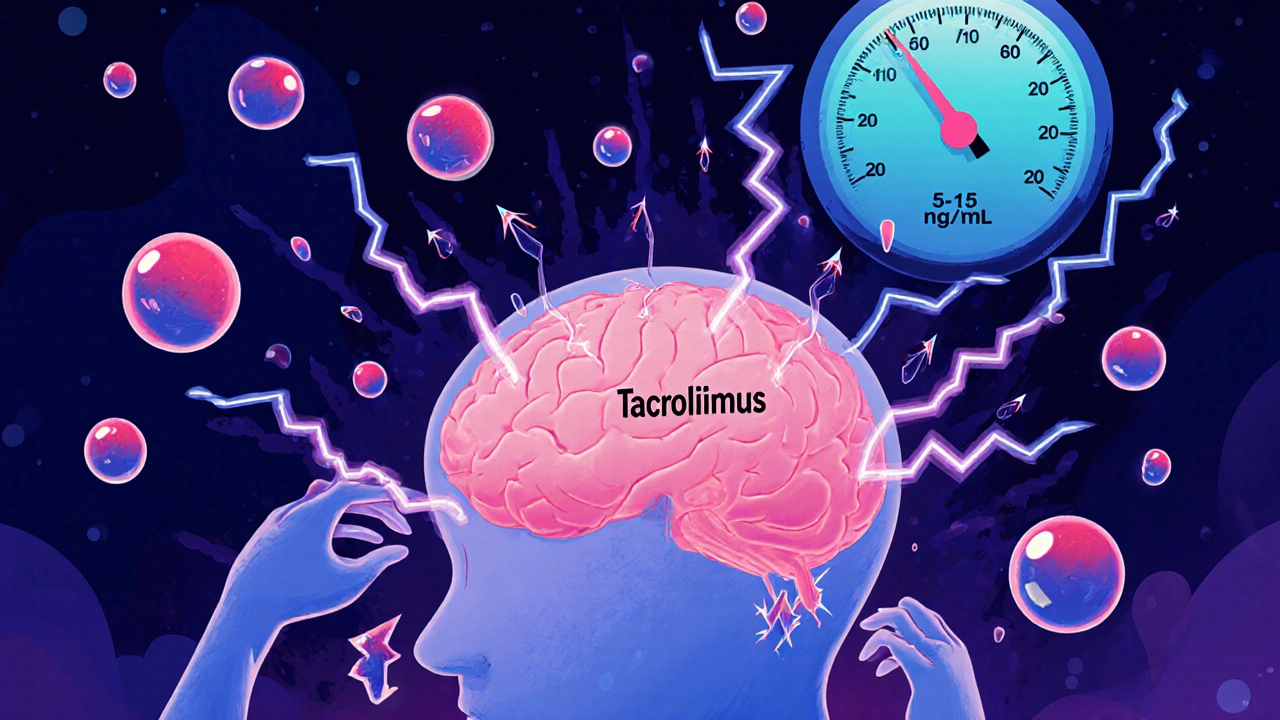
Tacrolimus Neurotoxicity: Understanding Tremor, Headache, and Blood Level Targets
Tacrolimus is vital for transplant patients, but up to 40% experience neurotoxicity like tremors and headaches-even at normal blood levels. Learn why, who’s at risk, and how to manage it.
read more