
Pill Splitting: Safe Ways to Cut Pills and Save Money
When you split a pill, you're not just saving money—you're adjusting your treatment. pill splitting, the practice of dividing a tablet or capsule into smaller doses. Also known as tablet splitting, it’s a common strategy for managing chronic conditions like high blood pressure, depression, or thyroid disorders, especially when higher-dose pills cost less than two lower-dose ones. But not all pills are meant to be split. Some have special coatings, extended-release layers, or are too fragile. If you split the wrong one, you could get too much or too little medicine—and that’s risky.
It’s not just about the pill itself. The pill cutter, a simple device with a blade and groove designed to split pills evenly makes a big difference. Using a knife, scissors, or your fingers? That’s how uneven doses and wasted pills happen. A good pill cutter gives you clean, consistent halves. And timing matters too. If you’re splitting a pill that needs to be taken on an empty stomach, like bisphosphonates, a class of drugs used to treat osteoporosis, splitting it doesn’t change the rule: take it with water, wait an hour before eating. Same goes for levothyroxine, a thyroid hormone replacement. Splitting it won’t fix the problem if you drink coffee right after.
People split pills for all kinds of reasons: insurance won’t cover the lower dose, the pharmacy only stocks the higher one, or they’re trying to wean off slowly. But it’s not a DIY experiment. Talk to your doctor or pharmacist first. Some pills—like those for epilepsy, cancer, or heart rhythm—are never safe to split. Others, like clonidine, a blood pressure and anxiety medication, are often split because they come in 0.1mg and 0.2mg tablets, and doctors routinely prescribe 0.1mg twice daily. You’ll find real examples in the posts below: how people split tacrolimus, an immunosuppressant used after organ transplants to manage costs, how splitting lisinopril-HCTZ, a combo blood pressure pill can affect salt balance, and why splitting valproic acid, a mood stabilizer might mess with how your body absorbs it.
You’ll also see how pill splitting connects to bigger issues: drug pricing, access to generics, and how small changes in how you take your meds can ripple through your health. Some posts show people adjusting doses for ADHD meds in teens, others track side effects after splitting transplant drugs. The goal isn’t to make you a pill-splitting expert overnight—it’s to help you ask the right questions before you grab that knife or cutter.
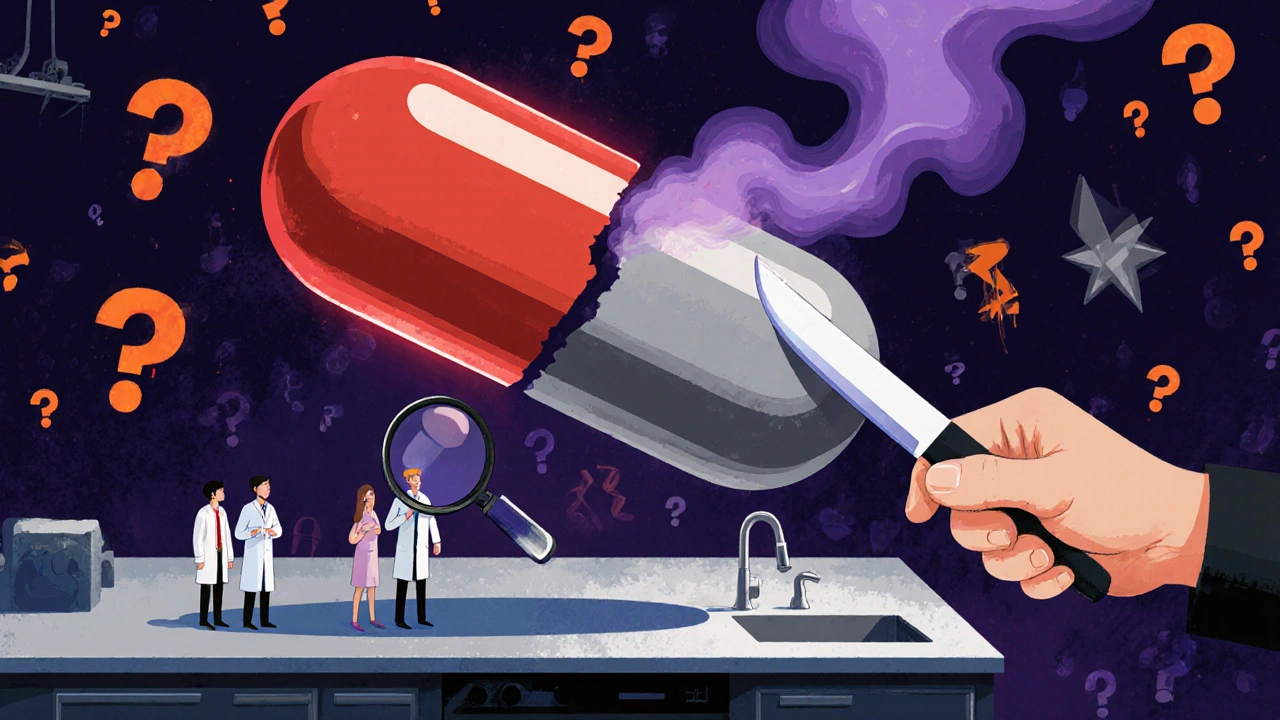
Crushing Tablets and Splitting Pills: What’s Safe and What’s Not
Crushing or splitting pills can save money but carries serious risks. Learn which medications are safe to split, the dangers of dose dumping, and how to avoid life-threatening mistakes.
read more