
SSRI Hyponatremia Risk Calculator
Risk Assessment Tool
Assess your risk of developing low sodium levels (hyponatremia) while taking SSRIs based on key factors from medical research.
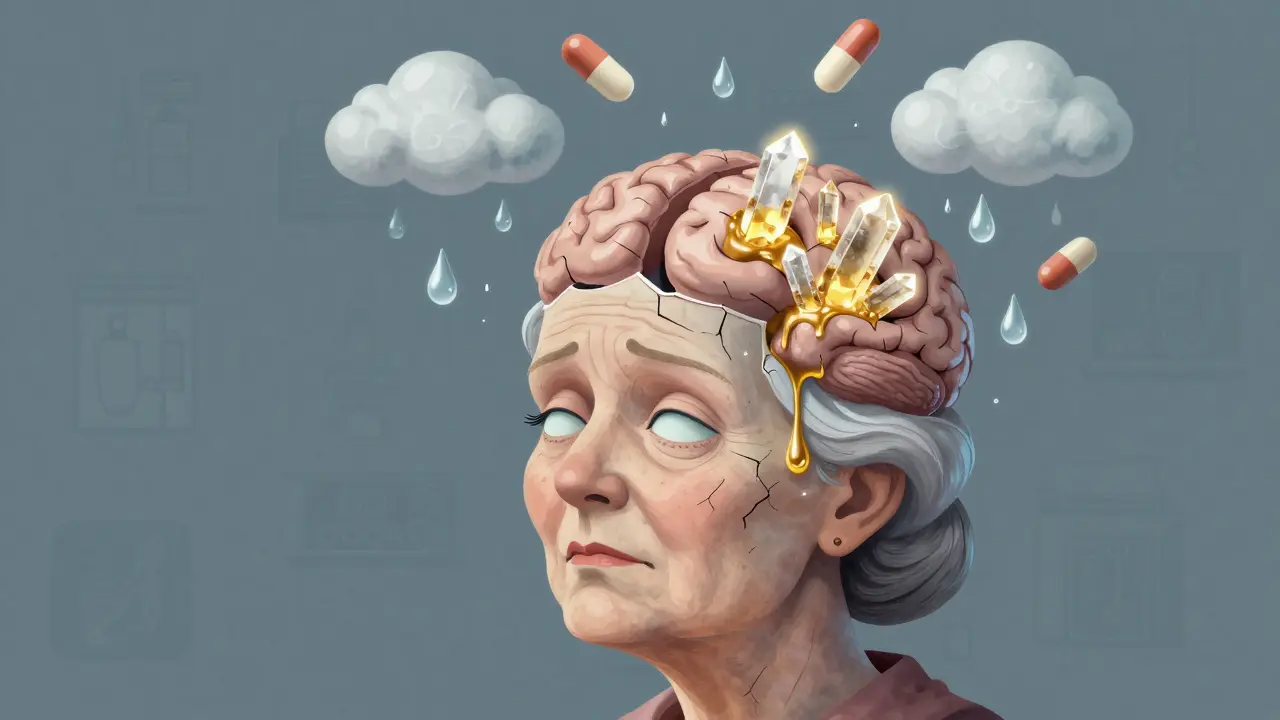
When you start an SSRI for depression, you expect to feel better. But for some people-especially older adults-the medication can quietly lower sodium levels in the blood, leading to confusion, dizziness, and even hospitalization. This isn’t rare. It’s one of the most common and dangerous side effects of antidepressants, yet most patients and even some doctors don’t know about it until it’s too late.
What Is Hyponatremia, and Why Does It Happen with SSRIs?
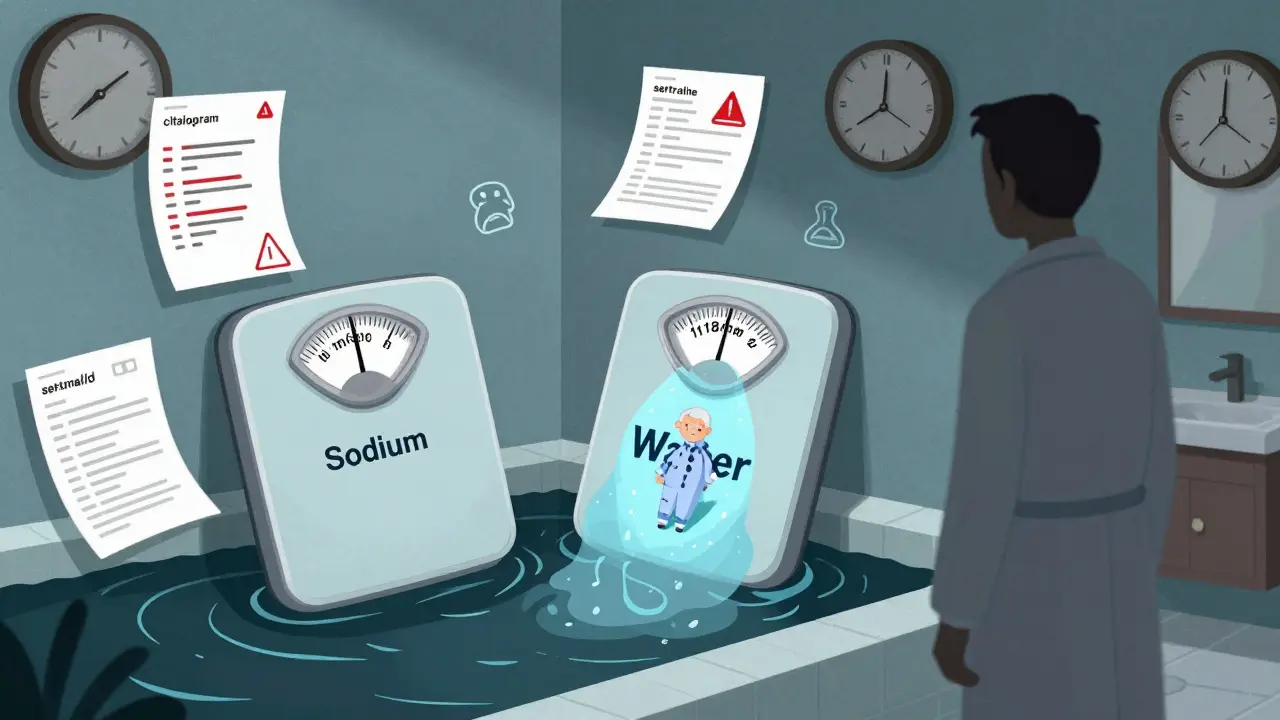
Hyponatremia means your blood sodium is too low-below 135 mmol/L. Sodium helps control fluid balance, nerve function, and muscle contraction. When it drops, water floods into cells, including brain cells. That’s when confusion, headaches, nausea, and seizures start.
SSRIs like citalopram, sertraline, and fluoxetine trigger this by overstimulating serotonin receptors in the brain. This tricks the body into releasing too much antidiuretic hormone (ADH). Normally, ADH tells your kidneys to hold onto water. Too much ADH means you keep drinking water but don’t pee it out. Your blood gets diluted. Sodium levels drop. It’s not about dehydration-it’s about water overload.
This usually happens within two to four weeks of starting the SSRI or increasing the dose. That’s why symptoms often get missed. People think they’re just adjusting to the medication, or worse, they blame aging or dementia.
Who’s Most at Risk?
If you’re over 65, you’re at dramatically higher risk. Studies show 13.9% to 18.6% of older adults on SSRIs develop hyponatremia. That’s nearly 1 in 5. Women are affected more often-65% of cases are female. People with low body weight (under 60 kg), kidney problems, or who take diuretics like hydrochlorothiazide are also at high risk.
Diuretics make things worse. They cause you to lose sodium through urine, so your body tries to compensate by holding onto water. Add an SSRI on top, and your body gets stuck in a dangerous loop: less sodium, more water, diluted blood. One study found the risk jumps 4.2 times when SSRIs and diuretics are combined.
Even if you’re healthy, age alone changes how your kidneys handle fluids. By 70, your kidney function naturally slows. Your body doesn’t flush out extra water as easily. That’s why SSRIs are now listed as potentially inappropriate for older adults in the American Geriatrics Society’s 2023 Beers Criteria.
Which SSRIs Carry the Highest Risk?
Not all SSRIs are the same. Citalopram has the highest risk-2.37 times more likely to cause hyponatremia than other antidepressants. Sertraline and fluoxetine are close behind. Paroxetine is a bit lower, but still risky.
Here’s the breakdown based on 2024 data:
- Citalopram: Odds ratio 2.37
- Sertraline: Odds ratio 2.15
- Fluoxetine: Odds ratio 1.98
- Paroxetine: Odds ratio 1.82
Compare that to mirtazapine, an antidepressant that doesn’t work like an SSRI. It has a risk level of just 0.47-less than half the risk of SSRIs. Bupropion (Wellbutrin) is also safer, with almost no link to low sodium.
This isn’t just theory. In one study, for every 1,000 people treated with SSRIs, about 18.6 developed hyponatremia. With mirtazapine, it was only 6.5. That’s a number needed to harm (NNH) of 82. In plain terms: if you switch 82 older patients from an SSRI to mirtazapine, you prevent one case of dangerous low sodium.
Real Stories: When Symptoms Are Mistaken for Something Else
A 78-year-old woman in Melbourne started sertraline for depression. Ten days later, she became confused, slurred her speech, and fell. Her family thought it was early dementia. Blood tests showed sodium at 118 mmol/L-severely low. She spent five days in intensive care.
Another case: an 82-year-old woman on citalopram became disoriented, stopped eating, and didn’t recognize her own children. Her son, who posted on Reddit, said the doctor didn’t mention hyponatremia. Sodium was 122 mmol/L. She was hospitalized. The SSRI was stopped. It took four days for her sodium to return to normal.
These aren’t outliers. A 2023 survey found only 28.7% of patients were warned about this risk before starting SSRIs. And doctors? A study showed 63.4% didn’t know the typical onset window-two to four weeks. So symptoms get ignored. Or worse, treated as dementia.
What Should You Do? Testing, Monitoring, and Safer Alternatives
Here’s what actually works:
- Test sodium before starting. Get a blood test within 7 days before beginning any SSRI.
- Test again at 2 weeks. That’s when levels usually drop. Don’t wait until you feel bad.
- High-risk patients? Test monthly for the first 3 months. Especially if you’re over 65, on diuretics, or have kidney issues.
- Watch for early signs. Headache, nausea, feeling off, fatigue. These come before confusion or seizures.
- Ask about alternatives. If you’re over 65, mirtazapine is safer. Bupropion is another option. Both work for depression without the sodium risk.
Dr. Elena Martinez, lead author of the 2024 meta-analysis, says: “Mirtazapine should be first-line for elderly patients.” That’s not a suggestion-it’s evidence-based care.
And if hyponatremia happens? Mild cases (sodium 125-134) often fix themselves with fluid restriction (800-1000 mL/day) and stopping the SSRI. Severe cases (below 125) need hospital care-IV saline, slow correction, and monitoring to avoid brain damage from too-fast correction.
Why This Is Still Underdiagnosed
Most people don’t know hyponatremia exists. Primary care doctors don’t test for it. Families assume confusion is normal aging. Elderly patients don’t report mild nausea or fatigue-they think it’s just getting older.
Studies estimate 37.8% of mild cases go undetected in primary care. That means thousands of older adults are walking around with low sodium, at risk of falls, cognitive decline, or sudden collapse. And because the symptoms mimic dementia, many are misdiagnosed, put on more meds, and spiral further.
The FDA now requires SSRI labels to warn about hyponatremia. But warnings on a pill bottle don’t help if no one reads them-or if the doctor doesn’t mention it.
What’s Changing in 2026?
Prescribing patterns are shifting. Between 2018 and 2023, SSRI use in people over 65 dropped 22.3%. Mirtazapine prescriptions for that group rose 34.7%. That’s because doctors are finally listening to the data.
The European Medicines Agency is reviewing SSRI safety, with results due by late 2025. The first clinical algorithm for managing SSRI-induced hyponatremia was published in March 2024-giving doctors clear steps to follow.
By 2027, mirtazapine is expected to be used in over 42% of antidepressant prescriptions for older adults. That’s up from less than 30% in 2023. The trend is clear: safer options are winning.
Bottom Line: Don’t Assume It’s Just Depression
SSRIs save lives. But they’re not risk-free. For older adults, the risk of low sodium is real, avoidable, and often ignored. If you or a loved one is on an SSRI and starts feeling confused, sluggish, or nauseous-get a blood test. Don’t wait. Sodium levels can drop fast.
Ask your doctor: “Has my sodium been checked since I started this medication?” If they say no, ask for a test. If they say it’s not necessary, ask about mirtazapine or bupropion. There are safer choices.
Depression is serious. But so is brain swelling from low sodium. You don’t have to choose between treating one and risking the other.
Can SSRIs cause confusion in older adults?
Yes. SSRIs can cause hyponatremia-low sodium in the blood-which leads to confusion, disorientation, and memory problems. These symptoms are often mistaken for dementia or normal aging, especially in people over 65. The confusion happens because low sodium causes brain cells to swell with water. It’s not a psychological effect-it’s a physical one, and it’s reversible if caught early.
How long after starting an SSRI does hyponatremia usually appear?
Most cases develop within two to four weeks of starting the medication or increasing the dose. That’s why testing at the two-week mark is critical. Symptoms can appear as early as 5-7 days, especially in high-risk patients. Waiting longer than four weeks doesn’t reduce risk-it just delays diagnosis.
Is mirtazapine really safer than SSRIs for older adults?
Yes. Mirtazapine has a much lower risk of causing hyponatremia-less than half the risk of SSRIs. Unlike SSRIs, it doesn’t strongly affect serotonin receptors that trigger antidiuretic hormone release. It’s now recommended as a first-line alternative for older adults in clinical guidelines. Many patients tolerate it well, and it’s effective for depression, sleep issues, and appetite loss.
Should I stop my SSRI if I feel confused?
Don’t stop abruptly without medical advice. But do get a blood test immediately. Confusion, nausea, or dizziness after starting an SSRI could be hyponatremia. Stopping the drug is often the first step in treatment, but it should be done under supervision. In severe cases, you may need IV fluids. Never ignore these symptoms-especially if you’re over 65.
Can I prevent hyponatremia while taking an SSRI?
Yes. Get a baseline sodium test before starting. Repeat it at 2 weeks. Avoid excessive water intake-don’t drink more than 1.5 liters a day unless told otherwise. Avoid diuretics if possible. If you’re over 65, ask your doctor if mirtazapine or bupropion might be a better fit. Monitoring beats prevention.
Are there any other antidepressants besides SSRIs that cause low sodium?
Yes, but less often. SNRIs like venlafaxine and duloxetine have moderate risk. Tricyclics like amitriptyline also carry some risk. But SSRIs are the biggest concern. Bupropion and mirtazapine have the lowest risk. Lithium and some antipsychotics can also cause hyponatremia, but they’re not used as first-line antidepressants.
How long does it take to recover from SSRI-induced hyponatremia?
Mild cases usually resolve within 72-96 hours after stopping the SSRI and limiting fluids. Severe cases need hospital treatment and can take several days to correct safely. Recovery of mental symptoms like confusion can take longer-up to a week or more-because brain cells need time to rebalance. Full recovery is common if treated properly.
Comments (12)
Candice Hartley
I had no idea this was a thing. My grandma started sertraline and got super confused - they thought it was dementia. Turns out her sodium was 120. She’s fine now, but we almost lost her. 🙏
John O'Brien
This is wild. I’m a nurse and I’ve seen this 3 times in the last year. Old folks get put on SSRIs like they’re vitamins. No labs, no warnings. Then they end up in the ER looking like they’ve had a stroke. Someone needs to scream this from the rooftops.
Harry Henderson
STOP letting doctors prescribe SSRIs to seniors like candy. We’re not talking about a rash - we’re talking about brain swelling. If your doc doesn’t check sodium before and at 2 weeks, find a new one. Period.
astrid cook
Oh please. Another fear-mongering post. My aunt took citalopram for 5 years and she’s sharper than most 40-year-olds. You people act like SSRIs are poison when they literally saved her life. Stop scaring people with cherry-picked stats.
Desaundrea Morton-Pusey
This is why I don’t trust Big Pharma. They push these drugs hard, then hide the side effects. Next thing you know, they’ll say aspirin causes brain rot. Who’s paying you to write this? 🤔
Murphy Game
They’re not hiding it. They’re just counting on you to die before you notice. Look at the data - every single elderly person on SSRIs is a ticking time bomb. And the FDA? They’re asleep at the wheel. This is slow genocide disguised as mental health care.
Kirstin Santiago
I appreciate the data here - really do. My mom’s on mirtazapine now after a scary hyponatremia episode. She sleeps better, eats more, and her mood’s stable. It’s not perfect, but it’s safer. If you’re over 65 and on an SSRI, please, get tested. It’s a simple blood draw. Could save your life.
Kegan Powell
I think we need to stop framing this as SSRIs bad vs mirtazapine good. It’s more like: we’ve been treating depression in elders like we treat a cold - one size fits all. But the body changes. The brain changes. The kidneys change. We need personalized care, not blanket prescriptions. Mirtazapine isn’t magic - it’s just less dangerous for some. And that’s enough to start with.
April Williams
If you’re over 65 and taking an SSRI, you’re already playing Russian roulette with your brain. And if your doctor didn’t warn you? They’re negligent. I’d sue them. No one deserves to be confused because someone didn’t check a basic blood panel. This isn’t just negligence - it’s criminal.
suhail ahmed
Man, this is the kind of post that makes me proud to be a med student. We’re taught SSRIs = first line, but nobody drills us on the sodium thing until you see a patient crash. I’m gonna start asking for baseline Na+ before I even write a script. And yeah - mirtazapine’s my new BFF for elderly folks. Less drama, more safety. 🙌
Andrew Clausen
The article contains multiple grammatical errors and misuses of statistical terminology. For example, 'number needed to harm' is incorrectly contextualized, and the odds ratios are presented without confidence intervals. Furthermore, the conclusion that mirtazapine is 'safer' is not supported by RCTs comparing long-term cognitive outcomes. This is alarmist pseudoscience dressed as medical advice.
Anjula Jyala
Hyponatremia due to SIADH secondary to SSRI-induced serotonergic overstimulation is well-documented in geriatric pharmacokinetic studies with incidence rates >15% in cohort analyses. The Beers Criteria explicitly classify SSRIs as PIMs in elderly populations due to ADH dysregulation and renal aquaporin-2 upregulation. Mirtazapine’s noradrenergic and histaminergic profile confers lower antidiuretic liability. Case closed.