
Pharmaceutical Development: How Drugs Are Made, Tested, and Brought to Market
When you pick up a pill at the pharmacy, you’re holding the result of pharmaceutical development, the multi-year process of discovering, testing, and approving medicines for public use. Also known as drug development, it’s not just science—it’s a complex system of regulations, patents, and real-world testing that determines what treatments reach you, when, and at what cost. This process doesn’t start with a pill. It starts with a question: How do we fix this disease? Researchers spend years identifying targets in the body, designing molecules to hit them, and testing them in labs. But only a tiny fraction ever make it to patients. Most fail—not because they don’t work, but because they’re too toxic, too expensive, or too hard to produce at scale.
Once a drug shows promise, it enters clinical trials. These aren’t just lab tests—they’re real people taking the drug under strict oversight. Phase 1 checks safety in healthy volunteers. Phase 2 sees if it helps patients with the condition. Phase 3 compares it to existing treatments in thousands of people. Only then does the FDA, the U.S. agency responsible for approving medicines and ensuring they’re safe and effective. Also known as Food and Drug Administration, it decide whether to approve it. But approval isn’t the end. The real battle often begins after launch. Companies fight to protect their patents, while others rush to make cheaper generic drugs, medicines that contain the same active ingredient as brand-name drugs but cost far less. Also known as generic medications, they enter the market through legal challenges like Paragraph IV certifications. These disputes, known as patent litigation, legal battles over drug patents that can delay cheaper alternatives from reaching patients. Also known as generic drug lawsuits, they can hold back access for years—even when the science says the generic is just as safe.
What you get on the shelf isn’t just chemistry. It’s shaped by money, law, and human behavior. A pill’s price isn’t just about production—it’s tied to how long the patent lasts, whether a company sued to extend it, and whether the FDA granted exclusivity. Even after approval, problems pop up: inactive ingredients cause reactions, mail-order pharmacies ship meds under weird conditions, and patients stop taking them because they think generics don’t work. That’s why the posts below cover everything from how to read a prescription label to why coffee messes with thyroid meds. You’ll find real stories about what happens when development meets daily life—how a split pill can save money, how a label can change how you feel, and why a generic version might make you sick even if it’s "the same" drug. This isn’t theory. It’s what happens when science meets the real world—and you need to know how to navigate it.
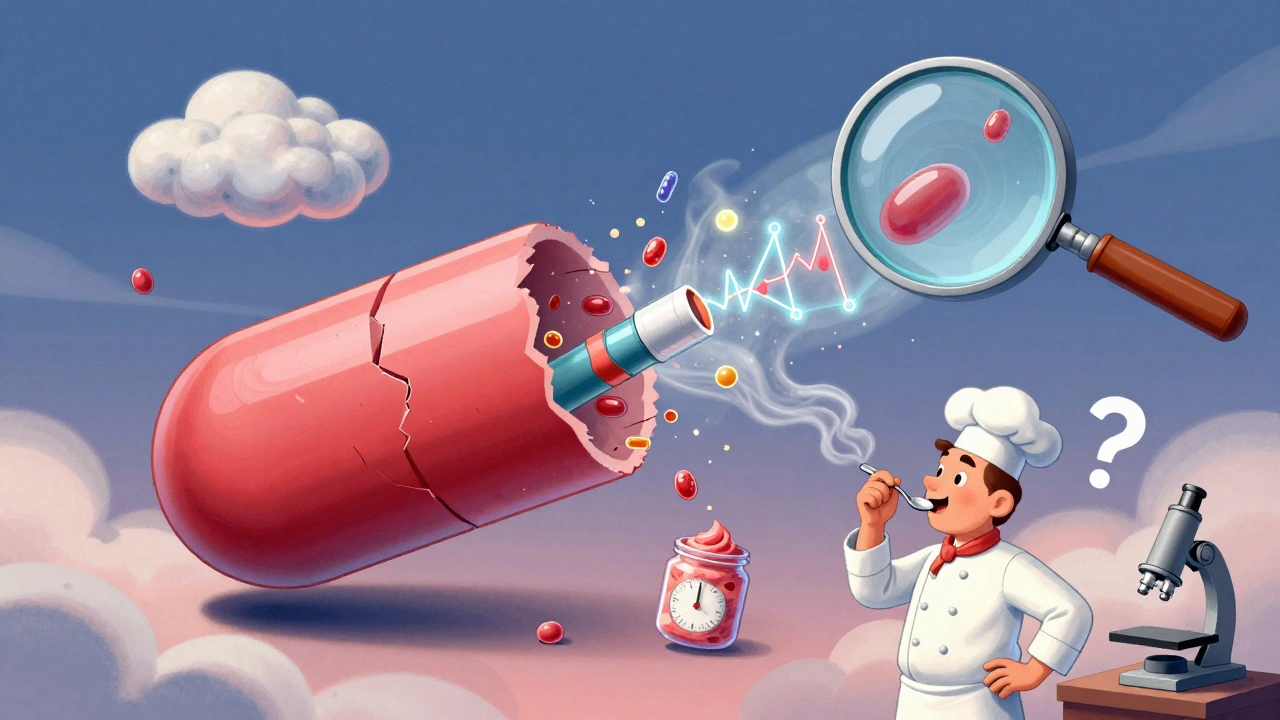
Complex Generic Formulations: Why Proving Bioequivalence Is So Hard
Complex generic formulations like inhalers, topical creams, and injectables are hard to copy because traditional bioequivalence tests don't work. Learn why proving they're as safe and effective as brand drugs is one of the biggest hurdles in generic medicine.
read more