
Insulin Storage: How to Keep Your Insulin Safe and Effective
When you rely on insulin, a life-saving hormone used to manage diabetes. Also known as human insulin, it's not just a medicine—it's a delicate biological product that loses effectiveness if not stored correctly. Many people assume insulin lasts forever once opened, but heat, light, and time can break it down—sometimes without you even noticing. That’s why knowing how to store insulin properly isn’t just helpful, it’s essential for keeping your blood sugar stable and avoiding dangerous spikes or drops.
Unopened insulin needs to stay cold, ideally between 36°F and 46°F (2°C to 8°C). That means your refrigerator is the best place—just don’t freeze it. Freezing ruins the structure of insulin molecules, making it useless. Once you start using a vial or pen, you can keep it at room temperature, usually up to 86°F (30°C), for about 28 days. That’s right: you don’t need to keep an open bottle in the fridge. In fact, cold insulin hurts more when you inject it. Many people find room-temperature insulin easier to handle and less painful.
Traveling with insulin? You need a different plan. Never pack it in checked luggage—temperatures in airplane cargo holds can drop below freezing or climb dangerously high. Use a cooling wallet or insulated bag with a cold pack, but make sure the insulin doesn’t touch ice directly. If you’re flying, carry a doctor’s note and keep it in your carry-on. Also, check the expiration date on the box. Even if it looks fine, insulin past its expiry date won’t work as well. And don’t forget: if your insulin looks cloudy, clumpy, or discolored, toss it. It’s not worth the risk.
What about insulin pens? Most work the same way as vials, but some brands have different rules. For example, some pre-filled pens can only stay out for 10 days, while others last 28. Always read the label that comes with your specific product. If you’re switching brands or types—say from Lantus to Humalog—check the storage guidelines again. They’re not all the same. And if you’re sharing insulin with someone else? Don’t. Even if it’s the same type, contamination risks are real.
There’s a reason pharmacies keep insulin in the back fridge. It’s not just tradition—it’s science. Insulin is a protein, and proteins degrade when exposed to heat, agitation, or light. Sunlight through a car window can ruin a pen in hours. A hot car seat? Same problem. That’s why keeping insulin cool isn’t optional. It’s part of your daily diabetes routine, just like checking your blood sugar.
And here’s something most people miss: insulin doesn’t go bad because it’s old—it goes bad because it’s been misused. A vial sitting on a windowsill for weeks might still look clear, but its potency could be down by 30%. That’s enough to throw off your whole control plan. You won’t feel it right away, but over time, you’ll see higher numbers, more fatigue, and more frustration.
Below, you’ll find real-world advice from people who’ve been there—how to handle insulin during power outages, how to tell if it’s still good, what to do when you’re stuck without refrigeration, and why some people have bad reactions after switching storage habits. These aren’t theory pieces. They’re practical fixes from daily life. Whether you’ve been on insulin for years or just started, this collection gives you the exact details you need to keep your treatment working.
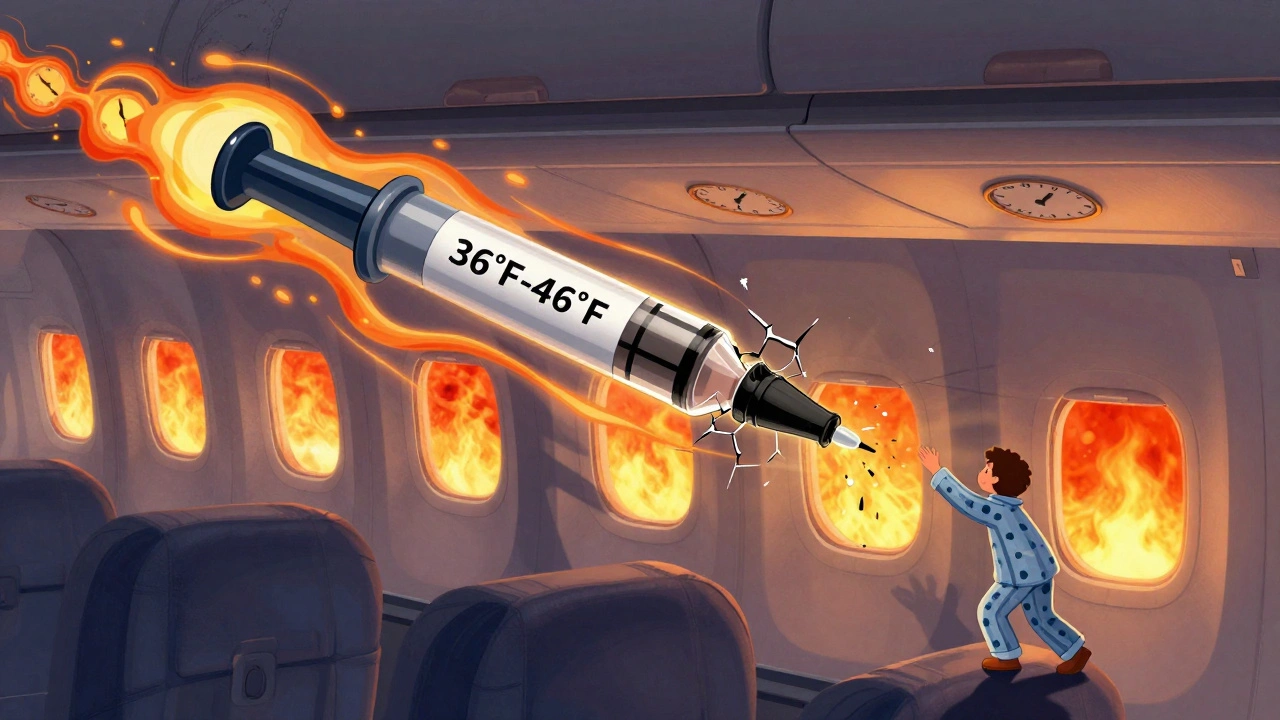
How to Store Insulin and Biologics During Long Flights: A Practical Guide
Learn how to safely store insulin and biologics during long flights to prevent dangerous temperature damage. Essential tips for travelers with diabetes, including cooling wallets, TSA rules, and dosing adjustments for time zones.
read more