
Gout Flare Treatment: Quick Relief, Medications, and What Actually Works
When a gout flare, a sudden, intense joint pain caused by uric acid crystals building up in the joints. Also known as acute gouty arthritis, it often hits the big toe like a lightning strike—red, swollen, and unbearable even under a sheet. This isn’t just bad luck. It’s your body’s reaction to too much uric acid, usually from diet, genetics, or medications like diuretics. And if you’ve had one flare, you’re far more likely to get another—unless you know how to stop it.
Most people reach for ibuprofen or naproxen right away, and those NSAIDs, nonsteroidal anti-inflammatory drugs used to reduce pain and swelling during gout attacks do help. But they’re not always enough. For faster, stronger relief, doctors often prescribe colchicine, a drug specifically designed to stop the inflammation triggered by uric acid crystals. It works best if taken within the first 12 hours of the flare. And if you can’t take NSAIDs or colchicine, corticosteroids—either pills or shots—can calm things down fast. But none of these fix the root problem: high uric acid. That’s where allopurinol, a daily medication that lowers uric acid production to prevent future flares comes in. It doesn’t help during a flare, but it’s the key to stopping them long-term. The tricky part? Starting allopurinol during a flare can make things worse. Timing matters.
What you eat plays a big role too. Red meat, shellfish, beer, and sugary drinks spike uric acid. But it’s not just about avoiding those. Some people think cherry juice or baking soda cures gout, but the science is thin. What works? Drinking water, losing weight if needed, and sticking to a consistent medication schedule. Skipping your allopurinol because you feel fine? That’s how flares come back. And if you’re on blood pressure meds like lisinopril-HCTZ, you might be at higher risk—those diuretics can raise uric acid levels without you even knowing.
The posts below cover exactly what you need: how to spot a flare early, which meds work fastest, why some generics cause unexpected reactions, how to avoid drug interactions (like allopurinol with azathioprine), and what to do if your current treatment isn’t cutting it. You’ll find real talk on managing gout without guesswork—no fluff, no myths, just what’s backed by evidence and used in clinics.
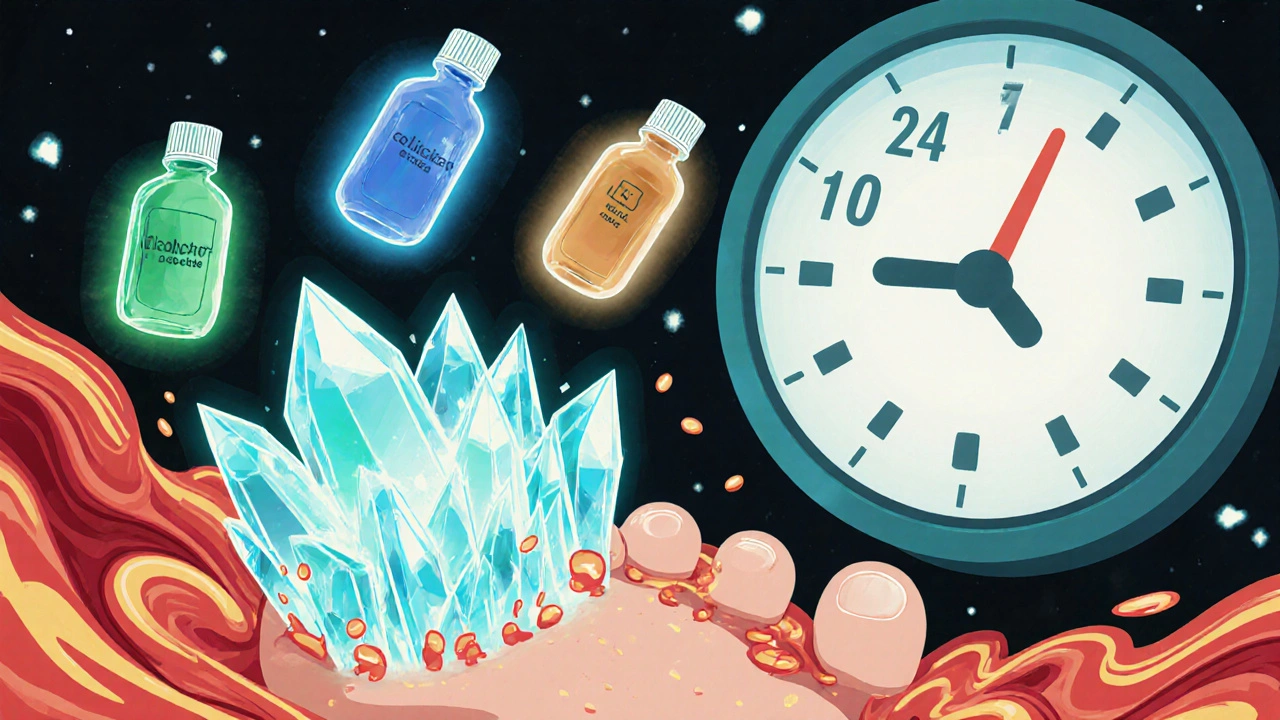
Gout Flares: Colchicine, NSAIDs, and Steroids Compared
Learn how colchicine, NSAIDs, and steroids compare for treating acute gout flares. Find out which option is safest for your health, when to use each, and why timing matters more than the drug you choose.
read more