
Endocrine Disease: Causes, Medications, and How to Manage Hormonal Imbalances
When your endocrine disease, a condition where hormone-producing glands don’t work right, leading to imbalances that affect metabolism, mood, energy, and more. Also known as hormonal disorder, it can show up as unexplained weight gain, fatigue, mood swings, or even trouble sleeping. It’s not just about being tired—it’s about your body’s internal system going off track. The thyroid, pancreas, adrenal glands, and pituitary are all part of this network, and when one fails, the whole system feels it.
Take thyroid medication, like levothyroxine, used to replace or supplement thyroid hormone when the gland doesn’t make enough. It’s one of the most common treatments for endocrine disease, but even small things like drinking coffee too soon after taking it can block absorption. Or consider diabetes, a type of endocrine disease where the body can’t properly use or make insulin. Metformin helps, but its extended-release form cuts stomach upset—something many patients don’t realize matters. Then there’s adrenal disorders, like Cushing’s or Addison’s, where steroid levels go haywire, causing everything from hiccups to high blood pressure. These aren’t rare side effects—they’re direct results of hormonal chaos.
Endocrine disease doesn’t just need a pill. It needs timing, diet, and awareness. Soy can interfere with thyroid meds. Calcium can cancel out osteoporosis drugs. Even generic versions of the same medicine can cause unexpected reactions because of inactive ingredients. You’re not imagining it—if you feel different after switching brands, it might not be in your head. It’s in the excipients.
What you’ll find below isn’t just a list of articles. It’s a practical guide to navigating the real-world mess of endocrine disease: how to take your meds right, what foods to watch, why your doctor might change your prescription, and when to push back if something feels off. These posts come from people who’ve lived it—not just read about it. They’ll show you how to spot the red flags, avoid common mistakes, and take back control without guessing.
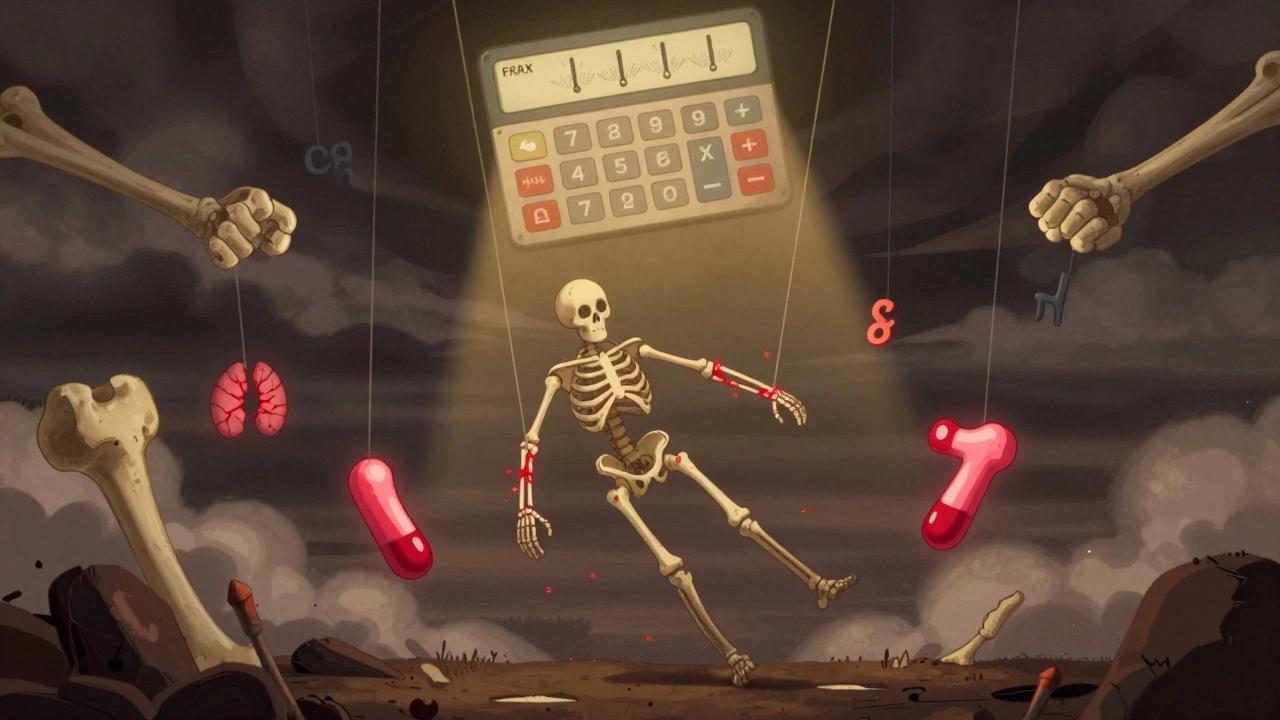
Osteoporosis in Endocrine Disease: How FRAX and Bisphosphonates Guide Treatment
Osteoporosis in endocrine diseases like diabetes and thyroid disorders requires special attention. FRAX calculates fracture risk accurately, and bisphosphonates are the first-line treatment to prevent breaks. Here’s how to know if you need them.
read more