
Drug Dosage: How Much Is Too Much and When It Works Right
When you take a drug dosage, the specific amount of a medication prescribed to achieve a therapeutic effect without causing harm. Also known as medication dose, it's not just about how much you swallow—it's about when, how, and with what you take it. A pill that saves one person could harm another, not because of the drug itself, but because of how the dosage was handled.
Take levothyroxine, a thyroid hormone replacement used to treat hypothyroidism. If you drink coffee 30 minutes after taking it, your body absorbs barely half the dose. That’s not your fault—it’s how the chemistry works. Same goes for bisphosphonates, bone-strengthening drugs used for osteoporosis. Take them with calcium or food, and they become useless. The drug dosage is correct, but the timing breaks it. These aren’t rare cases. They’re everyday mistakes that thousands make because no one told them the rules.
Then there’s the hidden danger: drug interactions, when two or more medications change how each other behaves in the body. Allopurinol and azathioprine together can shut down your bone marrow. Tacrolimus at "normal" blood levels can still cause tremors in 4 out of 10 transplant patients. These aren’t side effects you can ignore—they’re signals your body is under stress from a dosage mismatch. Even something as simple as a topical cream like Fucidin Cream, an antibiotic used for skin infections can fail if you use it too often or on the wrong type of infection. The dosage isn’t the problem. The match is.
Drug dosage isn’t just a number on a bottle. It’s a chain reaction: your age, your diet, your other meds, your liver, your kidneys, even the time of day. A teen on ADHD stimulants might lose appetite and stall growth—not because the dose is too high, but because it’s not being adjusted as their body changes. An older adult on blood pressure meds might get gout because a diuretic in the combo pushes uric acid levels too high. No single rule fits everyone. That’s why some people swear by their meds, and others feel worse after taking them.
You don’t need a medical degree to get this right. You just need to know the basics: never take meds with food or drinks unless told to, space out conflicting supplements, track how you feel after each dose, and ask about interactions before adding anything new. The posts below show real cases—how people fixed their dosing mistakes, avoided dangerous combos, and got their health back on track. No fluff. No theory. Just what works.
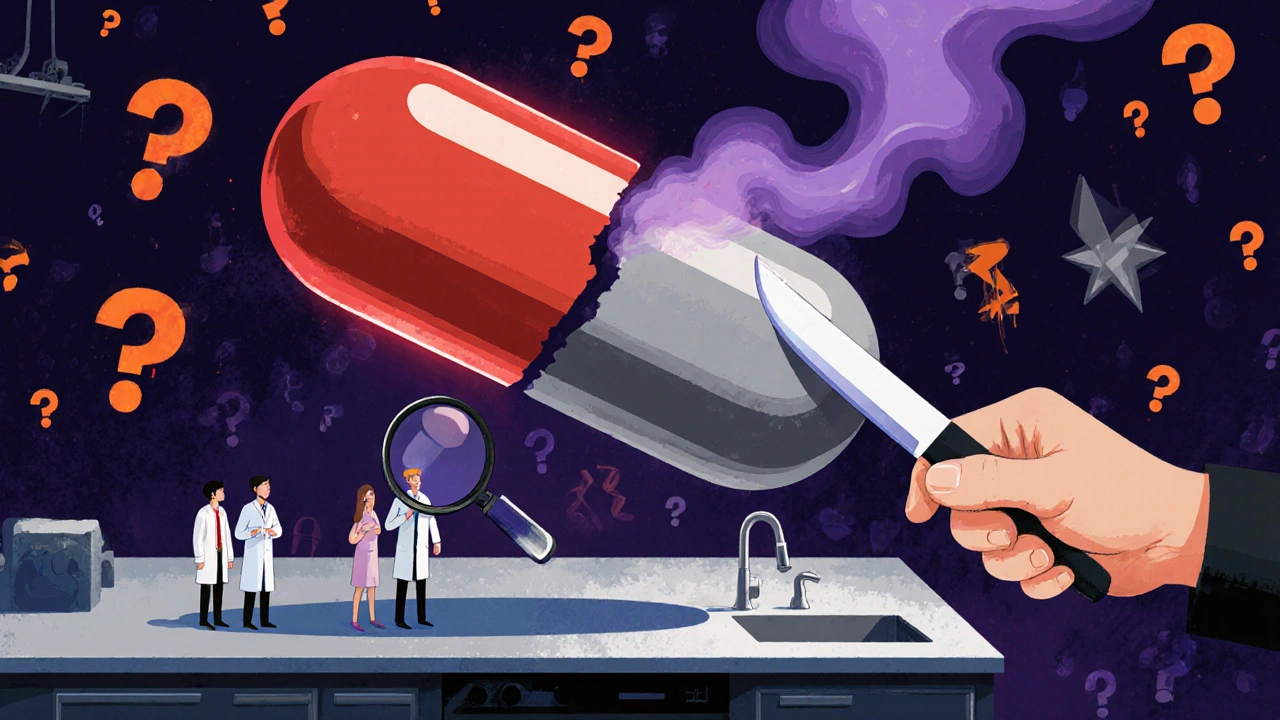
Crushing Tablets and Splitting Pills: What’s Safe and What’s Not
Crushing or splitting pills can save money but carries serious risks. Learn which medications are safe to split, the dangers of dose dumping, and how to avoid life-threatening mistakes.
read more