
Crushing Tablets: When It’s Safe, When It’s Dangerous, and What to Do Instead
When you crushing tablets, the physical alteration of oral medications to make them easier to swallow. Also known as pill crushing, it’s often done out of necessity—for kids, elderly patients, or those with swallowing difficulties. But not all pills are meant to be broken, and doing it wrong can turn a helpful drug into a harmful one.
Many medications are designed with special coatings or timed-release systems. Crush a sustained-release opioid like oxycodone, and you risk a dangerous overdose. Crush a proton pump inhibitor like omeprazole, and you destroy its acid-resistant shell—making it useless before it even reaches your stomach. Even something as simple as a film-coated tablet can change how fast the drug enters your bloodstream if you grind it up. The drug absorption, how quickly and completely a medication enters your bloodstream. Also known as bioavailability, it’s directly affected by how the pill is taken. Some drugs need to be absorbed slowly over hours. Others need to avoid stomach acid. Crushing them breaks that design.
Then there’s the issue of medication administration, the method by which a drug is delivered to the body. Also known as route of administration, it’s not just about swallowing—it’s about safety, accuracy, and patient comfort. Nurses and caregivers often crush pills to mix them with applesauce or juice. But if the pill is a controlled-release version, that mix might deliver the whole dose at once. Some medications, like transdermal patches or capsules with beads, shouldn’t even be opened. And if you’re crushing a medication that’s toxic to handle—like chemotherapy drugs—you’re putting yourself at risk too.
So what should you do instead? First, ask your pharmacist. They know which pills can be safely split or crushed and which ones can’t. Many drugs come in liquid form, chewable versions, or dissolvable tablets—often just as effective and way safer. If you’re struggling to swallow pills, try the water bottle trick: place the pill on your tongue, close your lips around a water bottle, take a sip, and swallow while tilting your head back. It works better than you think. Or use a pill splitter for scored tablets—never guess where to break an unmarked pill.
Some people crush pills because they think it helps with absorption. It doesn’t. In fact, it often hurts it. Take bisphosphonates for osteoporosis—crushing them ruins their need for an empty stomach and upright position. Or levothyroxine: crushing it changes how your body absorbs thyroid hormone, leading to unstable levels. Even small changes can throw off your treatment. And if you’re giving meds to someone who can’t swallow, don’t assume crushing is the answer. Talk to a doctor about alternatives like patches, injections, or oral suspensions.
There’s also the problem of dosing accuracy. A pill crushed into a spoonful of yogurt might not distribute evenly. You might end up giving half the dose—or twice. That’s dangerous with narrow-therapeutic-index drugs like warfarin or digoxin. Even if you think you’re being careful, it’s easy to lose track of how much you’ve given.
What you’ll find below are real cases where people tried to make pills easier to take—and what went wrong. From ADHD meds that lost their timed release to transplant drugs that caused toxicity when crushed, these aren’t hypotheticals. They’re stories from real patients who learned the hard way. You’ll also see what alternatives actually work, and how to talk to your pharmacist about options you might not even know exist. This isn’t about following rules blindly. It’s about understanding why those rules exist—and how to stay safe when swallowing becomes a challenge.
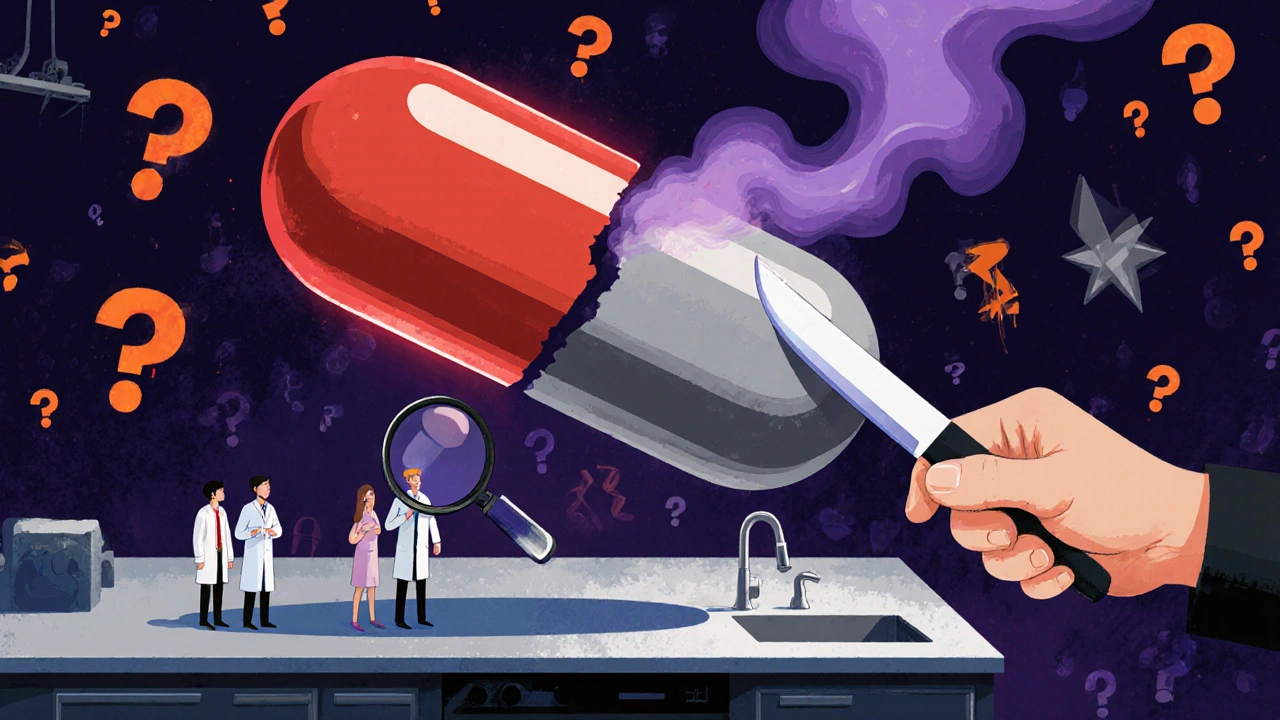
Crushing Tablets and Splitting Pills: What’s Safe and What’s Not
Crushing or splitting pills can save money but carries serious risks. Learn which medications are safe to split, the dangers of dose dumping, and how to avoid life-threatening mistakes.
read more