
Contact Allergens: What Triggers Skin Reactions and How to Avoid Them
When your skin turns red, itches, or swells after touching something harmless like a watch or shampoo, you’re likely dealing with contact allergens, substances that trigger an immune response when they touch the skin. Also known as allergic contact dermatitis, this isn’t just a rash—it’s your body’s way of saying it recognizes something as a threat, even if it’s perfectly safe for most people. Unlike poison ivy, which affects almost everyone, contact allergens only bother those who’ve become sensitized over time. That’s why you might suddenly react to a ring you’ve worn for years, or a new lotion that felt fine the first time.
Common nickel, a metal found in jewelry, zippers, and even phone cases is the #1 culprit. About 1 in 5 women and 1 in 10 men react to it. Fragrances, hidden in everything from soap to laundry detergent are another big trigger—even "unscented" products can contain masking chemicals. Then there’s latex, used in gloves, bandages, and some medical devices, which can cause delayed reactions that look like burns. These aren’t random. They show up in the same places you touch them: wrists from watches, ears from earrings, neck from collars, hands from cleaning products.
You won’t find these allergens listed clearly on most labels. That’s why people keep getting rashes and blaming themselves. But the pattern is real. If your rash shows up after using a new product, changing laundry detergent, or wearing a new piece of jewelry, it’s probably not coincidence. Patch testing by a dermatologist can pinpoint exactly what you’re reacting to. Once you know, you can avoid it—no more guessing. The good news? Once you identify your triggers, most reactions disappear. You don’t need to stop using everything. Just swap out the ones that cause trouble. Look for nickel-free jewelry, fragrance-free detergents, and hypoallergenic skincare. It’s not about living in a bubble. It’s about knowing what to avoid so you can live without constant itching.
The posts below dive into how everyday medications, supplements, and topical treatments can interact with your skin, trigger hidden allergies, or worsen reactions. You’ll find real examples of what’s in your medicine cabinet that might be making your rash worse, how to read labels like a pro, and what alternatives actually work without the side effects. No fluff. Just what you need to stop the itch and feel normal again.
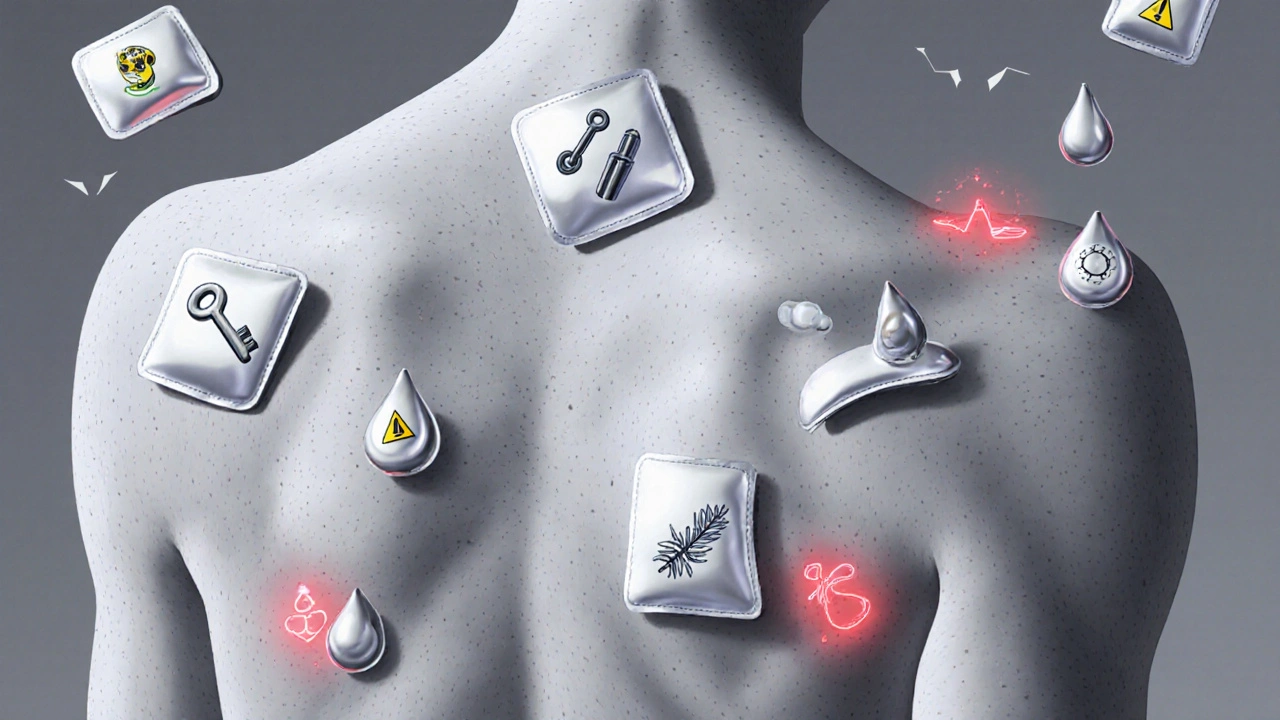
Contact Allergens: How Patch Testing Identifies Skin Irritants and Allergens
Patch testing is the gold standard for identifying hidden skin allergens like nickel, fragrances, and preservatives. Learn how it works, what it detects, and how to avoid triggers that cause chronic rashes.
read more