
Brand-Name Drugs: What They Are, Why They Cost More, and When They Really Matter
When you pick up a prescription, you might see a brand-name drug, a medication developed and marketed by a pharmaceutical company under a patent-protected name. Also known as originator drug, it’s the version that first hit the market after years of research and clinical trials. These are the pills you recognize from TV ads — like Lipitor, Nexium, or Humira. They’re not just names on a bottle; they represent billions in investment, years of testing, and strict quality controls that made them FDA-approved in the first place.
But here’s the catch: once the patent runs out, other companies can make the exact same active ingredient and sell it as a generic drug, a copy of the brand-name version that contains the same active ingredient, dosage, and intended use. Also known as nonproprietary drug, generics are usually 80% cheaper. That’s why mail-order pharmacies and insurers push them — and why you’ll see medication safety, the practice of ensuring drugs are taken correctly to avoid harm warnings in articles about switching from brand to generic. Most of the time, generics work just fine. But sometimes, differences in inactive ingredients — like fillers, dyes, or coatings — can trigger side effects, especially with narrow-therapeutic-index drugs like warfarin or thyroid meds.
That’s why some people stick with brand-name drugs even when generics are available. If you’ve had hiccups from dexamethasone, stomach issues from metformin, or tremors from tacrolimus, you might have noticed that switching to a generic changed how you felt — not because the active ingredient changed, but because your body reacted to something else in the pill. The same goes for drug pricing, the cost structure behind medications, influenced by patents, competition, and manufacturing. Brand-name drugs aren’t expensive because they’re better — they’re expensive because the company had to recover its R&D costs. But that doesn’t mean you should pay more unless you have to.
So when does it actually matter? If you’re on a chronic condition like epilepsy, bipolar disorder, or transplant rejection — where tiny changes in blood levels can cause big problems — your doctor might recommend staying on the brand. But for high blood pressure, diabetes, or allergies? Generics are almost always safe and effective. The real issue isn’t the drug itself — it’s knowing when to question a switch, how to spot unexpected side effects, and how to talk to your pharmacist about what’s really in the bottle. That’s why the posts below cover everything from splitting pills safely to understanding why your thyroid meds don’t work after coffee, and how generic practices at mail-order pharmacies keep your meds stable across the country. You’re not just choosing a pill — you’re choosing a system. And knowing how that system works can save you money, avoid side effects, and keep you in control of your health.
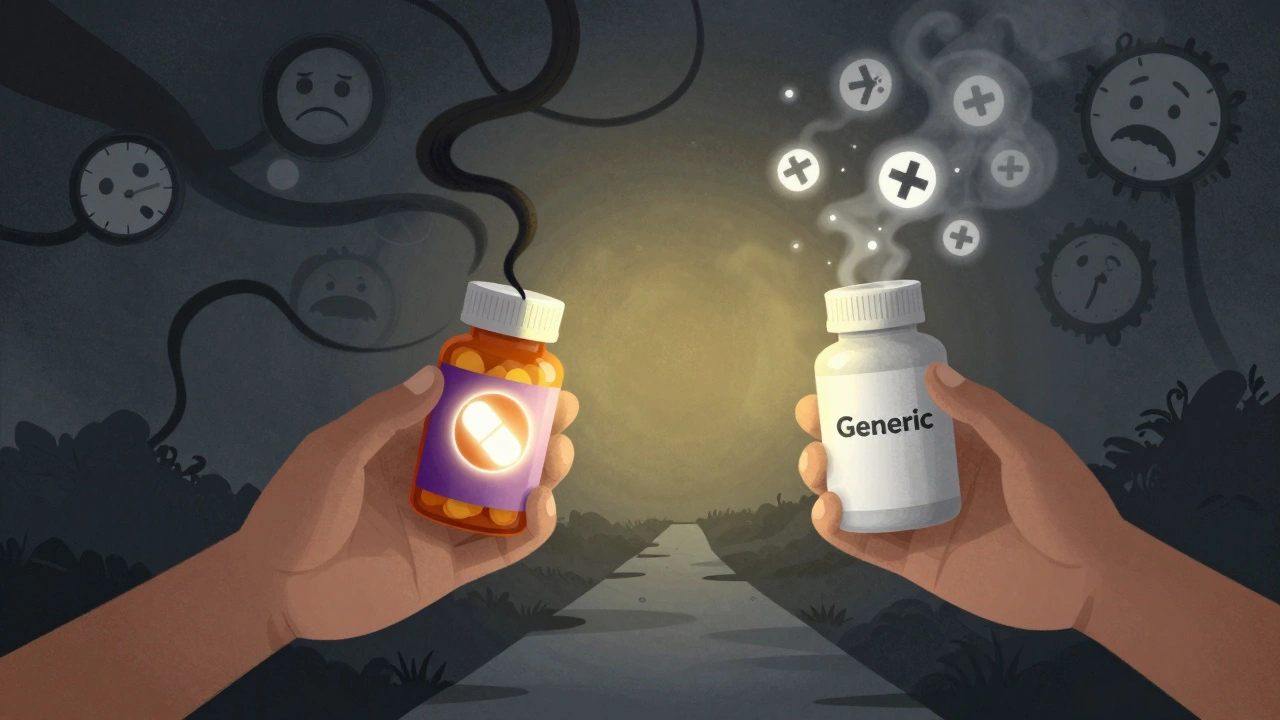
Labeling Effect: How Calling a Drug 'Generic' Changes How Patients Feel and Respond
The labeling effect shows that calling a drug 'generic' can make patients feel it's less effective-even when it's chemically identical to the brand-name version. This psychological bias impacts adherence, side effects, and outcomes.
read more