
Bone Fracture Risk: What Medications, Supplements, and Lifestyle Factors Really Affect Your Bones
When you hear bone fracture risk, the chance that a bone will break due to weakness, trauma, or underlying conditions. Also known as fracture susceptibility, it’s not just about falling—it’s about how strong your bones are to begin with. Many people think it’s only an older person’s problem, but medications, diet, and even how you take your supplements can raise your risk at any age.
Take bisphosphonates, a class of drugs used to treat osteoporosis by slowing bone loss. They help prevent fractures, but if you don’t take them right—like swallowing them with food or lying down too soon—they won’t work. And if you combine them with calcium supplements, a common remedy to strengthen bones at the wrong time, they cancel each other out. That’s not just a myth—it’s why some people still break bones even while on treatment. The same goes for long-term steroid use, which silently drains bone density over months, making even minor bumps dangerous.
It’s not just pills. Coffee right after thyroid meds? That can mess with your metabolism and indirectly weaken bones. Skipping vitamin D? Your body can’t use calcium, no matter how much you take. And let’s not forget that some generic drugs have different inactive ingredients that affect absorption—something you won’t find on the label. These aren’t edge cases. They’re everyday mistakes that add up.
What you’ll find here aren’t generic tips. These are real stories from people who learned the hard way: the woman who took calcium with her bisphosphonate and still fractured her wrist, the man whose hiccups from steroids turned out to be a sign his bones were crumbling, the teen on ADHD meds whose growth slowed because no one checked his vitamin levels. Each post here connects the dots between what you take, when you take it, and how your body responds. No theory. No fluff. Just what actually moves the needle on your bone fracture risk.
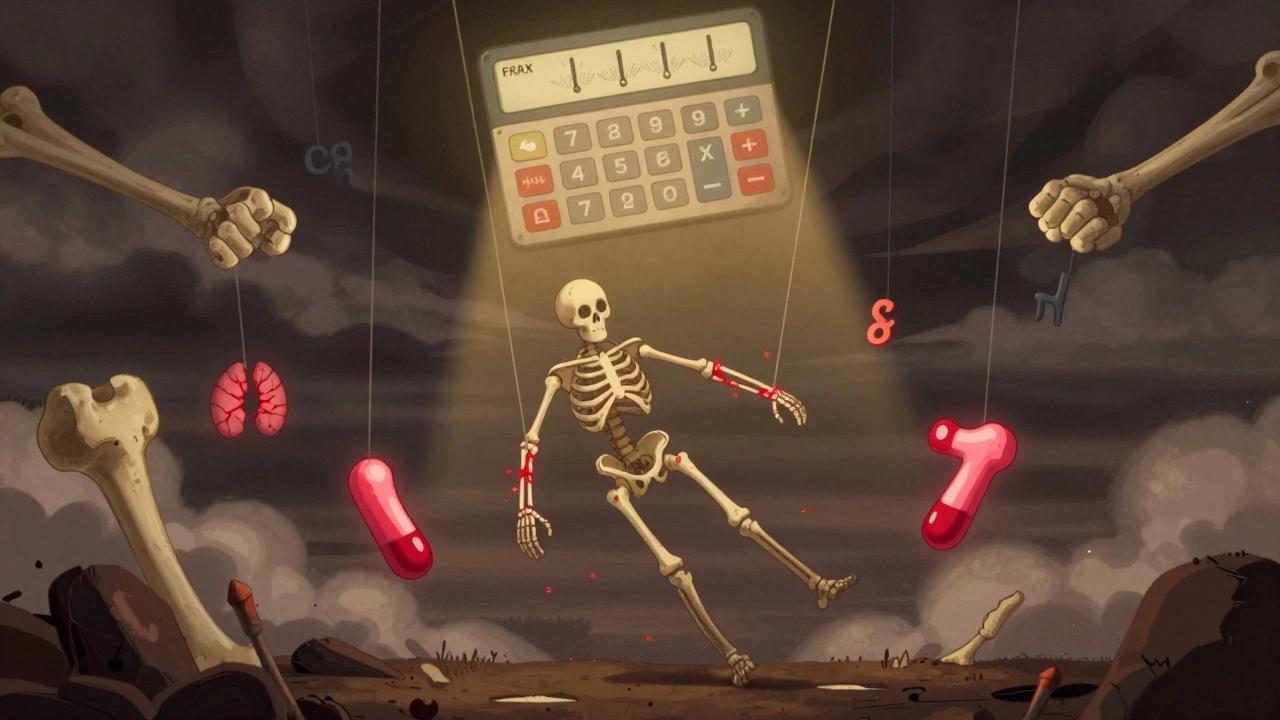
Osteoporosis in Endocrine Disease: How FRAX and Bisphosphonates Guide Treatment
Osteoporosis in endocrine diseases like diabetes and thyroid disorders requires special attention. FRAX calculates fracture risk accurately, and bisphosphonates are the first-line treatment to prevent breaks. Here’s how to know if you need them.
read more