
Allergy Diagnosis: How to Identify Triggers and Find Relief
When your nose won’t stop running, your eyes burn, or your skin breaks out for no clear reason, you might be dealing with an allergy, an overreaction of the immune system to a normally harmless substance. Also known as hypersensitivity, an allergy isn’t just a nuisance—it can turn into a life-threatening event if left unmanaged. Unlike colds or infections, allergies don’t come from viruses. They come from your body misreading things like pollen, dust mites, peanuts, or pet dander as invaders. That’s when your immune system releases immunoglobulin E, an antibody that triggers histamine and other chemicals causing allergy symptoms. This is the key player in nearly every allergic reaction, from mild itching to anaphylaxis.
But knowing you have an allergy isn’t enough. You need to know what you’re allergic to. That’s where allergy diagnosis, the process of identifying specific substances that trigger immune responses comes in. It’s not just about filling out a form or guessing based on seasons. Real diagnosis means testing—either through skin pricks, blood tests, or elimination diets. Skin tests are fast and common: tiny amounts of allergens are placed on your skin, and if you react, you’ll see a red, itchy bump. Blood tests measure immunoglobulin E levels directly. Both methods help doctors map out your personal triggers, so you can avoid them instead of just treating symptoms.
Many people think they’re allergic to gluten or dairy because they feel bloated after eating them—but that’s often intolerance, not allergy. True food allergies involve the immune system and can cause hives, swelling, vomiting, or trouble breathing within minutes. Environmental allergies, like those to mold or ragweed, tend to show up as sneezing, congestion, or itchy eyes. And then there are drug allergies—like reactions to penicillin—that can be deadly. Allergy triggers, the specific substances that cause allergic reactions vary wildly from person to person. One person reacts to cats; another can live with them just fine. One person breaks out from latex gloves; another never notices. That’s why diagnosis isn’t one-size-fits-all.
What you’ll find in these posts isn’t just theory. You’ll see real cases where people confused drug side effects with allergies, where generic meds caused unexpected reactions, and how timing—like drinking coffee with thyroid meds—can mimic or worsen allergy-like symptoms. Some posts even show how people mistake skin infections for allergic rashes, or how supplements like iron and folic acid can affect immune responses. There’s no fluff here. Just clear, practical info on how to tell what’s really going on with your body, when to push for testing, and how to stop guessing and start managing.
By the end of this collection, you’ll know how to ask the right questions, what tests to request, and how to interpret results without being misled by marketing or myths. You won’t just learn what allergies are—you’ll learn how to find out what’s making you sick, and what to do next.
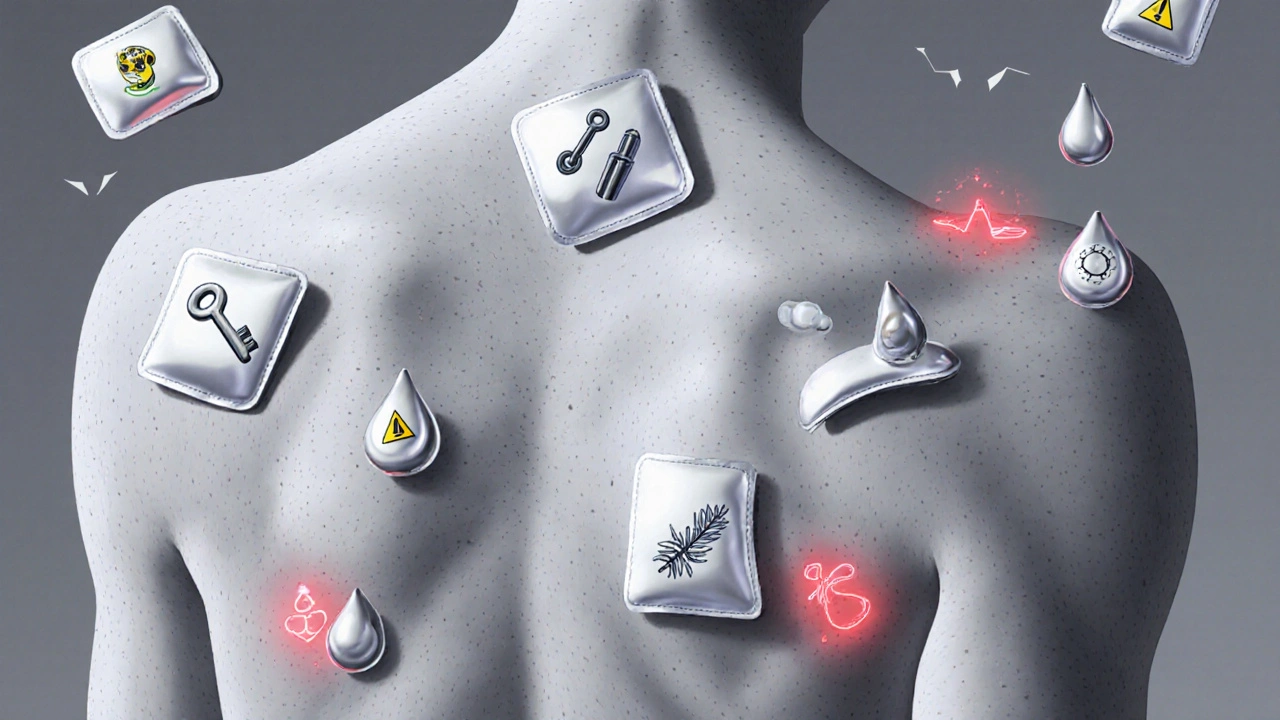
Contact Allergens: How Patch Testing Identifies Skin Irritants and Allergens
Patch testing is the gold standard for identifying hidden skin allergens like nickel, fragrances, and preservatives. Learn how it works, what it detects, and how to avoid triggers that cause chronic rashes.
read more