
Allergic Contact Dermatitis: Causes, Triggers, and What Works
When your skin reacts badly to something you touched—red, itchy, blistered—it’s often allergic contact dermatitis, a delayed immune response to a substance that touches your skin. Also known as allergic eczema, it’s not contagious, but it can turn your daily routine into a minefield. Unlike irritant dermatitis, which happens fast from harsh chemicals, allergic contact dermatitis sneaks up. You might use the same lotion for months, then one day, your wrist swells up. That’s your immune system finally saying, "No more."
This reaction isn’t random. It’s tied to specific allergens. Nickel in jewelry, fragrances in soap, poison ivy oils, even preservatives in creams can trigger it. Topical steroids, medicated creams that calm skin inflammation are the go-to fix for flare-ups. But they don’t stop the cause. That’s where patch testing, a diagnostic method that identifies exact allergens by applying small doses to the skin comes in. Dermatologists use it to find what’s behind your rash—so you can avoid it for good. Without testing, you’re just treating symptoms, not solving the problem.
People often blame new products, but the real culprit might be something you’ve used for years. A perfume in your shampoo, the rubber in your watchband, or even the metal in your phone case. Allergic contact dermatitis is sneaky because the reaction takes 24 to 72 hours to show up. You think you’re fine until your skin screams. And once you’re sensitized, you’re sensitized for life. Avoidance is the only cure.
What you’ll find below are real-world stories and practical fixes from people who’ve been there. From how Fucidin Cream helps with infected eczema, to why Triamcinolone works on scalp flare-ups, to how pill splitting mistakes can accidentally trigger rashes from new fillers—this collection cuts through the noise. No fluff. Just what works when your skin is on fire and you need answers fast.
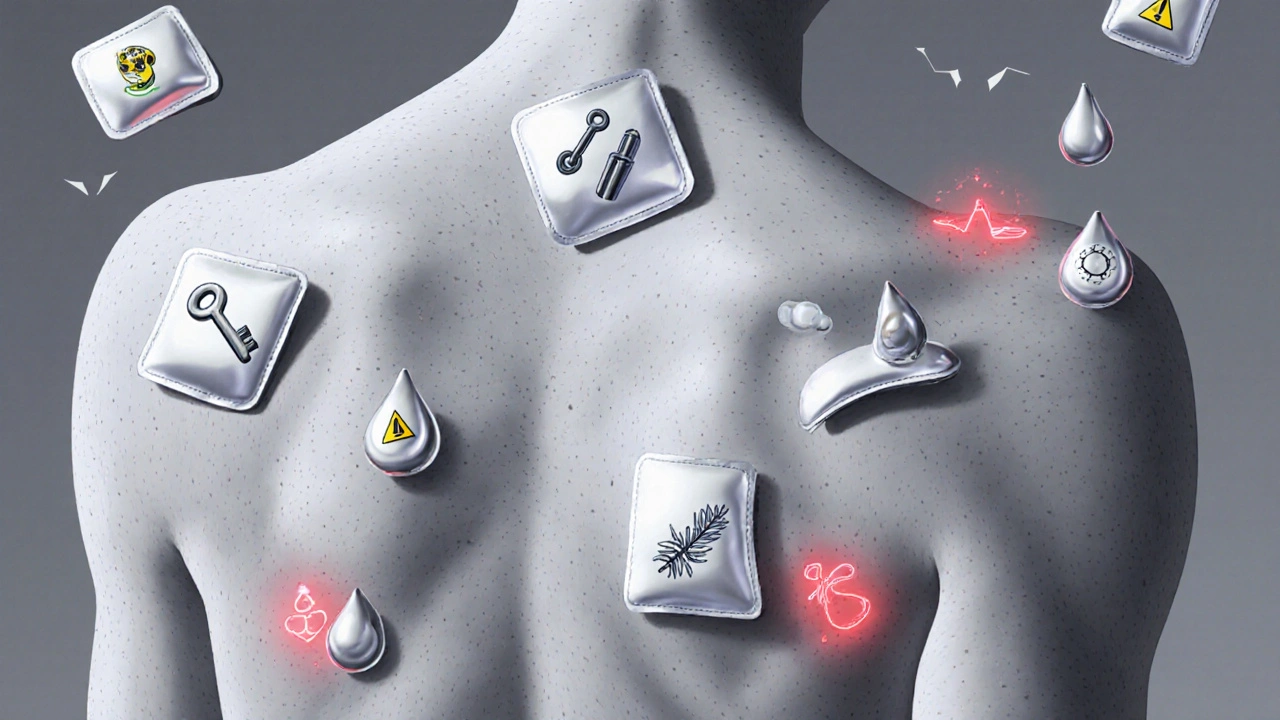
Contact Allergens: How Patch Testing Identifies Skin Irritants and Allergens
Patch testing is the gold standard for identifying hidden skin allergens like nickel, fragrances, and preservatives. Learn how it works, what it detects, and how to avoid triggers that cause chronic rashes.
read more