
ADHD Monitoring: Tools, Triggers, and Real-Life Tracking Strategies
When you're managing ADHD monitoring, the process of observing and recording symptoms, behaviors, and responses to treatment to improve daily functioning. Also known as attention deficit hyperactivity disorder tracking, it's not just about remembering to take pills—it’s about understanding how your brain works in real time. Many people think ADHD is just about being distracted or hyperactive, but the real challenge is consistency. Symptoms shift with sleep, stress, diet, and even the time of day. Without tracking, it’s easy to blame yourself when things go off track, when what you really need is data.
Effective ADHD monitoring, the process of observing and recording symptoms, behaviors, and responses to treatment to improve daily functioning. Also known as attention deficit hyperactivity disorder tracking, it's not just about remembering to take pills—it’s about understanding how your brain works in real time. isn’t about perfection. It’s about noticing patterns. Did your focus improve after a good night’s sleep? Did your irritability spike after skipping breakfast? Did that new medication make you feel calmer—or just tired? These aren’t vague feelings. They’re clues. And the best way to catch them is through simple, daily logs. Some use apps, others use paper journals. Some track mood, others track task completion or screen time. The goal isn’t to collect data for its own sake—it’s to find what actually moves the needle for you.
Related to this are behavioral tracking, the systematic observation and recording of actions, routines, and responses to identify patterns in attention, impulsivity, or hyperactivity, and medication effectiveness, how well a prescribed drug reduces core ADHD symptoms like inattention, hyperactivity, or impulsivity over time. These aren’t separate from ADHD monitoring—they’re the backbone of it. For example, if you’re on stimulants, you might notice your focus improves by mid-morning but drops after lunch. That’s not a failure—it’s feedback. It tells you whether you need a dose adjustment, a snack, or a change in schedule. And if you’re trying non-stimulants, tracking helps you see if the benefits show up slowly over weeks, not hours.
What you’ll find in these posts isn’t theory. It’s real-world stuff. People who’ve tried everything from digital trackers to handwritten logs. People who learned the hard way that coffee can mess with their meds, or that skipping breakfast makes their symptoms worse. You’ll see how some folks use simple checklists to get through workdays, while others rely on wearable devices that track movement and sleep. You’ll learn what to watch for when meds aren’t working—and when to talk to your doctor. No fluff. No jargon. Just what works, what doesn’t, and why.
ADHD monitoring isn’t about being watched. It’s about taking back control—one observation at a time. The tools are simple. The insights? They can change everything.
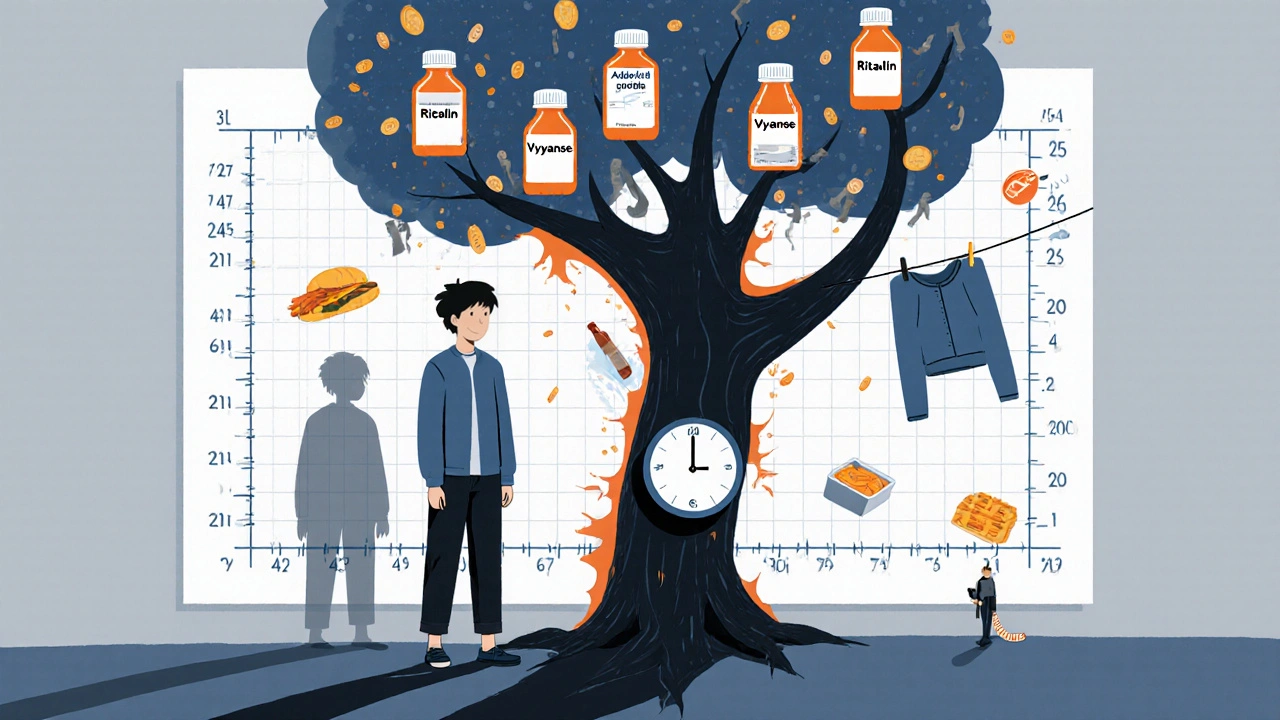
ADHD Medications in Teens: Tracking Growth, Appetite, and Side Effects
ADHD medications help teens focus but can affect growth and appetite. Learn how to monitor side effects, manage nutrition, and make informed treatment decisions with evidence-based strategies.
read more