
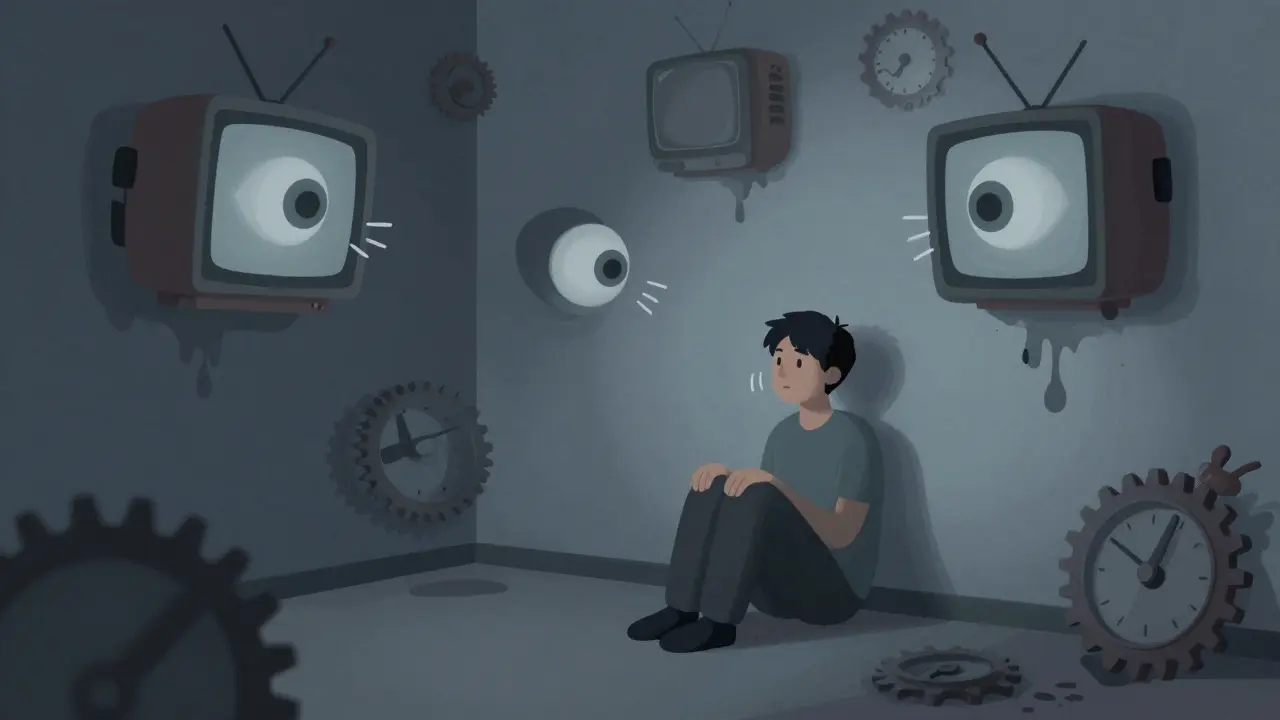
When someone starts hearing voices that aren’t there, or becomes convinced that strangers are watching them, it’s not just paranoia-it could be the early stages of psychosis. Many people don’t recognize these signs until it’s too late. But the truth is, psychosis doesn’t come out of nowhere. It creeps in slowly, often disguised as stress, laziness, or teenage moodiness. The good news? If caught early, recovery is not just possible-it’s likely.
What Exactly Is Psychosis?
Psychosis isn’t a diagnosis itself. It’s a symptom-a break from reality. People experiencing psychosis might hear sounds or see things others don’t (hallucinations), believe things that aren’t true (delusions), or struggle to organize their thoughts so clearly that conversations fall apart. It’s not madness. It’s a medical condition, often linked to schizophrenia, bipolar disorder, or severe depression. It can also be triggered by drugs, trauma, or even extreme sleep deprivation.
What makes psychosis different from normal stress or anxiety is persistence. A bad day? That’s normal. Hearing voices every morning for weeks? That’s not. And here’s the key point: the longer psychosis goes untreated, the harder it becomes to recover. Studies show that each extra month without treatment reduces the chance of returning to school, work, or normal social life by 3.2%.
Early Warning Signs You Can’t Ignore
Before full-blown psychosis hits, there’s a quiet phase-often called the prodrome. This is when the brain starts sending confusing signals, but the person might still know something’s off. These signs are subtle, easy to brush off. But if you see three or more of these in someone over a few weeks, it’s time to act:
- A sudden drop in grades or job performance-78% of first-episode cases show this
- Difficulty concentrating or following conversations-reported in 85% of cases
- Withdrawing from friends and family, spending hours alone-71% of individuals show this behavior
- Strange beliefs: thinking a TV show is sending them secret messages, or that their thoughts are being broadcast
- Sudden sensitivity to light, sound, or touch-things that used to be normal now feel overwhelming
- Poor hygiene: stopping showers, wearing the same clothes for days
- Unusual speech: jumping between topics mid-sentence, using odd words, or suddenly going silent
- Mood swings: unexplained anger, sadness, or even inappropriate laughter
One of the most telling signs? The person knows something’s wrong-but can’t explain it. They say, “I feel like I’m losing my mind,” but they don’t believe the voices are real… yet. That’s the window. Once they fully believe the hallucinations are real, it gets harder to treat.
Why Timing Matters More Than You Think
In the U.S., the average person waits 74 weeks-almost two years-before getting help after their first psychotic episode. That’s too long. Every day without treatment makes the brain more entrenched in false patterns. The brain starts rewiring itself around the delusions. Recovery takes longer. School and jobs get lost. Relationships break.
But here’s what changes everything: getting help within the first 12 to 24 months. People who start treatment early are 60% more likely to recover fully. They’re more likely to finish school, hold a job, and live independently. Delayed treatment? That’s when psychosis becomes a lifelong struggle.
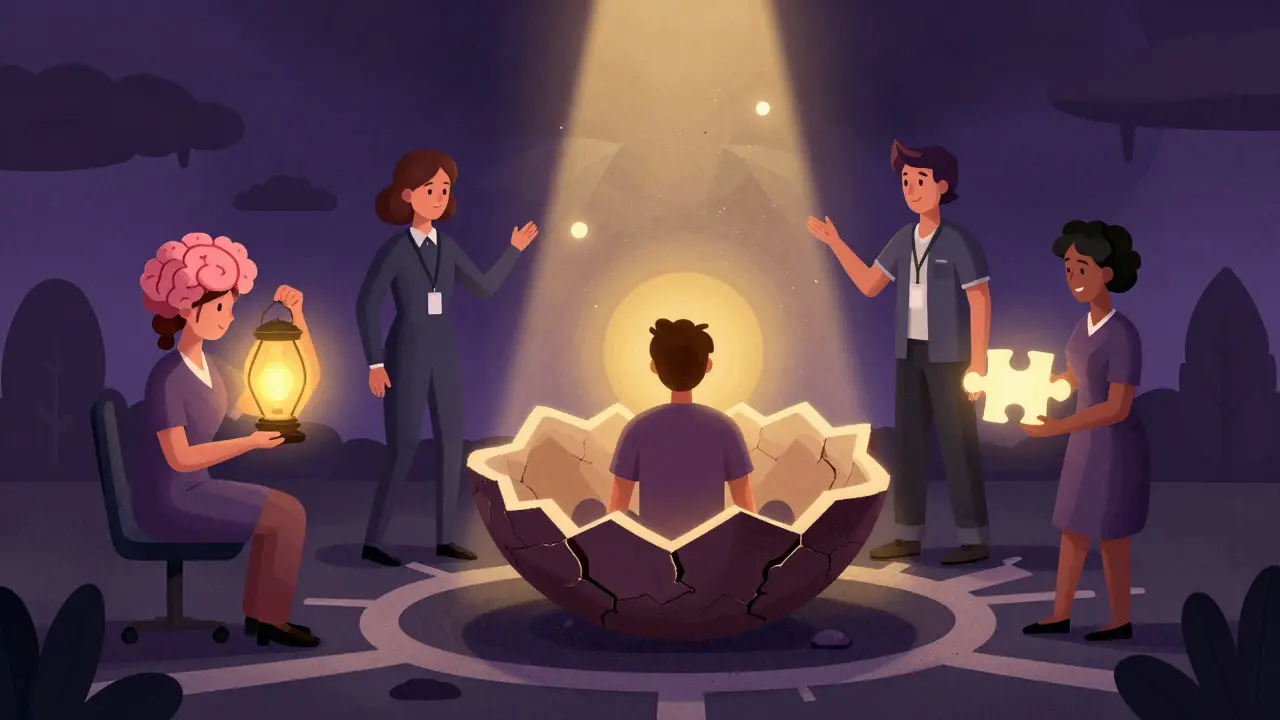
Coordinated Specialty Care: The Gold Standard for First-Episode Psychosis
There’s a treatment that actually works-and it’s not just medication. It’s called Coordinated Specialty Care (CSC). This isn’t a single doctor or a quick prescription. It’s a full team working together: therapists, case managers, psychiatrists, vocational counselors, and family support specialists-all focused on one goal: helping the person get back to life.
CSC has five core parts, all backed by decades of research:
- Case management: A dedicated worker visits the person at home, helps with daily tasks, and connects them to services. Staff-to-client ratios are kept at 1:10 to ensure real attention.
- Family education: Families aren’t bystanders. They get 12 to 20 weekly sessions to learn how to support without enabling, how to recognize warning signs, and how to communicate without triggering stress.
- Individual therapy: Specifically, Cognitive Behavioral Therapy for Psychosis (CBTp). This isn’t just talking-it’s learning how to challenge false beliefs, manage distressing voices, and rebuild thinking patterns.
- Employment and education support: 80% of CSC participants return to school or work within three months. Programs help with resumes, job interviews, and classroom accommodations.
- Medication management: Antipsychotics are used, but carefully. Doses start at 25-50% of normal adult levels. The goal isn’t to numb the person-it’s to reduce symptoms enough so therapy can work.
The results? People in CSC programs are 58% more likely to see their hallucinations and delusions fade. They’re 42% more likely to improve in daily functioning. And 35% more likely to stick with treatment.
Who Gets Access? The Big Gap
There are now 347 certified CSC programs across 48 U.S. states. They serve about 28,500 people a year. Sounds good? It’s not. Only 42% of people experiencing their first episode actually get into CSC within the critical two-year window. Why? Lack of awareness. Lack of providers. Especially in rural areas-only 28% of rural counties have any CSC program at all.
There’s also a racial gap. Black Americans wait, on average, 2.4 times longer than white Americans to get help. That’s not coincidence. It’s systemic. Bias in healthcare, lack of culturally trained staff, and mistrust in the system all play a role.
But change is coming. The 21st Century Cures Act now requires all Medicaid-funded programs to offer CSC by 2025. Thirty-two states have already created billing codes so these services can be paid for. And in 2022, Congress allocated $150 million to expand CSC access-especially in underserved areas.

What You Can Do Right Now
If you’re worried about someone:
- Don’t wait for it to get worse. Early action saves lives.
- Use the Prodromal Questionnaire (PQ-16)-a simple 16-question screening tool. A score of 8 or higher means a full evaluation is needed.
- Call a local mental health clinic or hospital. Ask: “Do you have a Coordinated Specialty Care program for first-episode psychosis?”
- Don’t force treatment. Approach with curiosity, not fear. Say: “I’ve noticed you’ve been struggling. I care about you. There’s help that really works.”
- Go with them. Most people are scared to go alone. Your presence makes a difference.
If you’re a teacher, coach, or employer: Look for the drop in performance. Don’t assume laziness. Ask if they’re okay. Connect them to school counselors or employee assistance programs. You might be the first person to notice.
The Future of Psychosis Care
Science is moving fast. Researchers have found 12 blood markers that can predict who’s likely to develop psychosis with 82% accuracy. Mobile apps like PRIME Care help track mood and sleep patterns in real time. Telehealth lets people in remote areas meet with specialists without driving hours.
But the biggest breakthrough isn’t technology-it’s mindset. Psychosis isn’t a life sentence. It’s a medical event, like a heart attack. You don’t wait for it to get worse. You act fast. With the right support, most people don’t just recover-they thrive.
By 2027, experts predict 75% of first-episode cases will be treated through CSC. That means fewer people stuck in hospitals. Fewer families broken apart. More people working, learning, and living full lives.
Frequently Asked Questions
Can psychosis go away on its own?
No. Psychosis doesn’t resolve without treatment. While some people may have one brief episode and never have another, most will experience worsening symptoms if left untreated. The brain adapts to the false realities, making recovery harder over time. Early intervention is the only proven way to prevent long-term disability.
Is psychosis the same as schizophrenia?
No. Psychosis is a symptom. Schizophrenia is one possible diagnosis that includes psychosis, but not everyone with psychosis develops schizophrenia. Many people recover fully after one episode and never meet the criteria for schizophrenia. The goal of early treatment isn’t to label someone-it’s to restore their life.
Are antipsychotic medications dangerous?
They have side effects-weight gain, drowsiness, tremors-but they’re far safer than leaving psychosis untreated. In CSC programs, medications are started at low doses and carefully monitored. The goal is the lowest effective dose, not to sedate. For most, side effects lessen over time. The bigger risk? Not treating it at all.
Can teens and young adults recover fully?
Yes. In fact, younger people respond better to treatment than older adults. Studies show that 63% of participants in CSC programs achieve symptomatic remission within a year. Many go back to college, start careers, and build families. Recovery isn’t about being “cured”-it’s about living well despite the experience.
How do I find a Coordinated Specialty Care program near me?
Start by calling your local hospital’s psychiatry department or county mental health agency. You can also visit the National Alliance on Mental Illness (NAMI) website or call their helpline. Many states have dedicated early psychosis networks-like EASA in Oregon or the RAISE network. If you’re unsure, ask: “Do you offer first-episode psychosis services using the Coordinated Specialty Care model?”
Comments (8)
Solomon Ahonsi
Wow, another feel-good mental health article that tells us what we already know. Great job pointing out that hearing voices is bad. Next you’ll tell us breathing is important. Meanwhile, my cousin got locked up for 6 months because no one knew where to send him. CSC? Yeah, right. Try finding one in rural Saskatchewan. This post is just virtue signaling with statistics.
George Firican
There’s something profoundly human about the way psychosis creeps in-not like a storm, but like fog rolling over a hill you didn’t know you were climbing. We treat it like a malfunction, a glitch in the software, but what if it’s the mind trying to make sense of a world that’s become too loud, too fast, too fractured? The brain doesn’t just ‘break’-it adapts, even when the adaptation is painful. The tragedy isn’t just the delay in care, it’s that we’ve built systems that reward efficiency over empathy. CSC isn’t just a protocol-it’s an act of rehumanization. And yet, we still measure its success in percentages and recovery rates, as if the soul could be quantified in a spreadsheet.
Matt W
I’ve seen this firsthand with my little brother. He went from being the life of the party to sitting in his room for weeks, staring at the ceiling. We thought he was just depressed. Turns out, he was hearing whispers in the static of the TV. Took us months to get help. When we finally found CSC, it saved him. The case manager came to our house every week. My mom cried the first time she learned how to talk to him without triggering him. This isn’t just medical-it’s familial. Thank you for writing this.
Anthony Massirman
Early detection saves lives. End of story.
Brittany Marioni
Thank you for this incredibly detailed, compassionate, and vital resource. I’ve shared this with my school district’s counseling team, my church’s youth group, and even my workplace’s EAP. The prodromal questionnaire? I printed it out and laminated it. I’m keeping it in my desk drawer-just in case. We need more of this. Not just awareness-but action. And funding. And training. And less stigma. Please keep pushing this message. People are listening.
phara don
Is there any data on how many people in CSC programs end up on disability long-term? I get that early intervention helps, but what’s the real-life outcome after 5+ years? I’m asking because my buddy got treated early, but now he’s on SSI and still hears voices sometimes. He says he’s ‘stable’-but is that really recovery? Just curious.
Bob Hynes
yo i live in toronto and the waitlist for csc is like 11 months??? like wtf. i know someone who had a full episode and they told him to ‘come back in 8 weeks’-8 weeks! meanwhile he’s sleeping in his car because he got kicked out of his apartment. this system is broken. we need more funding, more staff, more damn clinics. and why is it so hard to find someone who speaks spanish or arabic? my cousin’s mom cried because she didn’t understand the forms. this isn’t healthcare. it’s a lottery.
Eli Kiseop
My sister was misdiagnosed as bipolar for two years before they realized she was having first-episode psychosis. She’s doing great now-college, job, no meds. But I still think about how close we came to losing her. If you’re reading this and you’re worried about someone-don’t wait. Don’t hope it’s just stress. Call someone. Even if you’re scared. Even if you’re not sure. Just call.