
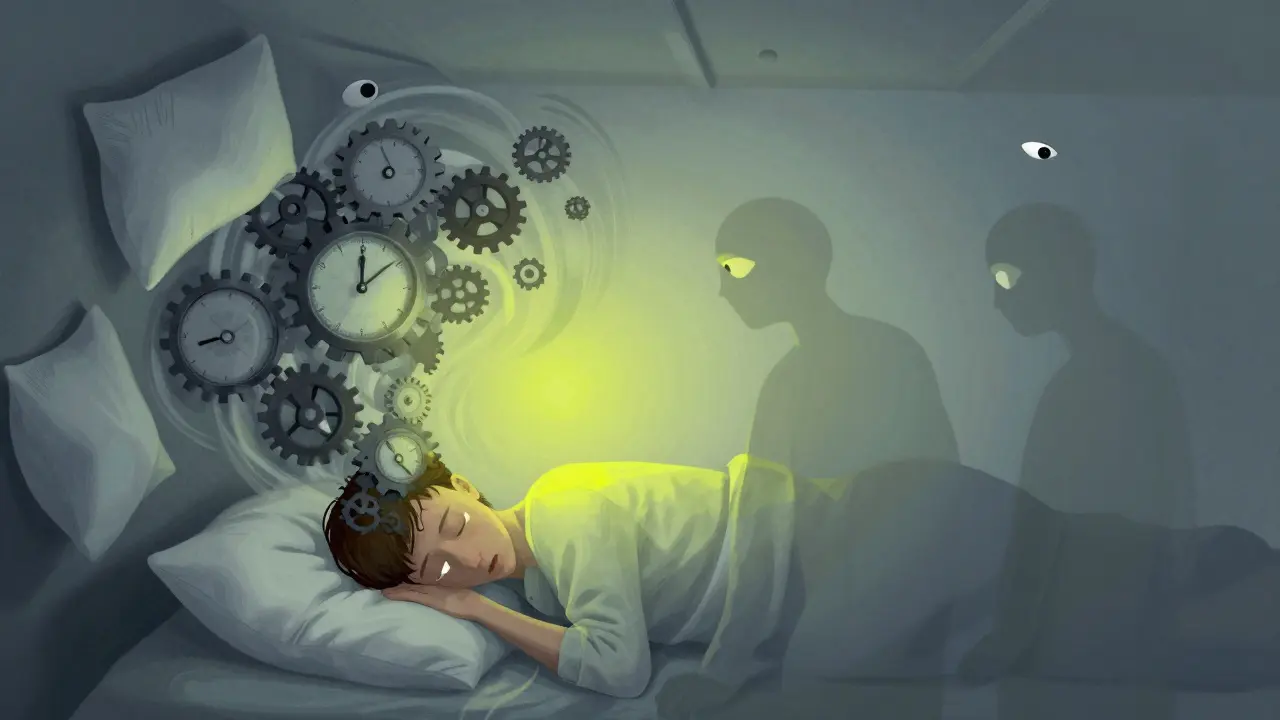
Imagine falling asleep mid-conversation, in the middle of driving, or while eating lunch-no warning, no control. For people with narcolepsy, this isn’t rare. It’s daily. Excessive daytime sleepiness (EDS) isn’t just feeling tired. It’s an overwhelming, irresistible urge to sleep that hits even after a full night’s rest. This isn’t laziness. It’s a neurological disorder where the brain can’t properly manage wakefulness and sleep cycles.
What Narcolepsy Really Is
Narcolepsy isn’t one condition-it’s two main types, both rooted in a failure of the brain’s sleep-wake control system. Type 1 narcolepsy includes cataplexy, a sudden loss of muscle tone triggered by strong emotions like laughter or surprise. Type 2 lacks cataplexy but still involves crushing daytime sleepiness. Both are linked to low levels of hypocretin (also called orexin), a brain chemical that keeps you awake and alert. In Type 1, the immune system mistakenly attacks the cells that produce hypocretin, turning it into an autoimmune disorder.About 1 in 2,000 people have narcolepsy, and while symptoms often start between ages 10 and 30, nearly a quarter of cases don’t show up until after 40. Many go undiagnosed for years because doctors mistake it for depression, ADHD, or just poor sleep habits. The truth? People with narcolepsy don’t sleep more-they sleep differently. Their nighttime sleep is broken into 4 to 6 chunks, totaling less than 6.5 hours, even if they’re in bed for 8 or more. They wake up often, sometimes with sleep paralysis or vivid hallucinations as they drift off or wake up.
The Five Hallmarks of Narcolepsy
If you’re experiencing more than just tiredness, look for these five signs:- Excessive daytime sleepiness (EDS): This is universal. People report 4 to 6 sleep attacks a day-each lasting 15 to 30 minutes-leaving them refreshed briefly, then exhausted again.
- Cataplexy: Only in Type 1. Sudden muscle weakness, often in the face or knees, triggered by emotion. Episodes last seconds to a couple of minutes.
- Disrupted nighttime sleep: Fragmented, restless, and non-restorative, even after 8+ hours in bed.
- Sleep paralysis: A temporary inability to move or speak while falling asleep or waking up. You’re fully aware, but trapped. Happens in 60% of cases.
- Hallucinations: Vivid, often frightening sensory experiences during sleep transitions. Visual, auditory, or even tactile. Affects 75% of patients.
Diagnosis isn’t based on symptoms alone. It requires a sleep study: first, an overnight polysomnogram to check for other sleep disorders, then a Multiple Sleep Latency Test (MSLT) the next day. In the MSLT, you’re given five 20-minute nap opportunities every two hours. If you fall asleep in under 8 minutes on average and enter REM sleep in two or more naps, that’s diagnostic. Or, if your cerebrospinal fluid shows hypocretin-1 levels below 110 pg/mL, that confirms Type 1 narcolepsy.
Why Stimulants Are the First-Line Treatment
There’s no cure for narcolepsy-not yet. But we can manage the symptoms. And for excessive daytime sleepiness, stimulants are the most proven, widely used tools.These aren’t your grandfather’s amphetamines. Modern stimulants like modafinil and armodafinil work differently. Instead of flooding the brain with dopamine, they gently boost wakefulness by blocking dopamine reuptake and supporting the remaining hypocretin pathways. The goal isn’t to make you hyper-it’s to help you stay awake enough to function.
Modafinil (Provigil) is the most common starting point. Dosed at 200 mg daily, usually taken in the morning, it helps 70% of patients improve their Epworth Sleepiness Scale score by at least 5 points. That’s the difference between nodding off at your desk and staying alert through a workday. Armodafinil (Nuvigil), its longer-lasting cousin, gives similar results with once-daily dosing and a half-life of 15 hours. It’s often chosen for people who feel a midday crash with modafinil.
Traditional Stimulants: More Power, More Risk
For those who don’t respond to modafinil or have severe EDS (Epworth score above 16), doctors turn to traditional stimulants: methylphenidate (Ritalin) or mixed amphetamine salts (Adderall). These work faster and stronger-80% of patients see improvement. But they come with a cost.Side effects are common: appetite loss, anxiety, insomnia, jitteriness, and heart rate increases. About 45% of people stop using them within a year because of side effects or tolerance. They’re also controlled substances (Schedule II in the U.S.), meaning prescriptions are tightly tracked. For people with high blood pressure or heart conditions, they’re risky. The FDA now recommends baseline ECGs and quarterly monitoring if you’re on these drugs.
Still, for some, the trade-off is worth it. A 34-year-old teacher in Melbourne, Sarah Johnson, went from an Epworth score of 18 (severe sleepiness) to 6 on armodafinil 250 mg. She went back to full-time teaching. For her, the benefits outweighed the risks.
Newer Options: Pitolisant and Solriamfetol
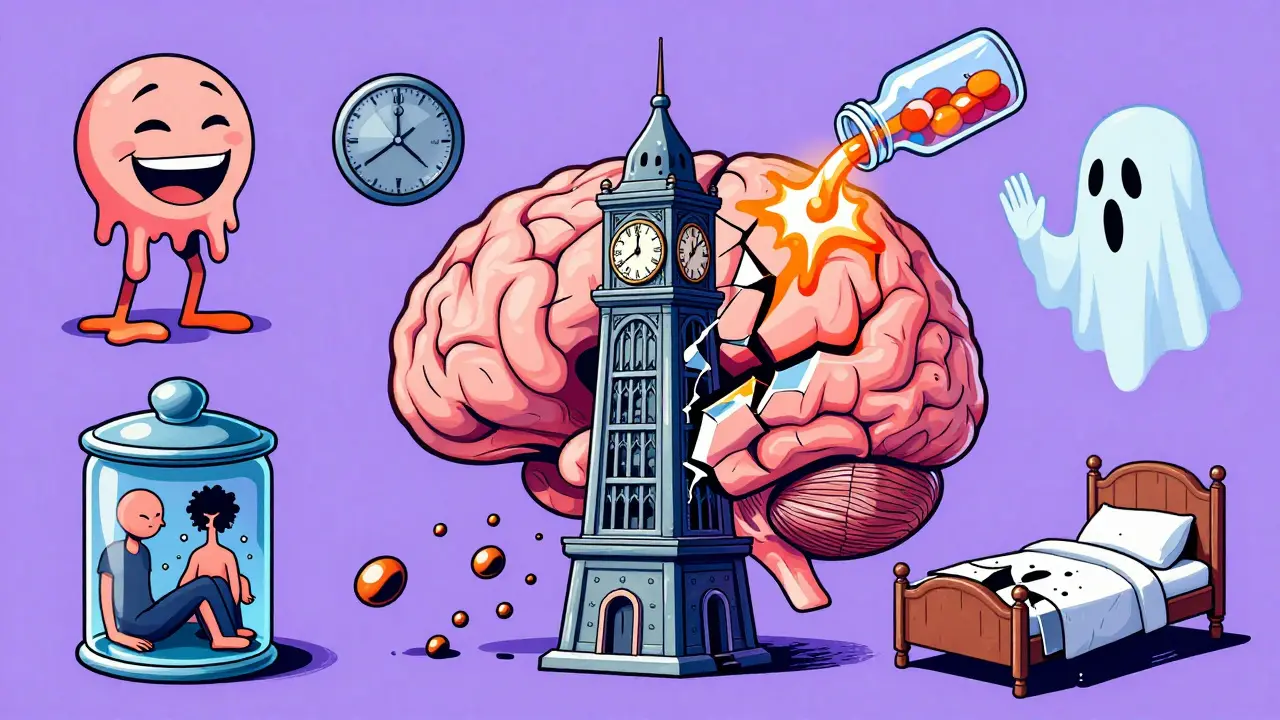
In recent years, two newer drugs have joined the toolkit. Pitolisant (Wakix) works by boosting histamine in the brain-another wake-promoting system. It’s as effective as modafinil but with better cardiovascular safety. The catch? It costs about $850 a month, compared to $400 for generic modafinil. Many insurers won’t cover it unless you’ve tried and failed older drugs.Solriamfetol (Sunosi) blocks dopamine and norepinephrine reuptake. It’s powerful-doses of 75 to 150 mg can slash Epworth scores by 7.5 to 9.8 points. It’s not addictive like amphetamines, but it can raise blood pressure. About 7% of users in trials saw readings above 140/90. Still, it’s a solid option for those who can’t tolerate stimulants or need stronger effects than modafinil offers.
What About Sodium Oxybate?
Sodium oxybate (Xyrem) isn’t a stimulant. It’s a sedative taken at night. But it’s the gold standard for cataplexy-reducing episodes by 85%. It also improves daytime sleepiness by about 5.8 points on the Epworth scale. The problem? It’s tightly controlled. You have to enroll in a special REMS program. It’s dispensed only through a single pharmacy. And because it’s high in sodium, it can cause swelling or worsen heart failure in some people. A new version, JZP-258 (lower-sodium oxybate), is under FDA review and could be available by late 2024, offering the same benefits with fewer side effects.Real-World Experience: What Patients Say
Online communities like MyNarcolepsyTeam and Reddit’s r/Narcolepsy give a raw view of treatment. Modafinil users report “clean energy without jitters,” but many say it loses effectiveness after 18 months. Armodafinil users praise its steady effect. Traditional stimulants get high marks for productivity-but also for causing emotional numbness and rebound fatigue in the evening.One recurring theme: tolerance. The brain adapts. What worked at 200 mg now needs 400 mg. What helped for years stops working. That’s why treatment isn’t just about picking a drug-it’s about monitoring, adjusting, and sometimes switching.

How Treatment Is Managed in Practice
Starting treatment isn’t just writing a prescription. It’s a process:- Confirm diagnosis with polysomnography and MSLT.
- Begin with modafinil 200 mg in the morning.
- After two weeks, if Epworth score hasn’t dropped by at least 3 points, increase to 400 mg.
- Track progress monthly with the Epworth scale.
- Check blood pressure quarterly.
- Assess cardiovascular risk annually.
Many patients struggle with insurance. In 2023, 78% reported prior authorization delays-sometimes over two weeks. Others stay on low doses too long because doctors don’t follow up. One study found 42% of patients were on suboptimal doses for over six months.
The Future: Beyond Symptom Control
Current drugs treat symptoms. They don’t fix the root cause-the loss of hypocretin-producing neurons. But research is moving fast. A drug called TAK-994, an orexin receptor 2 agonist, showed huge promise in trials-cutting sleepiness by nearly 8 points with few side effects. Development paused in 2023 due to liver concerns, but it proves the concept works.Long-term, scientists are exploring immunotherapy to stop the autoimmune attack in Type 1 narcolepsy. Others are working on cell replacement therapies to restore hypocretin production. These won’t be ready for years, but they’re the real hope.
For now, the goal is simple: help people stay awake, stay safe, and stay in control of their lives. Whether it’s modafinil, armodafinil, or another option, the right treatment can mean the difference between isolation and independence.
Can narcolepsy be cured?
No, narcolepsy cannot be cured today. It’s a lifelong neurological condition caused by the loss of hypocretin-producing brain cells. Current treatments manage symptoms like daytime sleepiness and cataplexy, but they don’t restore the missing brain chemistry. Research into disease-modifying therapies, including immunotherapy and hypocretin cell replacement, is ongoing but still years away from clinical use.
Is modafinil addictive?
Modafinil has very low abuse potential compared to traditional stimulants like amphetamines. It’s not classified as a controlled substance in most countries, including Australia. While tolerance can develop over time, leading to dose increases, it doesn’t cause the euphoria or cravings associated with addictive drugs. The European Academy of Neurology considers it a safe first-line option for this reason.
Why do some people stop taking stimulants?
About 45% of people discontinue traditional stimulants like Adderall or Ritalin within a year due to side effects-appetite loss, anxiety, insomnia, elevated heart rate, or emotional blunting. Even modafinil users sometimes stop because it loses effectiveness after 18-24 months. Rebound fatigue, where sleepiness crashes harder after the drug wears off, is another common reason.
Can you drive with narcolepsy?
Yes, many people with narcolepsy drive safely-but only with proper treatment and caution. Medications like modafinil or armodafinil can reduce sleep attacks enough to make driving possible. However, driving without treatment is dangerous. In Australia, you must declare narcolepsy to your state’s transport authority. Some states require a medical review before renewing your license, especially if you’ve had recent sleep attacks.
How long does it take for stimulants to work?
Modafinil and armodafinil usually start working within 1 to 2 hours after taking them, with peak effects around 2 to 4 hours. Most patients notice improved alertness within the first week. However, it can take up to 4 weeks to find the right dose. Traditional stimulants like Adderall work faster-within 30 to 60 minutes-but their effects wear off sooner, sometimes requiring multiple daily doses.
Are there non-drug treatments for narcolepsy?
Yes. Behavioral strategies are essential alongside medication. Scheduled short naps (15-20 minutes) during the day can reduce sleep attacks. Maintaining a consistent sleep schedule, avoiding alcohol and heavy meals before bedtime, and getting regular sunlight exposure help regulate circadian rhythms. Workplace accommodations-like flexible hours or the ability to take breaks-are also critical. But these alone aren’t enough for most people; they work best when combined with medication.
What to Do Next
If you or someone you know has unexplained daytime sleepiness, cataplexy, or sudden muscle weakness triggered by emotion, see a sleep specialist. Don’t wait. Early diagnosis means earlier treatment-and better quality of life. Bring a sleep diary, list your symptoms, and ask about the MSLT. Insurance hurdles are real, but patient advocacy groups like the Narcolepsy Network offer resources to help navigate them.The goal isn’t to eliminate narcolepsy-it’s to make sure it doesn’t eliminate you. With the right treatment, people with narcolepsy can work, drive, raise families, and live full lives. The science is improving. The support is growing. And the right medication can make all the difference.
Comments (11)
Sharon Biggins
i’ve had narcolepsy for 12 years and modafinil saved my life. not perfect, but i can actually hold a job now. thanks for writing this, it feels like someone finally gets it.
also, pls don’t call it laziness. i’ve heard that too many times.
and yes, i still nap at my desk. but now it’s scheduled, not catastrophic.
Kevin Waters
great breakdown. as a neurotech researcher, i’ve seen the data on hypocretin loss first-hand. the real win here is how far we’ve come from just telling people to ‘sleep more.’
modafinil isn’t a magic bullet, but it’s the best tool we’ve got until gene therapies catch up. keep pushing for better access - insurance hurdles are ridiculous.
Kat Peterson
OMG i’m crying rn 😭
my cousin just got diagnosed and i finally understand why she keeps ‘zoning out’ at family dinners. i thought she was being rude. turns out she’s fighting a neurological war and no one told me.
also, is it true they can’t drive? i’m so scared for her 😭😭😭
Husain Atther
This is a well-structured and informative article. The distinction between Type 1 and Type 2 narcolepsy is often misunderstood. I appreciate the emphasis on objective diagnostic criteria like MSLT and hypocretin levels. Many patients are misdiagnosed for years due to lack of awareness among general practitioners. The inclusion of real-world patient experiences adds valuable context.
Helen Leite
modafinil is just a cover-up. the real cause? 5g towers + chemtrails + big pharma hiding the cure. they don’t want you to know you can fix this with turmeric and meditation.
also, the government uses narcolepsy to track your dreams. i know someone who got a letter after her MSLT. they’re watching. 🕵️♀️👁️🧠
Gina Beard
we treat symptoms, not causes. that’s the tragedy.
we’ve turned human beings into dosage charts.
the brain isn’t a machine to be tweaked.
it’s a cathedral. and we’re sweeping dust while it burns.
Don Foster
modafinil 200mg? that’s amateur hour. i was on 600mg back in 2018 and still had to nap at 3pm. armodafinil is just modafinil with a fancy name. same crap different bottle. and don’t get me started on pitolisant - $850 a month? that’s robbery. the real solution? caffeine IV drips. i swear by it.
also, sleep studies are a scam. i’ve slept 12 hours straight and still fell asleep mid-sentence. it’s not the brain. it’s the diet.
siva lingam
another article about how stimulants fix everything. cool. so what’s the plan when the next pill doesn’t work? just up the dose until your heart explodes? nice.
also, why is every patient story from the US? where’s the data from the rest of the world? oh right - because no one else has insurance to pay for this crap
Viola Li
you’re glorifying drug use. people should learn discipline. if you’re tired, go to bed earlier. stop relying on chemicals to mask your laziness. this is why society is falling apart - we medicate instead of motivate.
Dolores Rider
i’ve been on 3 different meds and i still cry in the shower every morning. no one talks about the loneliness. you feel like a ghost in your own body. and when you finally find something that works? the insurance denies it. again. i’m so tired of fighting. i just want to be normal. 😭
venkatesh karumanchi
thank you for this. as someone from India, i struggled for 7 years to get diagnosed. doctors thought i was depressed. then they said i was just lazy. when i finally got the MSLT, i cried. this article gives hope. i’m on armodafinil now. i drive to work. i hold conversations. i’m alive again.
you’re not alone.