
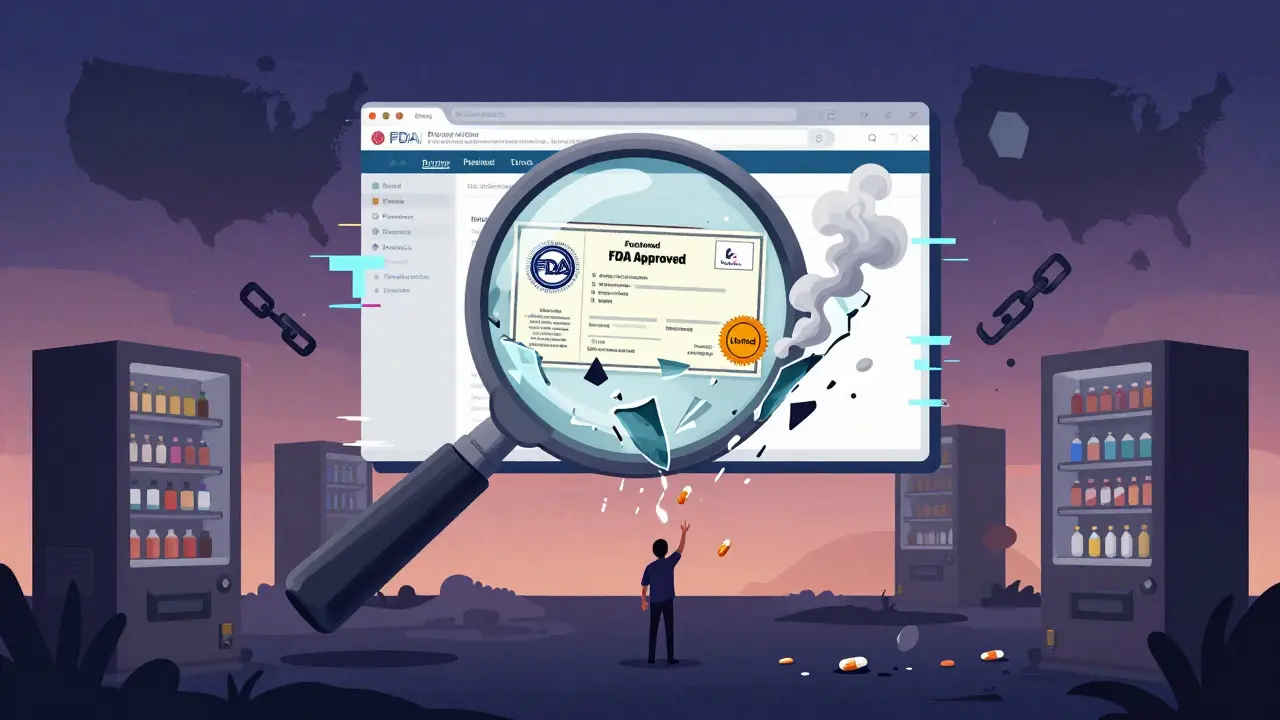
Buying medicine online sounds convenient-until you realize you might be ordering from a fake pharmacy. In 2022, the FDA shut down over 1,200 illegal online pharmacies selling fake, expired, or contaminated drugs. Many of these sites look professional, even mimic real pharmacies. But without checking their license, you’re risking your health. The good news? You don’t need to guess. Every legitimate online pharmacy in the U.S. must be licensed by its state board of pharmacy, and there are free, official tools to verify that license.
Why checking an online pharmacy’s license matters
It’s not just about legality. Unlicensed online pharmacies are the main source of counterfeit medications. These pills might contain the wrong dose, toxic ingredients, or nothing at all. A 2023 study in JAMA Internal Medicine found that 2.3% of pharmacy license checks in state systems had errors-meaning someone could think a pharmacy is licensed when it’s not. That’s not a small risk. It’s the difference between safe treatment and a hospital visit. Real pharmacies don’t hide their licenses. They display them clearly on their website. But even if they do, you shouldn’t trust what’s on the page. You need to check it yourself through the official state or national database. That’s the only way to know the license is active, not expired, and hasn’t been suspended for violations.How to check an online pharmacy’s license in Washington State
Washington State uses the Healthcare Enforcement and Licensing Management System (HELMS), one of the most user-friendly state systems in the country. Here’s how to use it:- Go to the official Washington Department of Health website: doh.wa.gov
- Click on “License Verification” under the “Professions” section
- Enter the pharmacy’s exact legal name or license number
- Review the results: Look for the status (must say “Active”), license number, expiration date, and any disciplinary actions
- Confirm the address matches the one on the website you’re buying from
Washington’s system updates within 24-72 hours after a renewal, and it shows disciplinary history-like past fines or complaints. That’s rare. Most states don’t make that info easy to find. In 2024, over 17,000 verifications were done in Washington each month. Most users rated it “excellent.” But here’s the catch: you need the exact name. If the pharmacy is listed as “Northwest Pharmacy LLC” but you search for “Northwest Pharmacy,” you’ll get nothing. 31% of first-time users miss this detail, according to DOH analytics.
The national solution: NABP Verify
If you’re buying from pharmacies in multiple states-or you’re a healthcare provider verifying staff-Washington’s system isn’t enough. You need NABP Verify, run by the National Association of Boards of Pharmacy. It’s the only service that checks licenses across all 50 states in one search.NABP Verify pulls real-time data from 41 state boards. That means if a license is revoked in Texas, you’ll know within minutes-not weeks. For hospitals and pharmacy chains, this saves hours. A 2023 study showed it cut verification time from 47 minutes down to just 3.2 minutes per pharmacy.
The downside? It costs $79 per year. That’s a barrier for individuals. But if you’re buying medications regularly from different online pharmacies, it’s worth it. Over 64% of U.S. hospital systems use it. The FDA specifically recommends NABP Verify for healthcare organizations because of its accuracy and speed.
Don’t confuse it with the NABP’s VIPPS program (Verified Internet Pharmacy Practice Sites). VIPPS is a seal of approval, not a license check. You can have a VIPPS logo and still be operating under a revoked license. Always verify the license number directly through NABP Verify.
What other states do-and why it’s messy
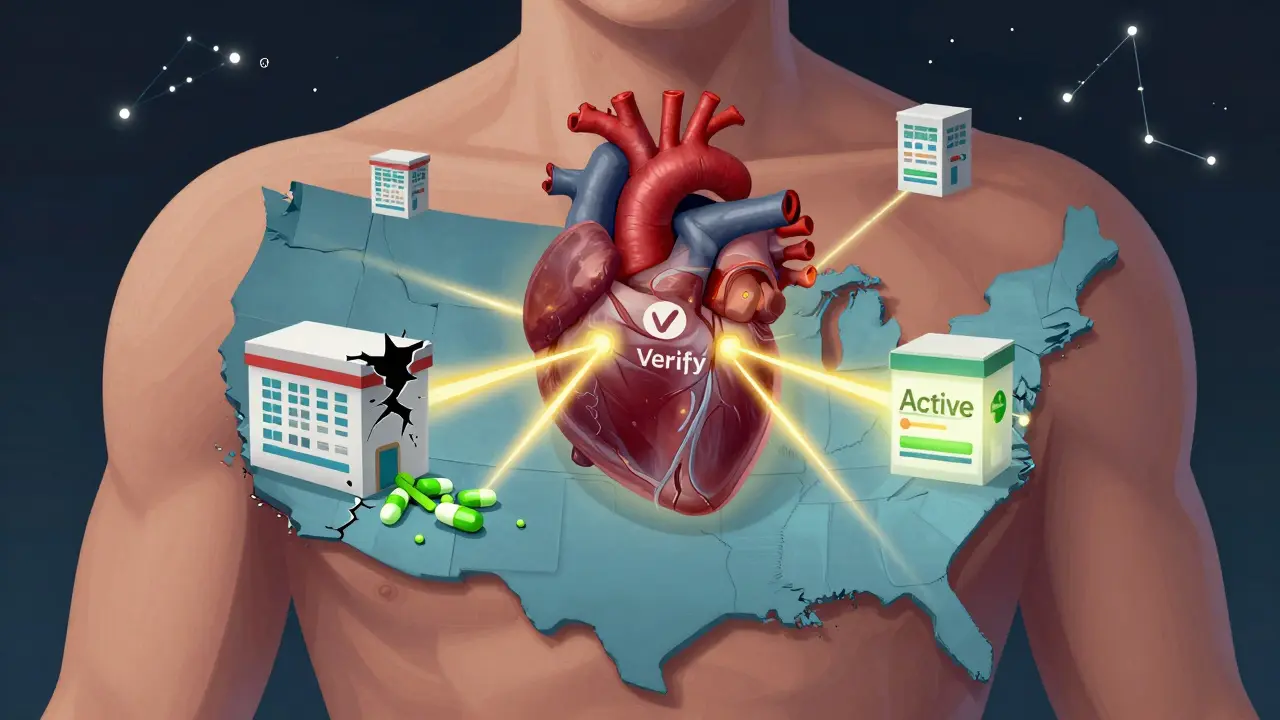
Not all states are like Washington. Kentucky, for example, requires annual renewals by June 30. Washington renews every two years, tied to the pharmacist’s birthday. That creates confusion for pharmacists working across state lines. And only 32 states are integrated with NABP’s system. That means if you’re checking a pharmacy in, say, Alabama or Nebraska, you’ll have to go to their separate state websites.Some states require you to create an account. Others let you search anonymously. Some show disciplinary history. Most don’t. A 2022 study by the University of Washington found 28% of users couldn’t find the verification tool at all without step-by-step guidance. That’s not user error-it’s bad design.
And here’s a real-world danger: In 2023, a Chicago hospital hired a pharmacist whose Illinois license had been revoked. They only checked the hospital’s internal directory, not the state database. The pharmacist dispensed the wrong medication. The hospital paid $250,000 in settlement. That’s why you never rely on third-party lists or internal databases. Always go to the source.
What to look for in the verification results
When you get the results, don’t just glance at “Active.” Dig deeper:- Status: Must say “Active.” “Inactive,” “Expired,” or “Suspended” means don’t buy from them.
- License number: Match this exactly to what’s on the pharmacy’s website. If it’s missing, that’s a red flag.
- Expiration date: Check if it’s more than a year out. If it’s expiring soon, the pharmacy might be cutting corners.
- Disciplinary actions: Even a single warning for improper dispensing is worth investigating.
- Physical address: Does it match the website? If the address is a PO Box or a residential home, walk away.
Legitimate pharmacies don’t hide their details. They want you to verify them. If the license info is buried or hard to find, that’s a warning sign.
What to avoid: fake seals and misleading claims
Many fake pharmacies use logos like “Verified,” “Accredited,” or “FDA Approved.” None of those mean anything. The FDA doesn’t approve online pharmacies. Only state boards do. The VIPPS seal from NABP is trustworthy-but again, only if you verify the underlying license.Another trick: pharmacies that claim to be “based in Canada” or “overseas.” That’s often a cover. Even if they’re physically located abroad, if they’re selling to U.S. customers, they still need to comply with U.S. laws-and most don’t. The FDA warns that 96% of websites selling prescription drugs without a prescription are illegal.
And never trust a site that offers “no prescription needed.” That’s a guaranteed sign of a rogue pharmacy. In the U.S., all prescription drugs require a valid prescription from a licensed provider. Period.

Best practices for safe online pharmacy use
Here’s what works:- Always verify the license before making a purchase-even if the site looks professional.
- Use NABP Verify if you’re buying from multiple states. It’s worth the $79 if you do it more than twice a year.
- Check the pharmacy’s license every six months. Renewals happen, and licenses can be revoked.
- Look for the physical address and phone number. Call them. A real pharmacy answers the phone.
- Use only pharmacies that require a prescription and have a licensed pharmacist available for questions.
- Set a reminder: Do a license check 30 days before you plan to reorder. That gives you time to find a replacement if something’s wrong.
A 12-hospital study published in 2024 showed that following this 30-day rule reduced staffing gaps caused by license issues by 63%. That’s not just about safety-it’s about efficiency.
What’s next for pharmacy verification?
The system is improving. Washington’s HELMS 2.0, launching in late 2024, will integrate with electronic health records and cut search time to under 1.5 seconds. NABP is adding 14 more states to its real-time network by 2025. And the FDA just awarded $15 million in grants to help states upgrade their systems.Long-term, experts predict biometric verification and blockchain systems will replace today’s databases by 2028. But for now, the tools we have are reliable-if you use them correctly.
Buying medicine online shouldn’t feel like gambling. With a few minutes of verification, you can make sure you’re getting safe, legitimate drugs. It’s not complicated. But it’s essential.
How do I know if an online pharmacy is legitimate?
A legitimate online pharmacy will have a valid license from a state board of pharmacy. You can verify this for free using official state databases or NABP Verify. Look for a physical address, a licensed pharmacist on staff, and a requirement for a valid prescription. If the site offers drugs without a prescription, sells controlled substances without oversight, or hides its license information, it’s not legitimate.
Is NABP Verify worth the $79 annual fee?
Yes-if you verify more than two pharmacies per year or work across multiple states. For individuals buying medication occasionally, checking state databases for free is fine. But for healthcare providers, pharmacies with multiple locations, or frequent online buyers, NABP Verify saves hours and reduces risk. It’s the only system that checks all 50 states in real time.
Can I trust a pharmacy with a VIPPS seal?
The VIPPS seal means the pharmacy met NABP’s standards at the time of review-but it’s not real-time. A pharmacy can earn the seal and later have its license revoked. Always cross-check the license number in NABP Verify or the state’s database. The seal is a good sign, but not proof.
What should I do if I find a fake pharmacy?
Report it immediately. In the U.S., file a complaint with the FDA’s MedWatch program and your state’s board of pharmacy. If you bought medication from the site, contact your pharmacist or doctor to check for side effects. The FDA shuts down hundreds of illegal sites each year-but they need public reports to find them.
Why can’t I find the pharmacy when I search by name?
State verification systems require exact matches. If the pharmacy is registered as “Sunset Pharmacy, LLC,” searching for “Sunset Pharmacy” won’t work. Try using the license number instead. If you don’t have it, check the pharmacy’s website footer or contact information for the legal business name. Most state systems also allow searching by city or ZIP code if the name fails.
Do I need to verify a pharmacy every time I order?
Not every time, but you should check at least once a year-or before any major reorder. Licenses can be suspended or revoked without notice. A 2024 study showed that 18% of previously verified pharmacies had license issues within 12 months. Don’t assume past verification means current safety.
Next steps: What to do right now
If you’ve bought from an online pharmacy in the past six months, take five minutes now to verify its license. Go to your state’s board of pharmacy website or use NABP Verify. If you’re unsure where to start, search for “[Your State] pharmacy license verification.” It’s free, it’s fast, and it could save your life.Don’t wait for a bad outcome. The tools are there. You just need to use them.
Comments (12)
Thomas Anderson
Just checked my last pharmacy order using NABP Verify. License was active, address matched, no red flags. Took 90 seconds. Seriously, folks-do this before you click buy. It’s free and it saves lives.
I used to skip it because ‘it looked legit.’ Now I don’t trust anything that doesn’t have a verifiable license number front and center.
Edward Stevens
Oh wow, a guide that doesn’t end with ‘and don’t forget to pray.’ Who knew checking a license could be this simple? Next they’ll tell us to wash our hands before eating.
Still, thanks for not making it a 20-page PDF with 17 pop-ups. I’ll give it a 9/10. The 1 point deduction is for not mentioning that 90% of these sites are run by bots in Moldova.
Daniel Wevik
Let’s be clear: the current state-based verification infrastructure is fragmented, inefficient, and non-interoperable at scale. The NABP Verify platform represents the only enterprise-grade solution with real-time API integration across 41 state boards.
For healthcare systems managing multi-state dispensing, the ROI is undeniable. The $79 annual fee is negligible compared to the liability exposure from unverified sourcing. This isn’t a luxury-it’s a compliance imperative.
And yes, VIPPS is a marketing seal, not a regulatory credential. Always cross-reference with the underlying license data. No exceptions.
Rich Robertson
Back in my village in Nebraska, we used to trust the guy with the white coat behind the counter. Now? We’ve got websites that look like they were designed by a college kid in 2007, selling ‘Canadian’ pills that turn out to be aspirin laced with rat poison.
It’s wild how much the world’s changed. But the core truth stays the same: if you can’t verify it, don’t take it. The tools are out there. Use them. It’s not hard. Just… do it.
Natalie Koeber
Wait… so the FDA doesn’t approve online pharmacies?? Then why do all the shady sites say ‘FDA APPROVED’?? I think this is all a scam by the pharma giants to keep us buying expensive crap. They don’t want us getting cheap meds from overseas. They’re scared. They’re hiding something.
Also, NABP? Sounds like a front for Big Pharma. Why do they charge $79? Who’s really behind that? I’m not trusting anything with a .org domain anymore.
Rulich Pretorius
What struck me most is how this isn’t just about safety-it’s about dignity. People who are chronically ill, elderly, or low-income are often forced to buy online because they can’t afford the local pharmacy’s markup. The system should serve them, not confuse them.
The fact that 28% of users can’t even find the verification tool? That’s a failure of public design, not public ignorance. We need better portals, plain language, and maybe even a simple app. This shouldn’t feel like solving a crossword puzzle just to get your insulin.
Dwayne hiers
It’s critical to distinguish between licensure and accreditation. Licensure is mandatory, legally binding, and enforced by state boards. VIPPS is voluntary, audit-based, and subject to periodic review. Confusing the two is a systemic error that puts patients at risk.
Additionally, the HELMS system in Washington is among the most transparent in the nation due to its integration of disciplinary history and real-time renewal tracking. Most state boards still operate on legacy systems with 30–60 day lag times. NABP Verify mitigates this gap-but only if you’re using the correct license number. Typos are the #1 cause of failed verifications.
Jonny Moran
Hey, if you’re reading this and you’ve never checked a pharmacy’s license before-you’re not alone. I didn’t either, until my aunt got sick from a fake blood pressure pill she ordered off a ‘Canadian’ site.
Now I check every single time. Even if it’s the same pharmacy. Even if it’s been years. I set a reminder every 6 months. It’s one of the few things I do that actually makes me feel like I’m protecting someone I love.
You can do this. Just take five minutes. It matters.
Sarthak Jain
Bro, I’m from India and I buy my diabetes meds online because here it’s crazy expensive. I used to just trust the reviews. Now I check NABP Verify even though I’m not in the US-just to see if the pharmacy is legit for Americans. If they’re scamming Americans, they’re probably scamming everyone.
Also, the ‘no prescription needed’ thing? That’s a dead giveaway. Even in India, you need a script for insulin. So why would a US pharmacy not ask for one? 🤔
Tim Bartik
Who the f*** lets some bureaucrat in Washington decide what meds I can buy? This is tyranny. I don’t need some government website to tell me where to get my pills. I’m an American. I’ll buy from whoever I want. If I get sick? So what. Freedom has consequences.
Also, NABP? Sounds like a communist plot to control the medicine supply. I’d rather trust my cousin who ‘knows a guy’ in Mexico. At least he’s got a beard and a truck.
Sinéad Griffin
OMG YES!!! I just checked my pharmacy and they were suspended for 3 months last year 😱 I almost ordered again!! Thank you for this!! 🙏❤️ I’m telling all my friends!! We need to make this viral!! 💪💊 #VerifyBeforeYouBuy #FakePharmaciesAreKillingUs
Daniel Thompson
While the procedural guidance provided is technically accurate, it neglects to address the sociopolitical underpinnings of pharmaceutical accessibility. The necessity of verifying licenses stems from systemic failures in healthcare infrastructure-particularly the commodification of essential medicines and the erosion of public trust in institutional authority. The individual burden of verification, while prudent, is a symptom, not a solution. A robust, federally mandated, universally accessible verification protocol-integrated into EHRs and pharmacy dispensing systems-is the only ethical path forward. Until then, we are asking patients to become compliance officers in a broken system.