
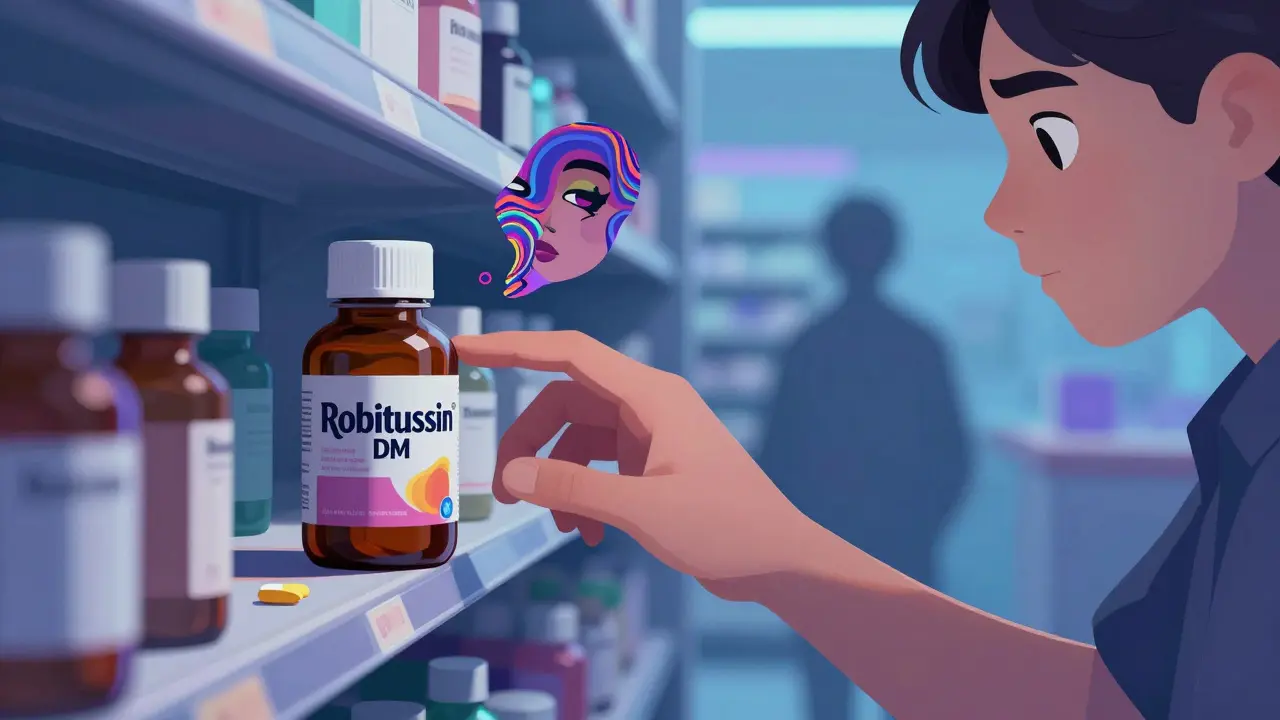
It starts with a cold. A stuffy nose, a sore throat, and that relentless cough that won’t quit. You grab a bottle of cough syrup from the pharmacy shelf - something with DXM on the label. It’s cheap. It’s legal. It’s right there next to the painkillers and antihistamines. But for some people, especially teens and young adults, that bottle isn’t just medicine. It’s a gateway to something far more dangerous.
What Exactly Is Dextromethorphan (DXM)?
Dextromethorphan, or DXM, is a synthetic cough suppressant. It was approved by the FDA back in 1958 as a non-addictive alternative to codeine. When taken at the right dose - usually 15 to 30 milligrams every 4 to 8 hours - it quietly shuts down the cough reflex in your brain. No pain relief. No euphoria. Just calm.
But here’s the catch: DXM doesn’t stop working at the cough center. At higher doses, it starts affecting other parts of the brain. Specifically, it interferes with NMDA receptors - the same ones targeted by drugs like PCP and ketamine. That’s when things go off the rails. Instead of just stopping a cough, DXM can trigger hallucinations, out-of-body sensations, and a complete disconnect from reality. That’s why users call it “the poor man’s PCP.”
You’ll find DXM in over 70 different OTC products. Common brands include Robitussin DM, Coricidin, NyQuil, DayQuil, Benylin DM, and Tylenol Cold. Look for the “DM” on the label - that’s the giveaway. Some products even have “Tuss” in the name. And it’s not just syrup anymore. These days, DXM is also sold as powder, capsules, and pills - often online. That makes it easier to abuse, harder to track, and way more dangerous.
How Do People Abuse It?
Most people who abuse DXM don’t start out looking for a high. They just take a little extra because they think “more must be better.” But once they hit 100 mg or more, the effects change completely.
Here’s how it usually plays out:
- “Robo tripping” or “dexing” - This is the most common method. Users drink multiple bottles of cough syrup at once. Some take 10, 20, even 30 doses in a single sitting. That’s 300 mg to over 1,500 mg - 50 times the recommended dose.
- The “robo shake” - A more advanced trick. Users drink huge amounts of syrup, then force themselves to vomit. Why? To get rid of the other ingredients - like acetaminophen or antihistamines - that cause nausea and liver damage. They keep the DXM and flush out the rest. It’s a dangerous gamble.
- Chemical extraction - Some users go further. They use simple household chemicals - like vinegar or rubbing alcohol - to strip DXM out of the syrup. What’s left? A white powder. Pure DXM. Snort it. Swallow it. Inject it. The risks skyrocket.
Street names like “candy,” “robo,” and “C-C-C” make it sound harmless. But this isn’t a party trick. It’s a medical emergency waiting to happen.
The Four Plateaus of DXM Abuse
DXM doesn’t just make you high. It takes you through stages - called “plateaus” - that get more intense with each dose.
- First plateau (100-200 mg) - Mild euphoria, slight dizziness, tingling. Feels like a strong cold medicine.
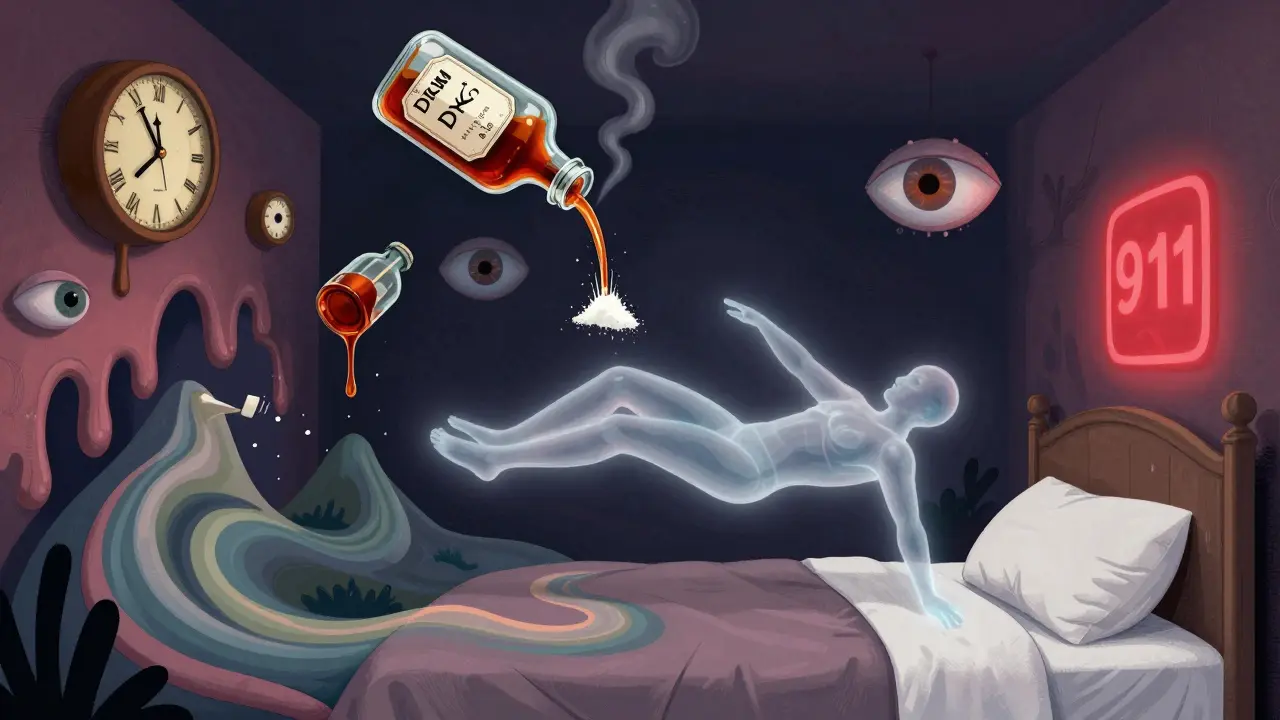
- Second plateau (200-400 mg) - Distorted vision, time distortion, numbness. You might feel detached from your body.
- Third plateau (400-600 mg) - Hallucinations, loss of coordination, slurred speech. You might not remember what happened.
- Fourth plateau (600+ mg) - Complete dissociation. Out-of-body experiences. Paranoia. Seizures. Coma. Death.
People who hit the third or fourth plateau often end up in the ER. Some don’t make it.
What Happens When You Mix It?
DXM alone is risky. DXM with anything else? That’s a death sentence waiting to happen.
Many OTC cough syrups already contain acetaminophen (Tylenol), antihistamines, or decongestants. Take too much, and you risk liver failure, seizures, or a stroke.
But the real killer is mixing DXM with other drugs:
- Alcohol - Slows breathing. Stops your heart.
- MDMA (Ecstasy) - Raises body temperature to deadly levels. Causes brain damage.
- SSRIs (like Prozac or Zoloft) - Can trigger serotonin syndrome: seizures, muscle spasms, high fever, death.
Mount Sinai Health Library says survival depends on how fast you get help. If someone’s passed out, foaming at the mouth, or having seizures - call 911. Now.
Why Teens Are Especially at Risk
According to the National Institute on Drug Abuse, about 3% of teens - that’s 1 in 30 - admit to abusing OTC cough medicine to get high. In 2015, nearly 5% of high school seniors had tried it.
Why? Three reasons:
- It’s cheap - A bottle of Robitussin costs $10. A gram of cocaine? $80.
- It’s legal - No dealer. No risk of arrest. Easy to buy at any pharmacy.
- It’s everywhere - Parents don’t think twice about keeping it in the medicine cabinet. Teens know exactly where to look.
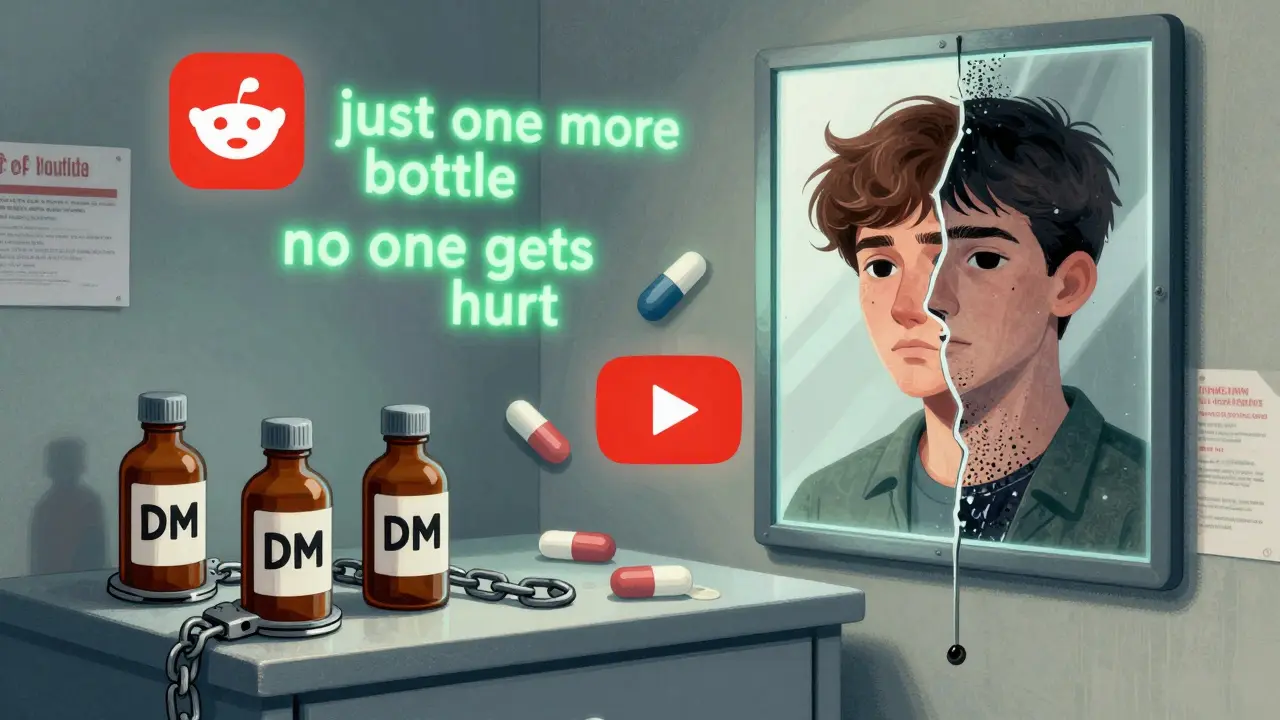
And the internet makes it worse. YouTube videos, Reddit threads, and forums give step-by-step guides on how to extract DXM, how much to take, and what to expect. No warnings. No risks. Just “this is how you get high.”
The Hidden Dangers
Most people think DXM is harmless because it’s OTC. But here’s what you won’t hear from the label:
- Overdose can kill - Even one bottle too many can stop your breathing.
- It can be addictive - While some experts say DXM isn’t addictive, treatment centers like Greenhouse Treatment report increasing cases of dependence. Users return again and again.
- Long-term damage - Chronic abuse can cause memory loss, depression, anxiety, and permanent brain changes.
- It’s not just teens - Adults abuse it too. Especially those with untreated mental health issues.
And here’s the scariest part: the effects aren’t always immediate. Someone might seem fine after taking a huge dose - then collapse hours later. By then, it’s too late.
What’s Being Done?
Some states have tried to stop the abuse. A few require ID to buy large quantities. Others limit how much you can buy in one day. But it’s not enough.
The CHPA (Consumer Healthcare Products Association) works with manufacturers to add warning labels and reduce packaging sizes. But the problem keeps growing. Why? Because the drug is still legal. And because the internet keeps teaching new ways to abuse it.
The DEA has considered putting DXM under the Controlled Substances Act. But so far, it hasn’t. That means it’s still sitting on pharmacy shelves - next to the aspirin.
What Should You Do?
If you’re a parent: Check your medicine cabinet. Look for bottles with “DM” on them. Count how many are missing. Talk to your kids - not with fear, but with facts. Tell them what DXM really does.
If you’re a teen: Don’t experiment. One bottle can change your life - or end it. You don’t need to get high to feel better. You need help if you’re using it to escape.
If you or someone you know is already abusing DXM: Don’t wait. Talk to a doctor. Go to a treatment center. It’s not weakness. It’s survival.
DXM isn’t a party drug. It’s a powerful chemical that hijacks your brain. And it’s easier to get than most illegal drugs. That’s not freedom. That’s a trap.
Can you overdose on DXM from cough syrup?
Yes. Overdosing on DXM is possible and can be fatal. Taking more than 1,500 mg in one sitting - which is only about 3 to 5 bottles of typical cough syrup - can cause seizures, coma, respiratory failure, and death. Mixing it with alcohol or other drugs increases the risk dramatically.
Is DXM addictive?
There’s debate among experts, but real-world evidence says yes. While some government reports claim DXM isn’t addictive, treatment centers like Greenhouse Treatment and Mount Sinai report increasing cases of dependence. Users develop tolerance, need more to get the same effect, and experience withdrawal symptoms like anxiety, insomnia, and cravings. It’s not as addictive as heroin or cocaine, but it can still trap people.
What are the signs someone is abusing DXM?
Look for empty cough syrup bottles, especially those labeled “DM.” Other signs include slurred speech, unsteady walking, confusion, dilated pupils, excessive sweating, nausea, and sudden mood swings. They might act detached, as if they’re not in their own body. If you see these signs, especially in a teen, it’s time to talk.
Can you get DXM in powder form?
Yes. DXM is now sold online as a powder, capsule, or pill - sometimes labeled as “research chemicals.” These forms are far more dangerous than syrup because they’re pure. One teaspoon can contain 500 mg or more - enough to cause a life-threatening overdose. Snorting or injecting it raises the risk of brain damage, seizures, and death.
Are there legal restrictions on buying DXM cough syrup?
Some states have laws limiting how much you can buy at once or requiring ID for large purchases. But in most places, you can still buy multiple bottles without a prescription. The FDA hasn’t classified DXM as a controlled substance, so it remains widely available. This is why abuse continues to rise - especially among teens who can easily access it.
Comments (8)
gemeika hernandez
I used to think DXM was just a cough suppressant until my cousin went full robot mode and started talking to the ceiling like it was his therapist. He took 12 bottles in one night. We thought he was faking it. He wasn't. He ended up in the ER with liver enzymes through the roof. Now I check every medicine cabinet in the house. Don't let this be your story.
Nicole Blain
I just read this and I'm crying. 😭 My little brother did this last year. We didn't even know what was going on until he started talking to the walls. Now he's in therapy. Please, if you're reading this - stop. It's not worth it.
Kathy Underhill
DXM works by blocking NMDA receptors. That's why it mimics ketamine. The brain doesn't distinguish between a pharmaceutical compound and a recreational one. The danger isn't the molecule - it's the context. When you remove medical supervision and amplify dosage, you're not experimenting. You're gambling with neurochemistry. The fact that this is sold next to aspirin is a systemic failure.
Ryan Voeltner
It is imperative to recognize that the accessibility of dextromethorphan reflects broader societal issues regarding mental health support for adolescents. The absence of adequate psychological resources leads individuals to seek relief through pharmacological means that are neither intended nor safe for such purposes. Education and access to care must precede regulation.
Emily Hager
This article is sensationalist nonsense. People have been using cough syrup for decades. The real issue is that parents are too lazy to supervise their children. If you lock up your medicine cabinet, you won't have this problem. Also, serotonin syndrome is a myth propagated by pharmaceutical companies to sell more antidepressants.
Robin Hall
This isn't about DXM. This is about the government letting Big Pharma poison the public. The FDA knew about the dissociative effects in the 80s. They buried it. Now they're using teens as test subjects. The real drug is the system. The bottles are just the delivery mechanism. Watch your back - they're watching you.
Jeremy Van Veelen
I have personally experienced the fourth plateau. I saw my own soul leave my body. I watched the stars from inside my skull. I came back. But I am not the same. This isn't a 'gateway drug.' It's a portal. And the people who wrote this article? They don't understand what it means to be unmade. You can't warn people. You can only survive it. And then you write.
jerome Reverdy
The real problem isn't DXM - it's the lack of harm reduction infrastructure. We don't need more laws. We need safe consumption spaces, education, and peer support networks. Teens are going to experiment. The question is whether we meet them with fear or with science. I've worked in youth outreach for 12 years. The ones who survive? They had someone who listened. Not yelled. Not shamed. Listened.