
What Are Antibiotic Combination Products?
Antibiotic combination products aren’t just two pills in one bottle. They’re carefully designed formulations that mix two or more active drugs-usually antibiotics-to work better together than they would alone. For example, piperacillin and tazobactam is a common combo used in hospitals to treat serious infections. Piperacillin kills bacteria, while tazobactam blocks the enzymes some bacteria use to resist antibiotics. Together, they overcome resistance that would make either drug useless on its own.
These products can also include delivery devices. Think of a prefilled syringe with an antibiotic blend, or an inhaler that delivers antibiotics directly to the lungs for patients with cystic fibrosis. The FDA calls these combination products because they combine a drug with a device or biological component. That makes them trickier to copy than a simple tablet.
Why Generic Versions Matter
When brand-name antibiotic combinations lose patent protection, generic versions can enter the market. The first major one was Hospira’s generic version of piperacillin-tazobactam for injection, launched in October 2010. That wasn’t just a win for manufacturers-it was a lifeline for hospitals and patients.
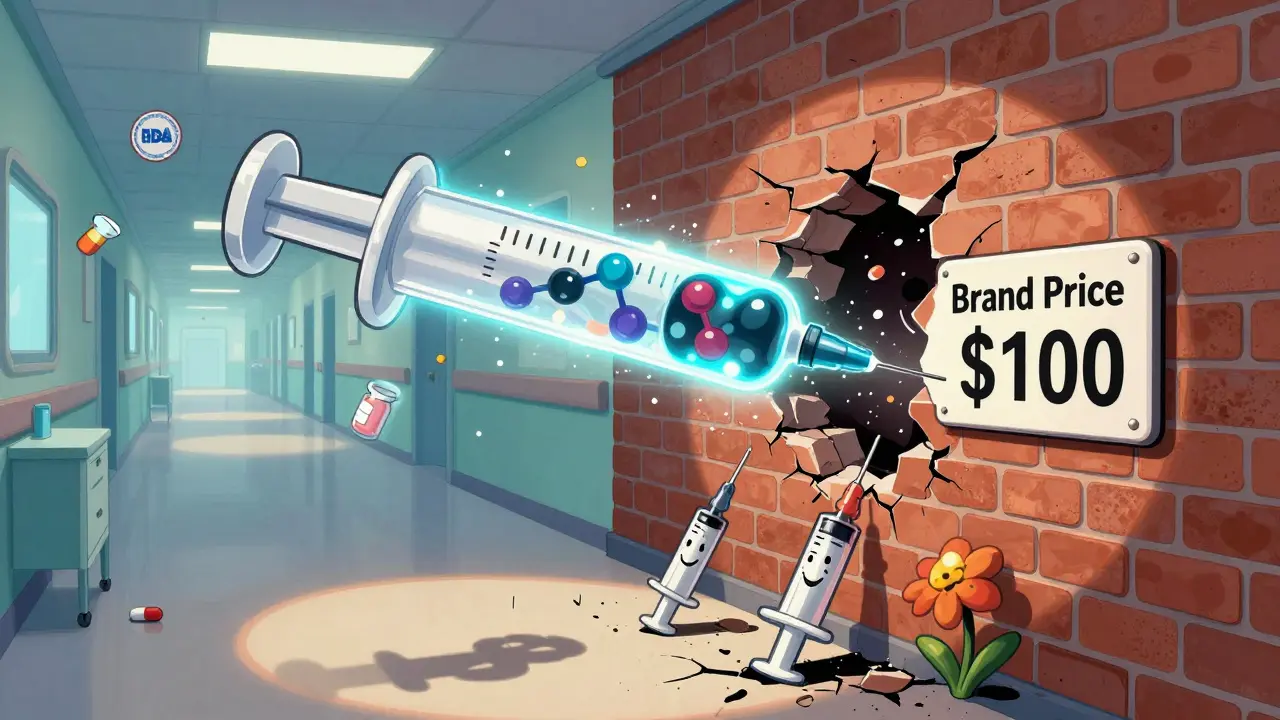
Before generics, a single dose of branded piperacillin-tazobactam could cost over $100. After generics hit, prices dropped by 60-80%. That’s not a small change. It means a patient on a 7-day course might pay $700 less out of pocket. Across the U.S. healthcare system, generic drugs saved an estimated $2.2 trillion between 2010 and 2020. Antibiotic combinations made up a meaningful slice of that.
Lower cost doesn’t just mean savings. It means more people get treated. Studies show that when prices drop, adherence improves. Patients are more likely to finish their full course of antibiotics if they’re not choosing between paying for meds or buying groceries.
How Generic Versions Get Approved
Getting a generic antibiotic combination approved isn’t like copying a simple pill. The FDA requires manufacturers to prove their version is therapeutically equivalent to the original. That means:
- The same active ingredients in the same amounts
- The same route of administration (IV, oral, inhaled)
- The same effect on the body
- The same safety profile
But here’s the catch: if the product includes a device-like a prefilled syringe or an inhaler-it’s called a generic drug-device combination product (g-DDCP). Now you need to prove the device works the same way. Is the needle gauge identical? Does the syringe plunger require the same force? Does the label confuse users? Even small differences can affect safety.
Manufacturers submit an Abbreviated New Drug Application (ANDA), but for combination products, they must include extra data: detailed comparisons of device function, user interface, and labeling. The FDA’s Office of Combination Products reviews all this. No new clinical trials are needed, but the paperwork is massive. That’s why only a handful of generic antibiotic combinations have made it to market since 2010.
Market Response: Not All Generics Are Created Equal
When a generic hits, you’d expect prescriptions to jump. But that’s not always what happens. A 2021 study in Nature Communications looked at 13 antibiotics after generic entry. Only five saw big increases in prescriptions: aztreonam, cefpodoxime, ciprofloxacin, levofloxacin, and ofloxacin. Some jumped by over 400%.
But others didn’t. Cefdinir prescriptions actually dropped. Why? It wasn’t about price. It was about clinical context. For example, aztreonam’s generic launch coincided with the rise of Cayston, an inhaled antibiotic for cystic fibrosis. Doctors started using aztreonam more often as a prep step before inhalation therapy-not because it was cheaper, but because it fit a new treatment pattern.
Some antibiotics saw rising trends, but no sudden spike. Cefprozil, cefuroxime axetil, and clarithromycin kept being used, but not because generics made them popular. Their use was already growing due to changing infection patterns.
The lesson? Generic availability doesn’t automatically mean more use. It depends on the drug, the disease, the delivery method, and even timing with other treatments.
Why State Laws Are Holding Back Access
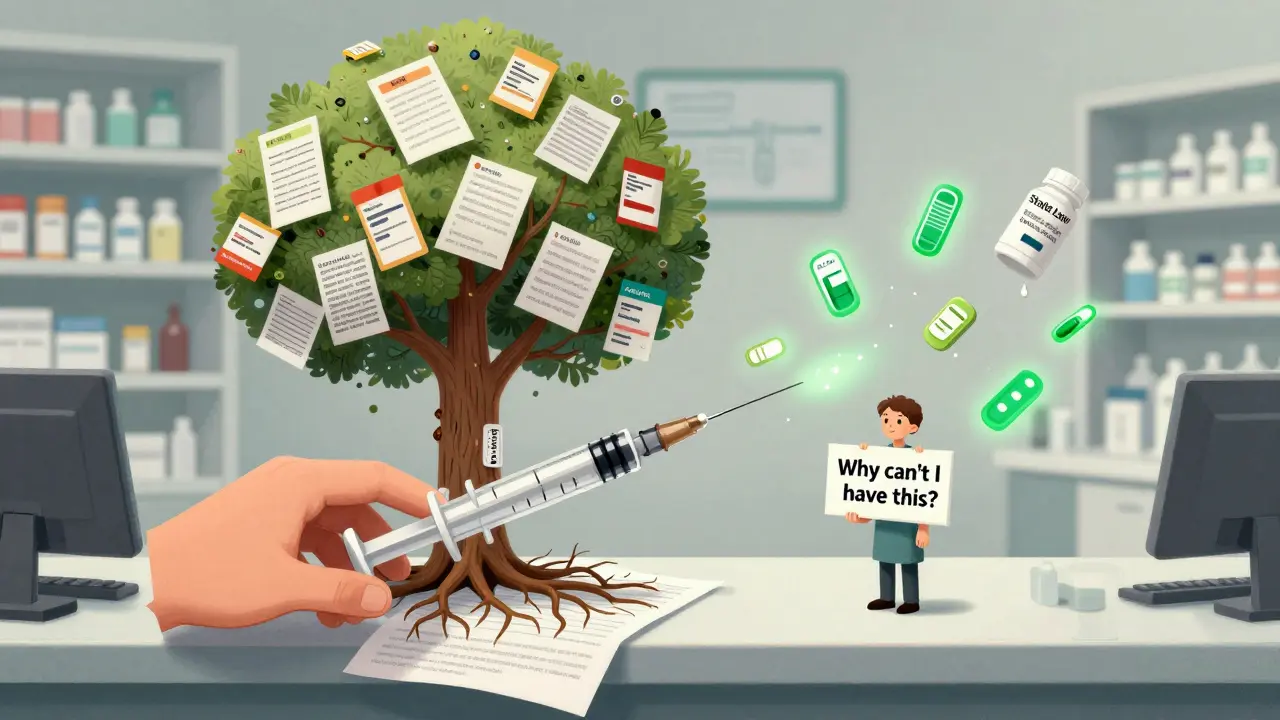
Even when a generic antibiotic combination is FDA-approved, pharmacists in many states can’t automatically swap it for the brand version. Why? Because most state substitution laws were written for simple oral pills-like generic amoxicillin. They don’t account for complex combinations with devices.
Take a prefilled antibiotic syringe. If the generic version has a slightly different plunger or label, the state law might say it’s not interchangeable-even if the FDA says it’s safe and effective. That forces doctors to write prescriptions for the brand name every time, even if the generic is cheaper and available.
Legal experts call this a “structural failure.” These laws were never meant to block access to life-saving drugs. But now, they’re doing exactly that. Until state laws catch up with modern drug delivery, patients will keep paying more than they should.

What’s Next for Antibiotic Combinations?
The FDA is trying to fix this. In September 2024, they held a conference called REdI to update guidelines for combination product development. They’re pushing for clearer rules on what data is needed, especially when a combo product has a new use, a new patient group, or a different way of delivering the drug.
Manufacturers are also working on better ways to prove equivalence without running expensive clinical trials. One approach is using real-world data-like how patients actually respond in hospitals-to show the generic works just as well.
But the biggest change needed isn’t technical. It’s legal. Federal and state regulators need to work together to update substitution laws. Without that, even the most effective generic antibiotic combination won’t reach the patients who need it.
Bottom Line: Cheaper Doesn’t Always Mean Easier
Generic antibiotic combination products are a win for cost and access-but only if the system lets them work. The science is solid. The savings are real. The problem is the rules.
Patients deserve affordable, effective antibiotics. Hospitals need reliable, low-cost options. But until state laws and pharmacy systems adapt to modern drug delivery, we’re stuck in a gap between innovation and implementation.
What’s next? Keep asking: Is this generic approved? Can it be substituted? And if not-why not? Your voice matters. So does your prescription.
Are generic antibiotic combination products as effective as brand-name ones?
Yes, if they’re FDA-approved. Generic versions must prove they deliver the same active ingredients in the same way and produce the same clinical results as the brand-name product. The FDA requires detailed testing for therapeutic equivalence, including bioequivalence and device performance. No clinical trials are needed, but manufacturers must show the generic matches the original in safety, strength, and delivery method.
Why are there so few generic antibiotic combinations on the market?
Because they’re harder to make. Unlike single-drug generics, combination products often include devices like syringes, inhalers, or pumps. Proving those devices work the same way as the original requires extra data, testing, and regulatory review. The process is expensive, time-consuming, and complex. Few manufacturers are willing to invest unless the market is large enough to justify the cost.
Can pharmacists substitute a generic antibiotic combination for the brand name?
Not always. State laws vary, and many were written for simple pills, not complex drug-device combos. Even if the FDA approves a generic, a pharmacist may be legally barred from substituting it unless the state explicitly allows it. Some states require prescribers to write "dispense as written" on the prescription to prevent substitution. This creates confusion and delays, even when the generic is cheaper and approved.
Do generic antibiotic combinations cost less?
Yes-often dramatically. After generic entry, prices for antibiotic combinations typically drop by 60% to 80%. For example, the generic version of piperacillin-tazobactam cost less than half the brand price within a year. These savings benefit patients, insurers, and hospitals alike. In 2020 alone, generic drugs saved the U.S. healthcare system over $2.2 trillion since 2010.
What’s being done to improve access to generic antibiotic combinations?
The FDA is updating its guidelines, especially for drug-device combos, and holding public forums to clarify approval requirements. Experts are calling for federal and state laws to be modernized to allow substitution of approved generics. Some researchers are also exploring ways to use real-world data instead of clinical trials to prove equivalence. But progress is slow-change requires coordination between regulators, manufacturers, pharmacists, and lawmakers.
Comments (8)
pradnya paramita
Therapeutic equivalence for g-DDCPs hinges on pharmacokinetic bioequivalence AND device performance metrics-this is non-negotiable. The FDA’s 2024 REdI guidelines explicitly mandate comparative in-use studies for syringe plunger forces, aerosol particle size distribution (for inhalers), and label readability indices. Without these, you’re not just copying a drug-you’re replicating a system. Most manufacturers cut corners here, which is why only 12 generic antibiotic combinations have cleared ANDA since 2010. The real bottleneck isn’t chemistry-it’s engineering validation.
Jhoantan Moreira
This is such an important topic 💙 Honestly, I didn’t realize how much device design impacts access. My cousin’s kid has CF and uses inhaled antibiotics-seeing how a tiny difference in syringe plunger could delay treatment breaks my heart. Hope lawmakers start listening soon. We need to stop treating complex meds like aspirin 🙏
Meenal Khurana
State laws are outdated. Fix them.
Joy Johnston
While the cost savings from generic antibiotic combinations are undeniably substantial, the regulatory framework governing their substitution remains fragmented and inconsistently enforced across jurisdictions. The absence of federal preemption in state pharmacy laws creates a patchwork system that undermines the intended public health benefits of generic entry. Until harmonized standards are implemented-particularly for drug-device combinations-clinical efficacy, though scientifically validated, will remain inaccessible to many due to administrative barriers.
Coy Huffman
so like… if the plunger feels different, the state says no? 😅 that’s wild. i get it’s safety, but come on. my aunt got her antibiotic shot last week and the generic was $40 vs $300. she almost skipped it cause the pharmacist said ‘not allowed to switch.’ we’re literally choosing between meds and rent. fix the rules, not the needle.
Nathan King
It is regrettably evident that the current regulatory architecture, while technically sound in its scientific rigor, is fundamentally misaligned with the socio-economic realities of modern healthcare delivery. The fetishization of ‘therapeutic equivalence’ without concurrent legislative reform constitutes a form of epistemic arrogance-a privileging of technical perfection over human accessibility. The FDA may approve, but if the pharmacist cannot dispense, the science is rendered inert.
Harriot Rockey
Thank you for writing this!! 🙌 I work in a rural clinic and we’ve seen patients skip doses because of cost-even after generics hit. The device thing? I had no idea. One mom told me her kid’s inhaler didn’t ‘click’ right with the generic and she was scared to use it. We need better labeling, better training, and yes-better laws. Let’s get this fixed together 💪
rahulkumar maurya
Most of these ‘generic’ claims are marketing fluff. Real pharmaceutical science demands rigorous comparative bioavailability studies across diverse populations-not just ‘same active ingredients.’ The FDA’s relaxed standards for device equivalence are a scandal. If you can’t replicate the exact syringe geometry, you’re not producing a generic-you’re producing a liability. And don’t get me started on how these low-effort generics are eroding clinical trust. True innovation isn’t about cost-cutting-it’s about precision. And right now, we’re getting neither.