
Medication Review Preparation Checklist
How Prepared Are You?
This checklist helps ensure you're fully prepared for your telehealth medication review. Complete all items to maximize your review's effectiveness and safety.
Preparation Checklist
Preparation Status
Complete your checklist to see your results.
Your preparation affects how effective your medication review will be. Complete all items to ensure safety and accuracy.
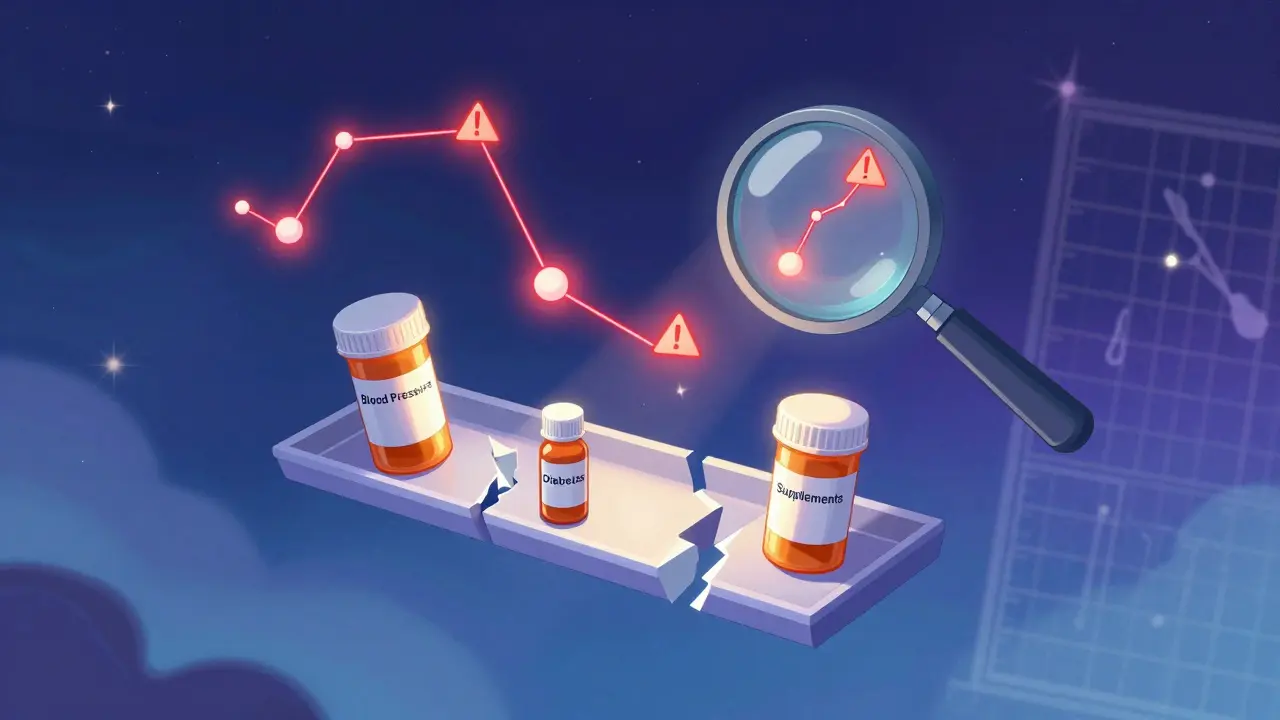
When you’re on multiple medications, even small mistakes can lead to big problems. A pill you forgot to mention. A supplement that clashes with your blood pressure drug. A dosage that’s too high after a hospital stay. These aren’t just hypotheticals-they happen every day. And when you switch from in-person visits to a telehealth medication review, the stakes don’t go down. They just change shape.
Telehealth medication reviews are now a standard part of care for millions. As of late 2024, 78% of U.S. healthcare systems offer them. That’s not a trend-it’s the new normal. But unlike a quick Zoom call for a cold, this is a detailed, structured check-up of everything you’re taking. And if you walk in unprepared, you’re leaving safety on the table.
What Exactly Is a Telehealth Medication Review?
A telehealth medication review isn’t just a chat with a pharmacist. It’s a clinical process built around a five-step model used across Australia, Canada, and the U.S. It starts when your doctor or pharmacist decides you need one-usually because you’re on five or more medications, recently left the hospital, or have a chronic condition like diabetes or heart failure. Then, you meet with an accredited pharmacist via a secure video platform like Doxy.me or Zoom for Healthcare. They pull up your full medical record, check your pharmacy history, and use clinical decision tools to spot risks. The goal? Cut down on side effects, avoid dangerous drug interactions, and make sure every pill you take actually helps you.
It’s not magic. But it’s backed by data. A 2020 study in the Journal of the American Geriatrics Society found that elderly patients who got telehealth reviews had 34.7% fewer dangerous drug reactions than those who didn’t. Another study in four nursing homes showed a 28.6% drop in high-risk medication errors. These aren’t small wins. They’re life-saving.
How to Prepare Before Your Appointment
Preparation isn’t optional. It’s the difference between a useful review and a missed opportunity. Here’s what you need to do-before the day even starts.
- Gather every medication you take. That means prescriptions, over-the-counter pills, vitamins, herbs, and supplements. Don’t just list them. Bring the actual bottles. Pharmacists need to see the labels-dosage, frequency, expiration date, and manufacturer. A 2023 study showed that patients who brought physical bottles improved review accuracy by 37.4%.
- Write down your symptoms. What’s changed in the last month? Dizziness? Trouble sleeping? Upset stomach? Even if you think it’s unrelated, write it down. That “weird tired feeling” might be your blood thinner reacting to a new painkiller.
- Know your pharmacy history. Have you switched pharmacies recently? Did you get a prescription filled at a different store while traveling? These gaps are where errors hide. If you’re unsure, call your pharmacy and ask for a complete list.
- Test your tech. Make sure your camera works. Check your internet speed-1.5 Mbps upload and download is the minimum. Try the video platform ahead of time. If you’ve had freezing or lag before, switch to a wired connection or move closer to your router.
- Have your primary care provider’s info ready. The pharmacist needs to send recommendations to them. Know their name, clinic, and phone number. If you’re not sure who manages your care, say so. That’s part of the review too.
Pro tip: Use a pill organizer for the week leading up to your review. It helps you remember what you actually took-and what you skipped.
What to Ask During the Review
You’re not just listening. You’re participating. Here are the six most important questions to ask-no matter who you’re talking to.
- “How will you verify my medication list against pharmacy records?” This is critical. The Institute for Safe Medication Practices found that 43.2% of medication errors happen because the provider’s list doesn’t match what’s in the pharmacy system. Don’t assume they’ve checked. Ask how they cross-reference.
- “Are any of my medications outdated or no longer needed?” Many people keep taking pills long after they’re useful. A statin you started after a heart attack? Fine. But what about that muscle relaxant from a sprained back three years ago? That’s a hidden risk.
- “Is there a cheaper or safer alternative?” Cost matters. So does safety. Some medications have generic versions that work just as well. Others have newer versions with fewer side effects. Ask if there’s a better option.
- “What should I watch for in the next few weeks?” Every change carries risk. If they’re adjusting a dose or adding a new drug, ask: “What symptoms mean I should call you immediately?” Write it down.
- “How will you communicate your recommendations to my doctor?” Only 62.8% of telehealth services have a standardized way to send notes to primary care providers. If yours doesn’t, ask how you’ll know if your doctor got the update. Don’t wait for them to call you.
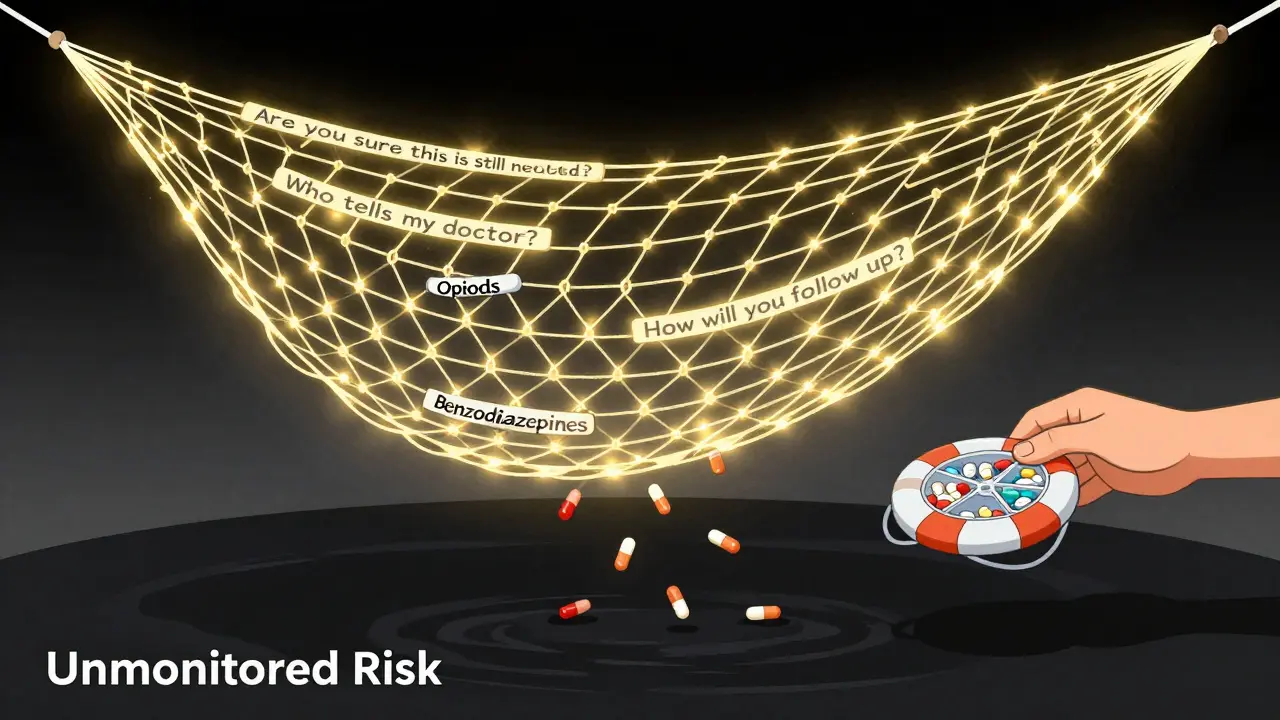
- “How will you monitor me between appointments?” This is the biggest gap in virtual care. If you’re on a new medication, who checks in? Will you get a follow-up call? A text? A lab test? Ask for a plan. Otherwise, you’re on your own.
These aren’t just smart questions-they’re safety checks. And if the pharmacist avoids answering any of them, that’s a red flag.
What Telehealth Can’t Do
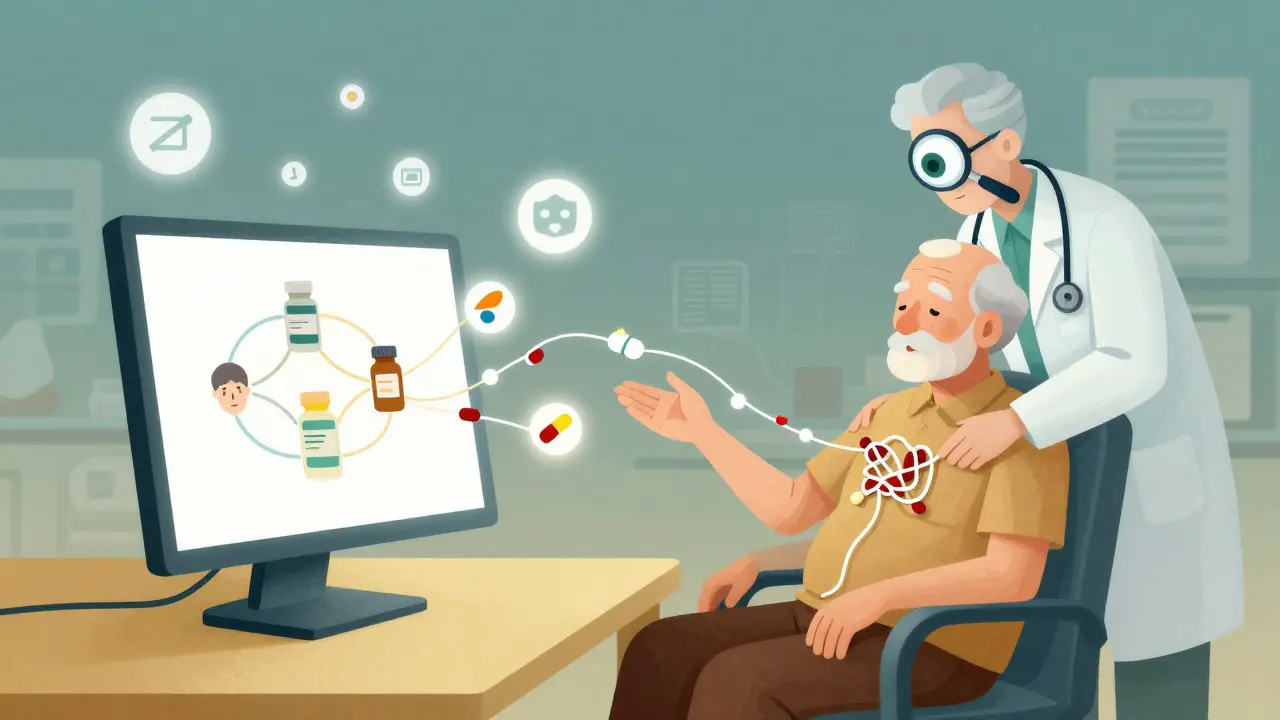
It’s not perfect. And pretending it is puts you at risk.
Telehealth medication reviews work best for stable conditions: managing blood pressure, diabetes, thyroid meds, or chronic pain with predictable patterns. They’re great at catching drug interactions and simplifying regimens. But they struggle with things you can’t see.
For example:
- Patients over 75 with multiple chronic conditions often need hands-on checks-like assessing how they swallow pills, whether they can open bottles, or if they’re hiding medications because they’re scared of side effects. Telehealth catches only 58.4% of these issues.
- Psychiatric medications require full mental status exams. Can a pharmacist tell if you’re confused, withdrawn, or hallucinating over a pixelated screen? Only 43.6% of cases are accurately assessed without in-person evaluation.
- Drug abuse or misuse can’t be detected by video alone. If someone is hoarding pills or skipping doses to sell them, that’s invisible on Zoom.
If you fall into one of these categories, ask your provider: “Do I need an in-person visit too?” Don’t assume telehealth replaces everything.
What Happens After the Review?
The review doesn’t end when the video call does. Here’s what to expect next.
- You should get a written summary within 48 hours. It should list every medication, the reason for each, any changes made, and the next steps.
- Your primary care provider should receive the same summary. If you don’t hear from them within a week, follow up.
- Some services offer automated check-ins via text or app. Ask if yours does. A simple “How are you feeling?” message every 5-7 days can catch side effects before they become emergencies.
- If a medication was stopped or changed, watch for withdrawal symptoms or rebound effects. For example, stopping a beta-blocker suddenly can spike your heart rate. Know what to look for.
Don’t assume everything is fixed. Medication management is ongoing. This review is a checkpoint-not a finish line.
Why This Matters Now
In 2025, the Medicare program officially created two new billing codes for telehealth medication reviews: G2225 for comprehensive reviews ($142.37) and G2226 for targeted ones ($78.92). That means these services are now financially sustainable. Pharmacies and clinics aren’t doing them as a favor-they’re building them into long-term care.
But growth brings risk. With 92.4% of healthcare systems planning to keep telehealth reviews permanent, quality varies wildly. Some use AI tools to flag risks. Others just run through a checklist on Zoom. Your job isn’t to judge the system-it’s to demand the best version of it.
And if you’re over 65, or caring for someone who is, here’s one more thing: 68.2% of seniors felt more confident after getting tech training before their first telehealth visit. That’s not a luxury. It’s a necessity. Ask your local Area Agency on Aging if they offer free tech help for medical appointments. Many do.
Final Thought
Telehealth medication reviews are one of the most effective tools we have to prevent harm from medicines. But they only work if you show up ready. You’re not a passive patient. You’re the most important person in the room. Your list of pills. Your symptoms. Your questions. These aren’t just details-they’re your safety net. Treat them that way.
Do I need to bring my medications to a telehealth review?
Yes. Bringing the actual bottles-prescription, over-the-counter, and supplements-is the single most important thing you can do. Pharmacists need to see labels for dosage, expiration, and manufacturer. Studies show this increases review accuracy by 37.4%. A list alone isn’t enough.
Can a pharmacist change my medication during a telehealth review?
No. Pharmacists can recommend changes, but only your prescribing provider (like your doctor) can approve them. The pharmacist will send a written summary with suggestions. You or your provider will then decide what to do. Never stop or change a medication based on a telehealth review alone.
Is telehealth medication review safe for controlled substances like opioids or benzodiazepines?
It depends. As of January 2025, the DEA allows Schedule III-V medications (like some painkillers and anti-anxiety drugs) to be managed entirely via telehealth if the provider has a special registration. But Schedule II drugs (like oxycodone or Adderall) still require an initial in-person exam. Follow-up visits can be virtual-but only if you’ve already been seen face-to-face. Always confirm your provider’s compliance with state and federal rules.
What if my video call freezes or cuts out during the review?
If the connection fails, the review is incomplete. Do not proceed. Ask to reschedule. Incomplete reviews miss critical risks-like missed doses, side effects, or drug interactions. A 2024 survey found 47.6% of negative reviews cited technical problems. Don’t settle for a shaky connection. Your safety isn’t worth the hassle.
How often should I get a telehealth medication review?
If you’re on five or more medications, or have a chronic condition like heart disease, diabetes, or kidney disease, aim for one every 6 to 12 months. After a hospital stay, you should get one within 30 days. If you’re stable and on fewer meds, once a year is fine. But if you notice new symptoms, start a new drug, or switch pharmacies, don’t wait-request a review.
Comments (15)
Ivan Viktor
So let me get this straight. You're telling me I need to haul my entire medicine cabinet onto a Zoom call just so some pharmacist can squint at expiration dates? I've got pills in Ziplocs, unlabeled bottles from 2018, and that one gummy vitamin that says 'for energy' but tastes like regret. Bring the bottles? Sure. But who's gonna explain why half of them are still in my medicine cabinet because my doctor forgot to say 'stop taking this'? This isn't a review. It's a hoarder's audit with a clipboard.
Zacharia Reda
I love how this post breaks down exactly what to ask-but here's the real kicker: most people don't even know they're supposed to be asking questions. I've seen elderly patients nodding along like they're at a TED Talk, then go home and keep taking the same 12 pills because 'the pharmacist didn't say to stop.' The real win isn't the checklist-it's teaching people they have the right to demand clarity. You're not a passive patient. You're the CEO of your own body. And if your pharmacist talks down to you? Find a new one.
Donna Zurick
Just did my first telehealth med review and it changed everything. Brought my pills, wrote down my weird fatigue, asked about the muscle relaxant I’d been taking since 2021-and they cut it. No more drowsiness. No more forgetting where I put my keys. I felt like I finally got to speak up instead of just nodding. If you're on more than 5 meds? Do this. It's not optional. It's your life.
Tobias Mösl
Let me guess-you're all excited about this 'telehealth revolution' while Big Pharma quietly funds the software that auto-generates these 'reviews.' They don't care if you live or die. They care about billing codes G2225 and G2226. You think they're catching drug interactions? Nah. They're flagging which meds you're NOT taking so they can upsell you something newer. And don't get me started on the 'automated check-ins.' That's not care. That's a surveillance drone with a chatbot. Wake up. This isn't healthcare. It's a data harvesting scheme with a stethoscope.
tatiana verdesoto
My grandma had her first review last week. She was terrified. Thought she'd be yelled at for forgetting a pill. Instead, the pharmacist sat there, listened, and said 'thank you for being so honest.' That’s the magic. It’s not the tech. It’s the human moment when someone says, 'I see you.' If you're nervous? You're not alone. But showing up? That’s the bravest thing you can do for your body.
Ethan Zeeb
This post reads like a corporate brochure. 'Bring your bottles.' 'Ask six questions.' 'Get a summary in 48 hours.' All fine. All useless if your provider doesn't have a functioning EHR system. I work in rural telehealth. We don't have access to 80% of the pharmacy records. The 'review' is a 10-minute script read from a template. And yes, I've had patients die because a change was never communicated. This isn't innovation. It's negligence dressed up as convenience.
Darren Torpey
This isn’t just a checklist-it’s a lifeline. Imagine your meds are a tangled mess of Christmas lights. Every pill’s a bulb. Some are burnt out. Some are wired wrong. A telehealth review? It’s the person who finally unplugs the whole thing, labels each wire, and rewires it so you don’t get fried. I’ve seen people go from 'always tired' to 'I slept through the night.' It’s not magic. It’s math. And you’re the one holding the plug.
Mariah Carle
It’s funny how we treat medication like a sacred text-once prescribed, never questioned. But pills aren’t commandments. They’re tools. And tools wear out. They rust. They get misused. A telehealth review isn’t about compliance. It’s about recalibration. You’re not being judged for taking too many pills. You’re being honored for surviving long enough to need them. That’s the quiet revolution here: dignity in complexity.
Justin Rodriguez
Two quick tips I’ve learned from 12 years as a pharmacist: 1) People forget what they take because they’re overwhelmed-not lazy. A pill organizer helps, but so does a simple chart with colors. 2) The biggest risk isn’t interactions-it’s silence. If someone doesn’t say they’re skipping pills because they can’t afford them? That’s the real crisis. Ask about cost. Ask about fear. The meds are just the surface.
Siri Elena
Oh, how quaint. You're asking people to 'bring bottles' like we're still in 2010. Most seniors don't even have the original bottles anymore. They're in a drawer, or the pharmacy gave them a new one, or they're in a blister pack labeled 'Monday' and nothing else. And your '6 questions'? Cute. But if the pharmacist is on a 7-minute timer because of Medicare billing quotas, you're not getting answers-you're getting a robotic recitation of the script. This is performative medicine. The system is designed to make you feel heard while actually doing nothing.
Divya Mallick
Western medicine is a scam. In India, we use Ayurveda, herbal synergy, and ancestral wisdom. Why are you trusting a Zoom call with a pharmacist who doesn't even know your dosha? You're poisoning yourself with synthetic chemicals while ignoring the truth: your body speaks through pulses, not pill bottles. This telehealth nonsense is colonialism wrapped in a white coat. You think you're safe? You're being chemically manipulated by a system that profits from your dependency. Wake up. Return to nature. The pills are not your allies.
Pankaj Gupta
While I respect the intent of this guide, I must note that the assumption of universal digital access is flawed. In many rural U.S. and Indian communities, stable internet is a luxury. A 1.5 Mbps requirement excludes those without infrastructure. Also, 'pharmacy history' assumes centralized records-yet in the U.S., pharmacy data remains siloed across CVS, Walgreens, and independents. Without interoperability, the 'review' is an illusion. Practical advice is good, but systemic reform is essential.
Alex Brad
Bring the bottles. Write down symptoms. Ask the six questions. That’s it. No fluff. No drama. Just do it. Your life depends on it. Not the system. Not the pharmacist. You. So do it.
Renee Jackson
It is of paramount importance that individuals approach their telehealth medication review with the utmost diligence and preparedness. The integrity of one’s health regimen hinges upon the fidelity of the information provided. One must ensure that all pharmaceutical agents, including over-the-counter compounds and nutraceutical supplements, are documented with precision and presented in their original containers to facilitate accurate clinical assessment. Failure to do so may result in suboptimal therapeutic outcomes and potential adverse events. This is not a suggestion-it is a clinical imperative.
RacRac Rachel
Just had my review and I’m crying 😭 I brought my 17 pills, wrote down my anxiety spikes, and asked if my blood pressure med could be swapped for a cheaper one… they did it. AND sent me a text 3 days later asking how I felt. I felt seen. I felt safe. I felt like my life mattered. Thank you for writing this. You saved me. 🙏❤️