
Sleep Medication Risks: What You Need to Know Before Taking Them
When you’re struggling to sleep, it’s tempting to reach for a pill that promises rest. But sleep medication risks, the hidden dangers of commonly prescribed sleep aids including dependency, cognitive decline, and increased fall risk. Also known as hypnotics, these drugs are meant for short-term use—but too often, they become a nightly habit. The problem isn’t just that they don’t fix the root cause of your insomnia. It’s that they can make things worse over time.
Many people don’t realize that benzodiazepines, a class of sedatives often prescribed for sleep, including drugs like lorazepam and temazepam can lead to physical dependence in just a few weeks. Withdrawal isn’t just uncomfortable—it can trigger rebound insomnia worse than before, anxiety, seizures, and even hallucinations. And it’s not just the strong stuff. Even over-the-counter sleep aids with diphenhydramine can mess with your memory and increase your risk of dementia, especially if you’re over 65. Studies show older adults on these meds are 40% more likely to fall, and falls are the leading cause of injury-related death in that group.
Then there’s the sedative side effects, the grogginess, confusion, and impaired coordination that linger into the next day. You might feel fine in the morning, but your reaction time is slower, your focus is fuzzy, and you’re more likely to make mistakes—whether you’re driving, operating machinery, or just walking down the stairs. And if you’re taking other meds like painkillers, antidepressants, or even some herbal supplements, those risks multiply. A simple mix can turn a sleep aid into a life-threatening combination.
What’s missing from most ads and prescriptions is the truth: sleep meds don’t teach your brain how to sleep. They just put it to sleep. Meanwhile, the real causes—stress, poor sleep hygiene, untreated sleep apnea, or even caffeine after noon—keep going unchecked. That’s why so many people end up on higher doses, longer periods, or switching to something stronger. It’s a cycle that’s hard to break without support.
There are safer paths. Cognitive behavioral therapy for insomnia (CBT-I) is proven to work better long-term than any pill. Simple changes—like fixing your light exposure, cutting screen time before bed, or managing nighttime anxiety—can restore natural sleep without chemicals. But if you’re already on a sleep med, don’t quit cold turkey. Talk to your doctor. There are tapering plans, alternatives, and strategies that can help you get off safely.
Below, you’ll find real, practical advice from people who’ve been there—how to spot warning signs, what to ask your pharmacist, which meds are riskiest for older adults, and how to avoid the trap of relying on pills night after night. These aren’t generic tips. They’re based on actual cases, clinical data, and hard lessons learned by patients and doctors alike.
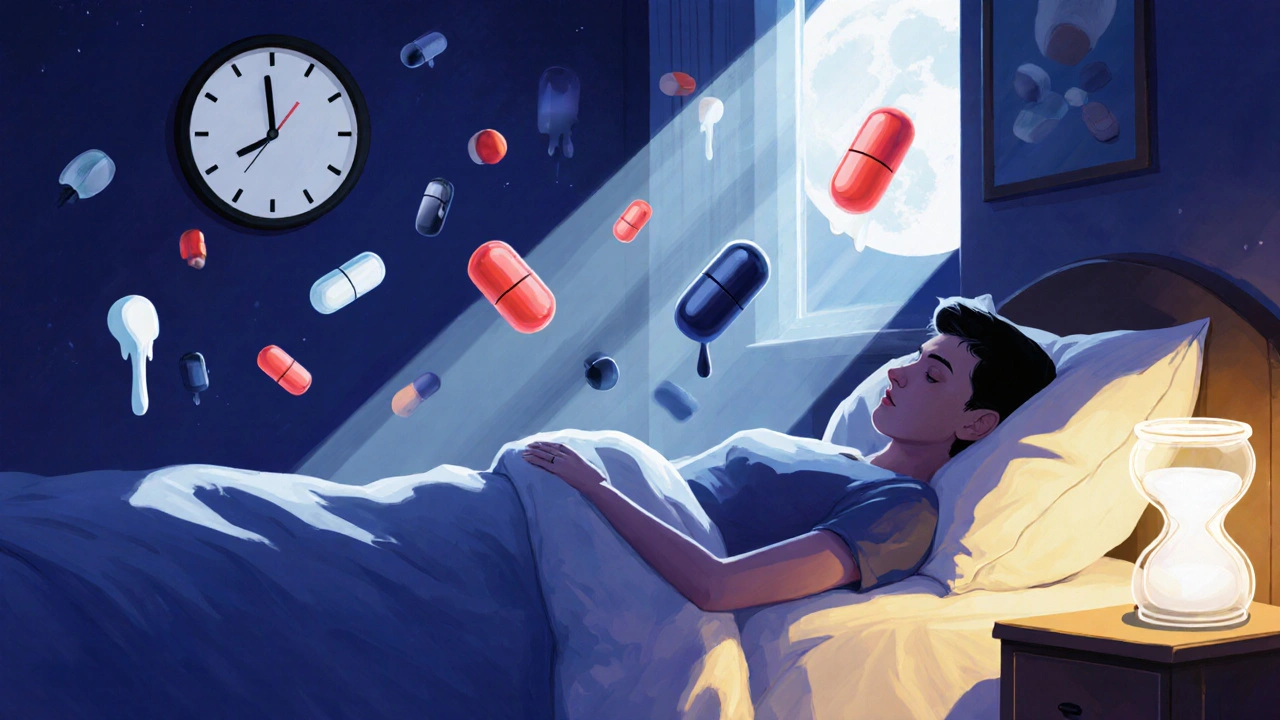
Sleep Hygiene When Medications Disrupt Rest: Practical Steps to Reclaim Your Nights
When medications disrupt your sleep, sleep hygiene is your most effective, drug-free solution. Learn how to fix insomnia caused by antidepressants, beta blockers, and sleep pills with science-backed habits.
read more