
Sleep Disruption: Causes, Medications, and How to Fix It
When you can't sleep, it's rarely just about stress. sleep disruption, a persistent inability to fall or stay asleep that affects daily function. Also known as insomnia, it often links directly to the medications you're taking, not your mindset. Think about it: if you're on levothyroxine for thyroid issues, drinking coffee too soon after your pill can block absorption and throw off your whole rhythm. Or if you're on tacrolimus after a transplant, tremors and headaches—common side effects—can keep you wide awake at night. Sleep disruption isn't a standalone problem; it's a symptom.
Many people don't realize how often medication side effects, unintended physical or mental reactions to drugs. Also known as drug reactions, they quietly sabotage sleep. Take metformin—its stomach upset can wake you up. Or clonidine, used for blood pressure and anxiety, which causes drowsiness during the day but rebound insomnia at night. Even calcium supplements, if taken at the wrong time with bisphosphonates, can mess with your body’s natural mineral balance and trigger nighttime muscle cramps. These aren’t random glitches—they’re predictable interactions built into how your body processes drugs.
And then there’s the hidden connection: thyroid medication, drugs like levothyroxine that replace or supplement thyroid hormone. Also known as T4 replacement therapy, they demand strict timing. Eat soy, drink coffee, or take iron within hours of your pill, and your body won’t absorb it right. That means your thyroid levels stay low, your metabolism slows, and your sleep cycle gets tangled. You feel tired all day, then wired at night. It’s not your fault—you just didn’t know the rules.
What you’ll find below isn’t a list of sleep hacks. It’s a real-world map of how your meds, your diet, and your body’s chemistry collide—and how to untangle them. From splitting pills safely to avoid cost-driven dosing errors, to understanding why your antiviral or antibiotic might be keeping you up, these articles cut through the noise. No fluff. No vague advice. Just clear, tested connections between what you take and why you can’t sleep.
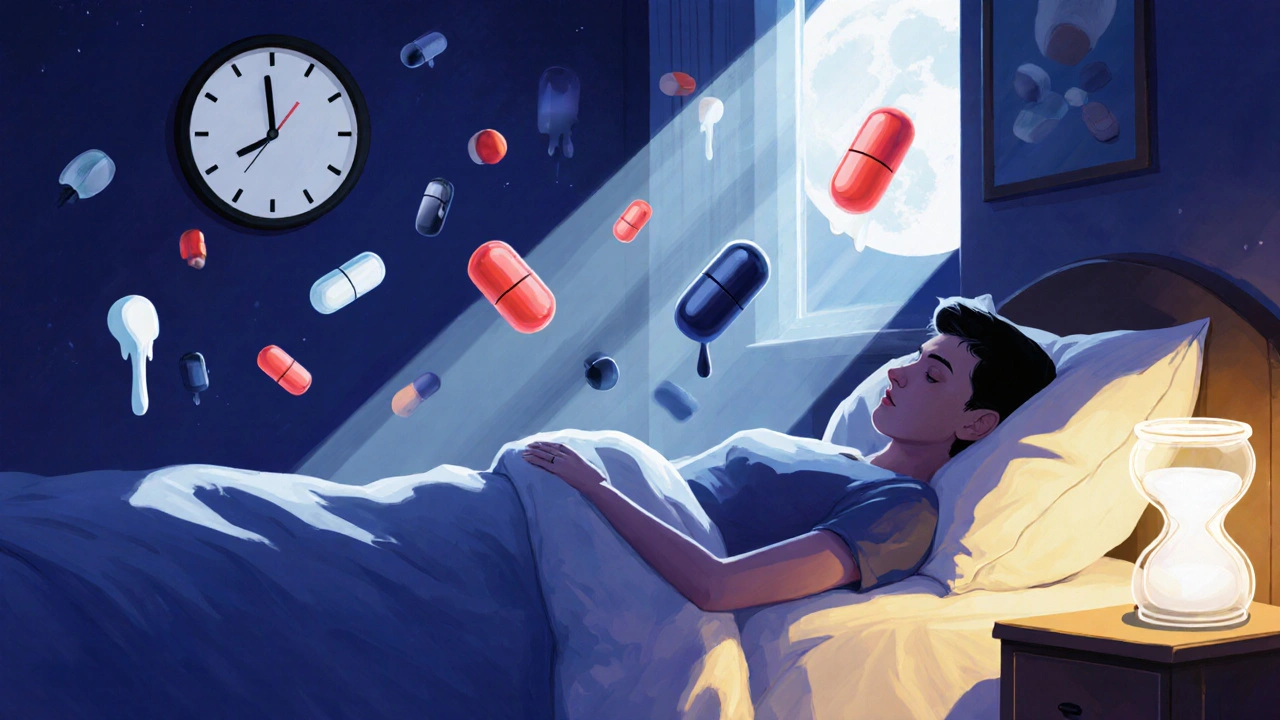
Sleep Hygiene When Medications Disrupt Rest: Practical Steps to Reclaim Your Nights
When medications disrupt your sleep, sleep hygiene is your most effective, drug-free solution. Learn how to fix insomnia caused by antidepressants, beta blockers, and sleep pills with science-backed habits.
read more