
Insomnia from Drugs: How Medications Disrupt Sleep and What to Do
When you take a medicine to feel better, the last thing you expect is to lie awake all night. But insomnia from drugs, a side effect caused by prescription and over-the-counter medications that interfere with normal sleep patterns. Also known as drug-induced insomnia, it’s more common than most people realize—even if your pill isn’t labeled as a stimulant. It’s not just caffeine or decongestants. Even meds for depression, high blood pressure, thyroid issues, or chronic pain can quietly steal your sleep. You might not connect the dots until you’ve spent weeks counting ceiling tiles.
Take levothyroxine, a thyroid hormone replacement used to treat hypothyroidism. It’s essential, but if you take it too late in the day, it can overstimulate your nervous system and keep you up. Same with clonidine, a blood pressure and anxiety drug that can cause rebound insomnia when it wears off. Even tacrolimus, an immunosuppressant used after organ transplants, triggers tremors and headaches in up to 40% of users—side effects that make falling asleep nearly impossible. These aren’t rare cases. They’re documented patterns you’ll find in real patient reports and clinical studies.
What makes this worse is that doctors rarely ask about sleep when prescribing. You get a new med, feel off, assume it’s stress or aging—and never mention the insomnia. But the fix isn’t always stopping the drug. Sometimes it’s timing: taking levothyroxine first thing in the morning, spacing out stimulant meds before noon, or switching to a different formulation like extended-release metformin to reduce nighttime GI discomfort that disrupts sleep. Other times, it’s swapping one drug for another—like replacing clonidine with amlodipine or lisinopril, both of which have fewer sleep-related side effects.
You don’t have to live with sleepless nights just because you need medication. The right adjustments can bring your sleep back without sacrificing your health. Below, you’ll find real-world guides on how specific drugs affect rest, what alternatives exist, and how to talk to your doctor about solutions that actually work.
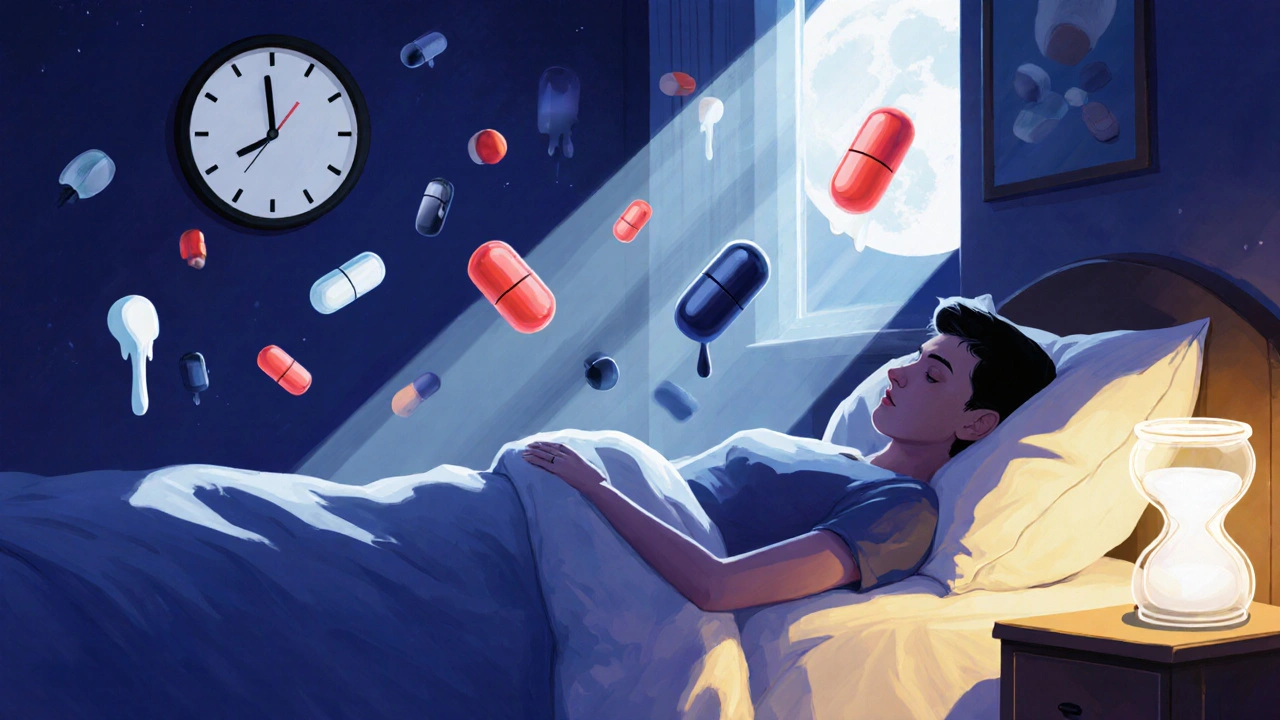
Sleep Hygiene When Medications Disrupt Rest: Practical Steps to Reclaim Your Nights
When medications disrupt your sleep, sleep hygiene is your most effective, drug-free solution. Learn how to fix insomnia caused by antidepressants, beta blockers, and sleep pills with science-backed habits.
read more