
Adolescent Growth: Understanding Physical Changes, Medications, and Nutrition
When we talk about adolescent growth, the period of rapid physical and hormonal changes between childhood and adulthood. Also known as puberty, it’s when the body transforms—bones lengthen, muscles build, and hormones surge to trigger development. This isn’t just about getting taller. It’s a delicate window where nutrition, medication, and even sleep patterns can shape long-term health.
For teens, growth hormones, natural chemicals that drive bone and muscle development are critical. But they don’t work in isolation. Take calcium supplements, often given to support bone density during rapid growth. If taken with certain medications like bisphosphonates, they can cancel each other out—just like coffee blocks thyroid meds. Timing matters. So does diet. Iron and folic acid aren’t just for anemia—they help strengthen gums and teeth, which often weaken during growth spurts. And while some teens take supplements hoping to boost height, the real drivers are protein, vitamin D, zinc, and sleep—none of which can be replaced by a pill.
Adolescent growth also intersects with medications used for chronic conditions. A teen on tacrolimus after a transplant might get tremors or headaches—not because their dose is too high, but because their developing brain is more sensitive. Or a teenager with bipolar disorder on valproic acid could face liver stress or weight gain that disrupts normal development. Even common drugs like clonidine or lisinopril-HCTZ can affect bone density or trigger gout, which is rare in teens but possible if metabolism is thrown off. This isn’t about scaring parents—it’s about awareness. Growth isn’t linear. Some teens hit a wall at 14, others keep growing into their late teens. What’s normal? What’s a red flag? It’s not just height on a chart—it’s skin changes, voice cracks, menstrual cycles, mood swings, and how the body responds to what it’s given.
What you’ll find here aren’t generic tips. These are real cases: a teen with a broken knee needing ACL repair while on immunosuppressants, a girl on birth control managing acne while her bones are still forming, a boy taking iron for fatigue only to find his gums were burning from deficiency. Each post cuts through the noise. No fluff. Just what works, what doesn’t, and what no one tells you until it’s too late.
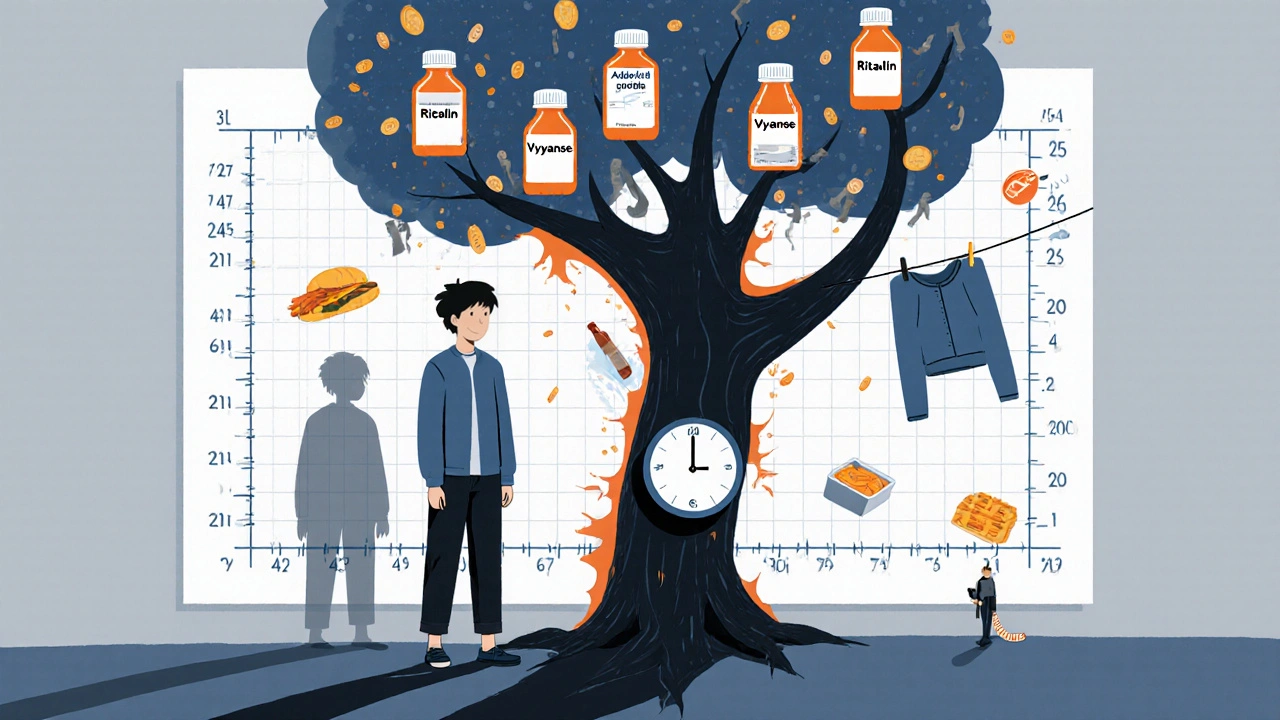
ADHD Medications in Teens: Tracking Growth, Appetite, and Side Effects
ADHD medications help teens focus but can affect growth and appetite. Learn how to monitor side effects, manage nutrition, and make informed treatment decisions with evidence-based strategies.
read more