

Imagine a hospital where the waiting room is packed, but half the nursing stations are empty. This isn't a nightmare scenario; it's the reality for thousands of health systems today. With the World Health Organization (WHO) projecting a global shortfall of 11 million health workers by 2030, the industry is facing a breaking point. In the U.S. alone, the Health Resources & Services Administration expects a gap of up to 3.2 million workers by 2026. When there aren't enough people to provide care, patient safety drops and burnout skyrockets. The good news? Health systems are fighting back with a mix of high-tech tools and human-centric policy changes to keep the lights on and the patients safe.
Quick Wins: Immediate Tactical Staffing
When a ward is understaffed tomorrow morning, administrators can't wait for a four-year degree program to graduate. They need people now. To bridge this gap, many systems have turned to a "gig economy" approach for medicine. Shortage mitigation strategies often start with tactical hires like traveling clinicians and per diem staff. Data from 2023 shows about 12.7% of U.S. hospitals rely on travel nurses during peak demand. While expensive, this flexibility prevents total system collapse during seasonal surges.
Beyond temporary contracts, international recruitment has become a cornerstone for survival. About 18% of U.S. hospitals are now hiring from abroad to fill critical voids. However, the most sustainable short-term fix is often found within the existing walls. Around 43% of hospitals have implemented cross-training, teaching staff to handle multiple roles. This doesn't just help the workflow; it gives employees a broader skill set and makes the system more resilient when a specific department is hit hard by absences.
Using Tech to Buy Back Time
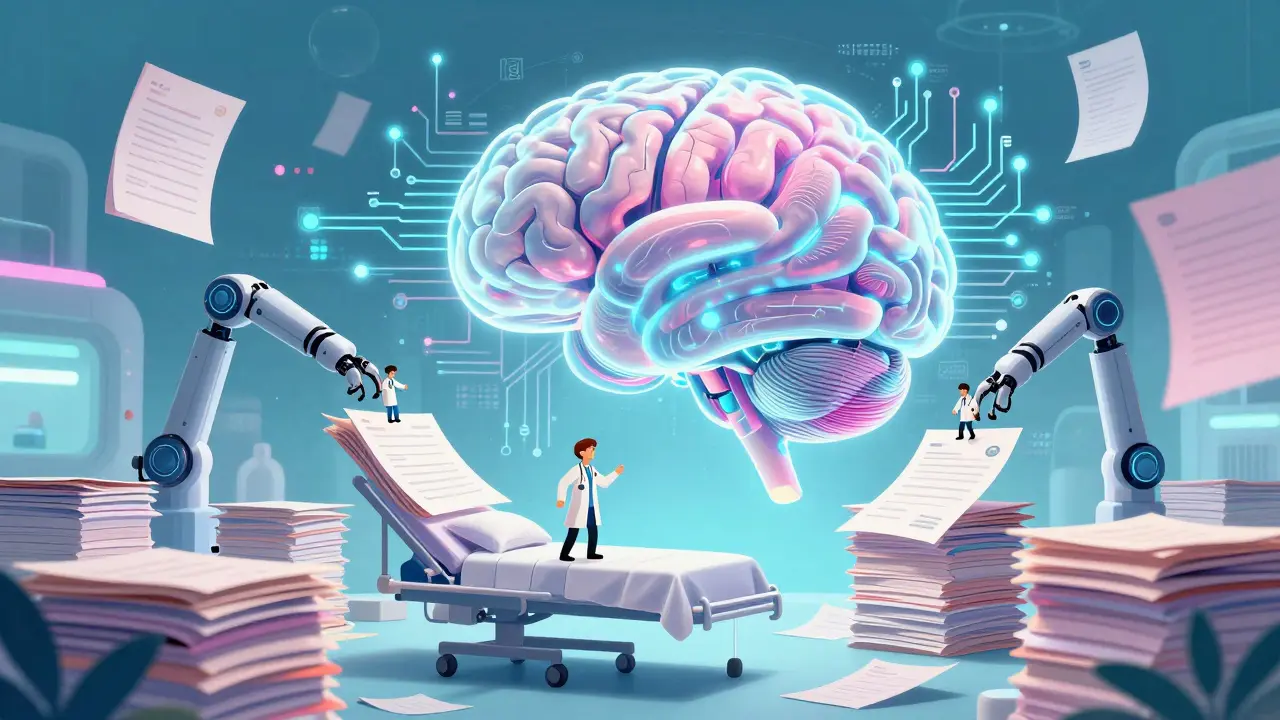
You can't conjure new doctors out of thin air, but you can make the ones you have more efficient. This is where Artificial Intelligence (AI) comes in. We're seeing a massive shift toward Generative AI and Robotic Process Automation (RPA) to handle the "paperwork" that drives clinicians crazy. IDC predicts a 51% jump in generative AI spending from 2024 to 2025 because the goal is simple: reduce the administrative burden so providers can actually see patients.
Take Baptist Health as an example. By using AI-powered intelligent document processing, they slashed their administrative burden by 37%. When you remove the tedious data entry, you're not just saving money-you're saving the mental health of your staff. Similarly, Telehealth nursing has exploded. Adoption jumped from 35% to 68% between 2022 and 2024, allowing a single "virtual nurse" to support multiple physical wards, checking admissions and monitoring vitals from a remote hub.
| Technology Type | Primary Benefit | Observed Outcome |
|---|---|---|
| Intelligent Document Processing | Admin Reduction | 37% less paperwork (Baptist Health) |
| Virtual Nursing | Capacity Scaling | Adoption rose to 68% of systems |
| Robotic Process Automation | Workflow Speed | Est. $382B industry savings by 2027 |
Changing the Culture: Recruitment and Retention
Throwing money at the problem with sign-on bonuses-which averaged $15,000 to $25,000 in 2024-is a band-aid. To actually stop the bleed, health systems are rewriting the employee experience. One of the biggest culprits of turnover is burnout; 63% of healthcare workers reported symptoms in 2024. To fight this, 37% of major hospital systems have piloted flexible scheduling, which has brought burnout rates down by 19%.
Retention is also about growth. When people feel stuck, they leave. Career development pathways have boosted retention by 23%, and micro-credentialing-where staff earn short-term certifications in specific high-demand skills-has increased job satisfaction by 18%. It's a shift from treating staff as replaceable units to treating them as long-term assets. Even retirement is being handled differently. Johns Hopkins University School of Nursing found that phased retirement programs (reduced hours with full benefits) increased clinical faculty retention by 22%.
Reimagining How We Deliver Care
If there aren't enough physicians, why does every patient need to see one for every visit? Health systems are moving toward team-based care models. By expanding the roles of Nurse Practitioners and physician assistants, 78% of primary care facilities have increased their patient capacity by 33%. This isn't about lowering the quality of care; it's about utilizing the right skill for the right task.
We're also seeing a push out of the hospital and into the community. Expanding home-based care has reduced hospital readmissions by 22%. This takes the pressure off the inpatient wards and allows the remaining hospital staff to focus on the most critical cases. By shifting the venue of care, health systems are effectively "expanding" their walls without adding a single new bed.
The Long Game: Building a Sustainable Pipeline
The most successful systems, like Intermountain Healthcare, aren't just doing one of these things-they're doing all of them. They've managed to drop their vacancy rates from 18% to 7% by combining tech, flexible schedules, and local partnerships. A huge part of this is the "hyper-local" approach. Mayo Clinic partnered with community colleges in Minnesota, increasing their worker pipeline by 47% between 2022 and 2024.
On a policy level, there is a push to increase the number of Graduate Medical Education slots. Groups like Kaiser Permanente are advocating for federal reforms to add 14,000 residency slots. Until those systemic changes happen, the focus remains on accelerated nursing programs, which have nearly doubled their graduates over the last decade, adding about 8,000 new nurses to the workforce every year.
What are the most effective ways to reduce nurse burnout?
The most successful strategies include implementing flexible scheduling, which has reduced burnout by 19% in pilot programs, and providing robust mental health support, which has been shown to reduce turnover by 17%. Career development and micro-credentialing also help by increasing job satisfaction.
How is AI actually helping with staffing shortages?
AI isn't replacing nurses, but it is replacing the paperwork. Intelligent document processing can reduce administrative burdens by up to 37%, freeing up clinicians to spend more time with patients. Additionally, virtual nursing allows a smaller number of staff to monitor more patients via telehealth.
Do sign-on bonuses actually work for long-term retention?
Sign-on bonuses (averaging $15k-$25k) are effective for immediate recruitment but often fail at long-term retention. Systems are finding more success with tuition reimbursement (offered by 68% of major systems) and loan forgiveness programs to create a lasting bond with the employee.
What is a team-based care model?
A team-based care model shifts the focus from a single physician to a multidisciplinary team. This often involves increasing the autonomy and role of Nurse Practitioners and Physician Assistants, which has increased patient capacity by 33% in many primary care facilities.
Why are international hires becoming more common?
With a projected global shortfall of 11 million health workers, domestic pipelines often cannot meet demand. About 18% of U.S. hospitals now recruit internationally to fill critical gaps in specialized medical professions.