
Rosuvastatin Kidney Safety Calculator
Your Kidney Function & Rosuvastatin Safety
Your kidney function affects how your body processes rosuvastatin. This tool helps you understand safe dosing based on your eGFR (estimated glomerular filtration rate).
Enter your eGFR value to see recommended rosuvastatin dosing.
Rosuvastatin is one of the most powerful statins available today. If you’ve been prescribed this medication, you’re likely aiming to lower your LDL cholesterol significantly - maybe from 180 down to 85, as some users report. But with great power comes greater responsibility: you need to know what to watch for, when to call your doctor, and how to tell if it’s working without causing harm.
Why Rosuvastatin Is So Strong
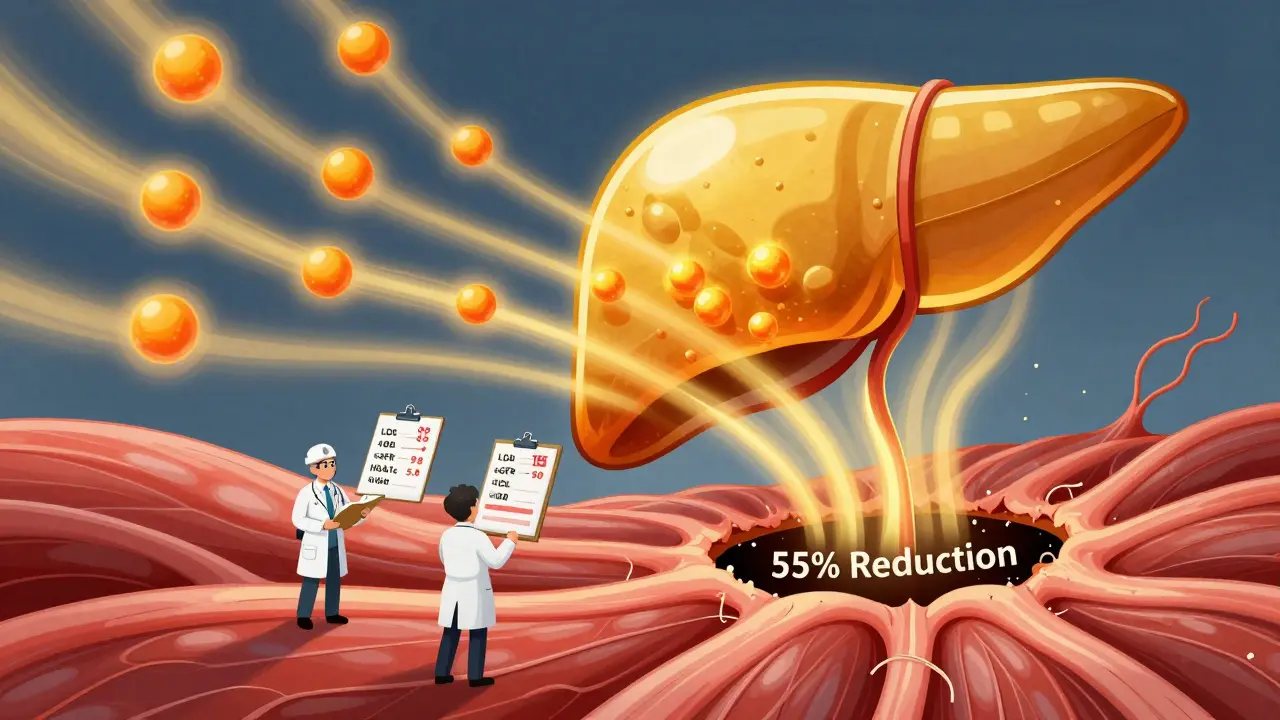
Rosuvastatin doesn’t just nudge your cholesterol down - it pushes it hard. At a 20 mg daily dose, it cuts LDL cholesterol by about 55%, which is stronger than 40 mg of atorvastatin or simvastatin. That’s why doctors reach for it when someone has very high cholesterol, diabetes, or a history of heart problems. It’s classified as a high-intensity statin by the American College of Cardiology, meaning it’s meant for people who need the biggest possible drop in LDL to avoid a heart attack or stroke. Its strength comes from how it works. Rosuvastatin blocks HMG-CoA reductase, the enzyme your liver uses to make cholesterol. But unlike older statins, it doesn’t get broken down much by the liver’s CYP enzymes. That means fewer interactions with other drugs - like antibiotics or antifungals - which is a big plus if you’re on multiple medications.What Side Effects You Should Watch For
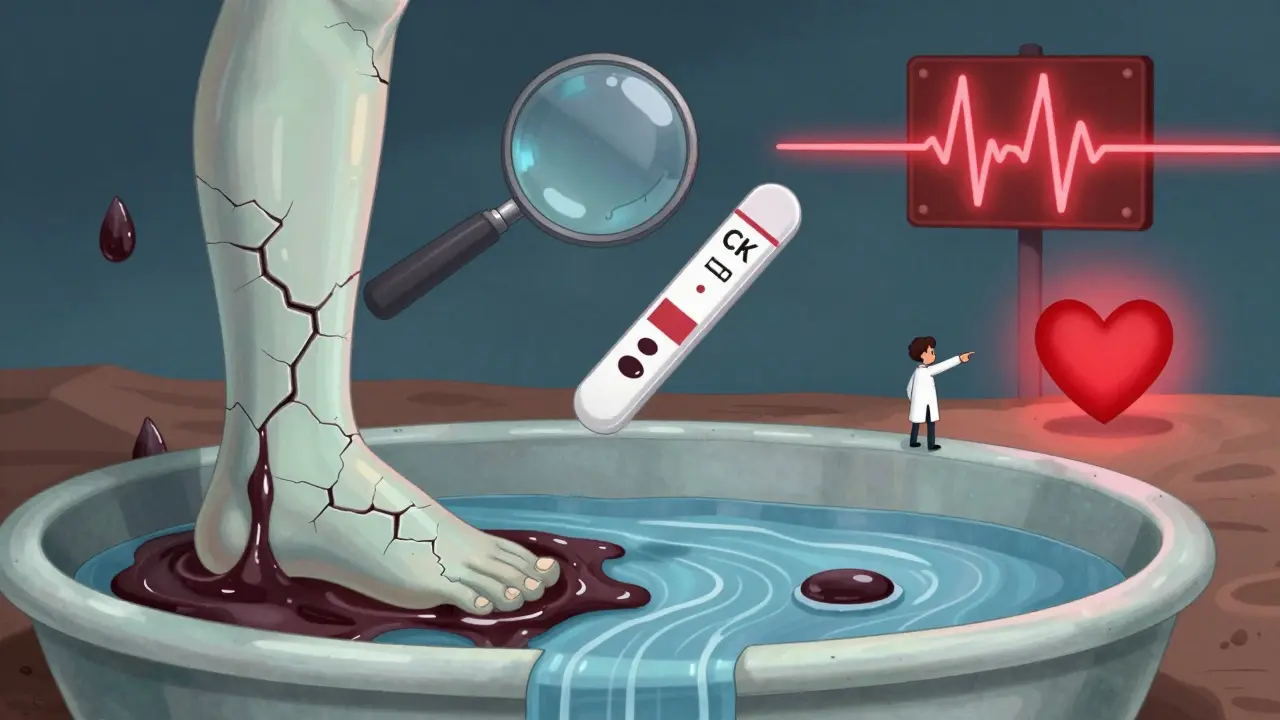
Most people take rosuvastatin without issues. But side effects do happen, and some can be serious. The most common complaint? Muscle pain. Not everyone feels it, but about 5-10% of users report mild aches or cramps, especially in the legs. That’s normal. If it’s just a dull soreness that comes and goes, it’s probably not dangerous. But if you start feeling severe muscle pain, weakness, or tenderness - especially if you also have fever, dark urine, or feel unusually tired - stop taking it and call your doctor immediately. That could be a sign of rhabdomyolysis, a rare but dangerous condition where muscle tissue breaks down and can damage your kidneys. It happens in fewer than 1 in 5,000 people, but it’s life-threatening if missed. Another side effect you might not expect: elevated blood sugar. Studies show statins, including rosuvastatin, can slightly raise fasting glucose and HbA1c levels. It’s not enough to cause diabetes in healthy people, but if you’re prediabetic or have a family history, your doctor should check your HbA1c before you start and again in 3-6 months. Don’t panic - the heart protection you get from lowering LDL far outweighs this small risk. Some users report memory fog or confusion. The FDA says these reports are rare and usually go away when the drug is stopped. If you notice trouble remembering names or focusing, talk to your doctor. It’s not common, but it’s worth mentioning.What Your Doctor Should Monitor
You don’t need monthly blood tests. In fact, routine liver enzyme checks are no longer recommended for people without symptoms. But here’s what actually matters:- Before starting: Get baseline tests for ALT, AST (liver enzymes), CK (muscle enzyme), eGFR (kidney function), and HbA1c.
- 3 months after starting or changing dose: Repeat ALT, AST, and eGFR. If your liver enzymes are more than 3 times the normal limit, your doctor may pause the drug.
- Annually: Check eGFR and HbA1c if you’re stable. No need for CK unless you have muscle symptoms.
For kidney health, rosuvastatin needs special care. If your eGFR drops below 60 mL/min, your dose should be reduced to 10 mg. At 40 mg, it’s not allowed if your eGFR is below 60, and it’s completely off-limits if it’s below 30. This isn’t just caution - it’s science. Rosuvastatin is cleared mostly by the kidneys, not the liver. If your kidneys aren’t working well, the drug builds up and raises your risk of side effects.
When to Stop or Switch
You shouldn’t quit rosuvastatin on your own. But there are clear red flags:- Unexplained muscle pain that lasts more than a week, especially with weakness or dark urine.
- ALT or AST levels more than 3 times the upper limit of normal.
- eGFR dropping below 30 mL/min - this means your kidneys are failing, and you need a different statin.
- Repeatedly high blood sugar that doesn’t improve with diet or exercise.
Many people switch to pravastatin or fluvastatin if kidney function declines - these statins are cleared through the liver, not the kidneys. Others drop to a lower dose of rosuvastatin (5 mg or 10 mg) and still get 40-50% LDL reduction, which is enough for many.
Real People, Real Experiences
On patient forums, the stories are split. One Reddit user wrote: “Took 20 mg for 8 months. My LDL dropped from 170 to 78. No side effects.” Another said: “Leg cramps so bad I couldn’t walk. Stopped it. Cramps gone in 10 days.” A 2022 survey of 450 doctors found that 68% had patients quit rosuvastatin because of side effects - and 74% of those cases were muscle-related. But here’s the key: those who stayed on it had 44% fewer heart attacks, strokes, and deaths in long-term studies like JUPITER. The benefit isn’t just statistical - it’s life-saving.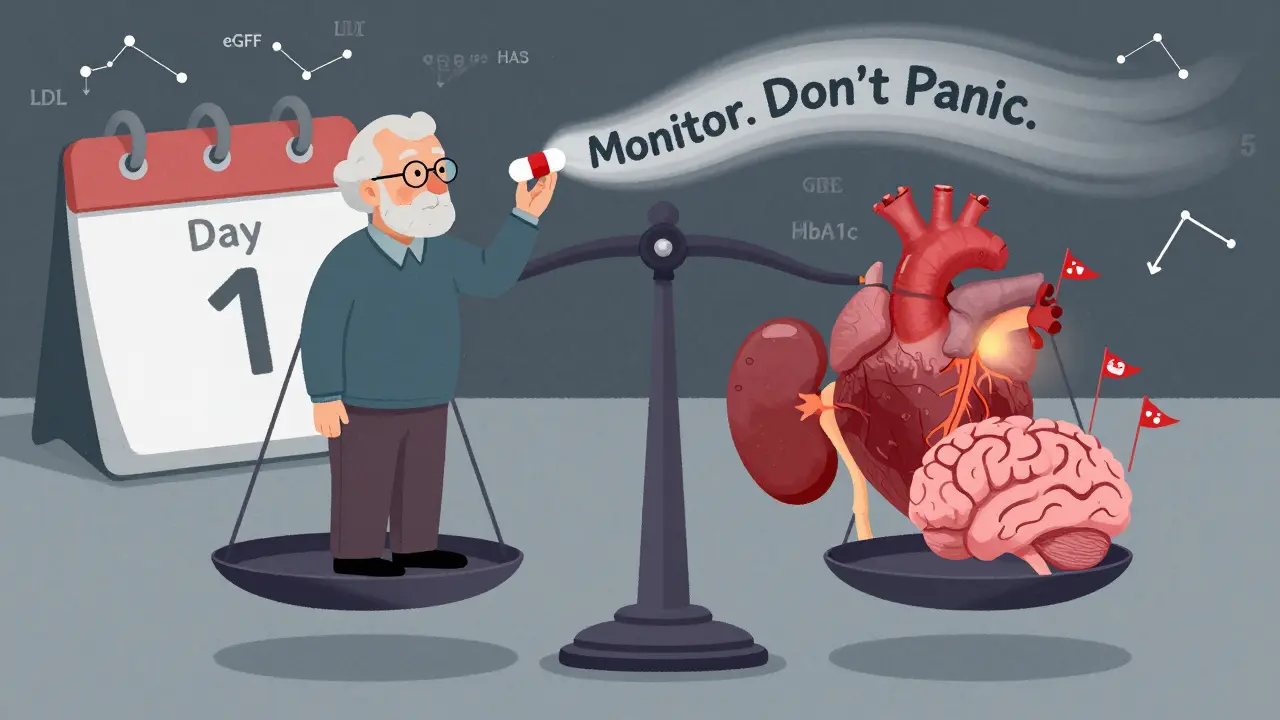
What You Can Do Right Now
If you’re on rosuvastatin:- Know your numbers: Keep a note of your last LDL, eGFR, and HbA1c.
- Report muscle pain - even if it seems minor. Don’t wait for it to get worse.
- Don’t take other supplements like red yeast rice or niacin without telling your doctor. They can increase side effects.
- Take your pill at the same time every day. Food doesn’t matter - morning or night is fine.
- Keep your annual checkups. Don’t skip them because you feel fine.
If you’re considering starting rosuvastatin, ask your doctor: “Is this the right intensity for my risk level?” You don’t always need 20 mg. Many people do just as well on 5 or 10 mg - with fewer side effects.
Bottom Line
Rosuvastatin is powerful. It works. And for people at high risk of heart disease, it’s one of the best tools we have. But it’s not a magic pill. It requires awareness. You need to know your body’s signals and your lab values. Most side effects are mild and reversible. Serious ones are rare - but only if you catch them early.Don’t let fear stop you. But don’t ignore warning signs. Work with your doctor. Track your symptoms. And remember - the goal isn’t just a lower number on a blood test. It’s staying healthy, active, and alive for years to come.
Can rosuvastatin cause kidney damage?
Rosuvastatin doesn’t damage kidneys directly, but it’s cleared by them. If your kidneys are already weak (eGFR below 60), the drug can build up and increase the risk of muscle side effects. That’s why dosing is lowered or avoided in kidney disease. It’s not the drug hurting your kidneys - it’s your kidneys struggling to clear the drug. Regular eGFR checks help prevent this.
Is rosuvastatin safe for older adults?
Yes, but with caution. Older adults often have reduced kidney function and are more sensitive to muscle side effects. Doctors typically start with 5 or 10 mg and monitor closely. If you’re over 70, your doctor should check your eGFR and CK if you report any muscle pain. The benefits still outweigh risks for most, especially if you’ve had a heart event or have diabetes.
Can I take rosuvastatin with other cholesterol meds?
You can, but only under close supervision. Combining rosuvastatin with ezetimibe or PCSK9 inhibitors is common for very high-risk patients. But avoid combining it with other statins or supplements like red yeast rice - those can spike muscle risks. Always tell your doctor what else you’re taking, even over-the-counter products.
Does rosuvastatin cause weight gain?
No, rosuvastatin doesn’t cause weight gain. Some people think they gain weight because they feel better and eat more - but the drug itself has no effect on metabolism or appetite. If you notice unexplained weight gain, look at diet, activity, or other medications. It’s not a known side effect.
How long does it take for rosuvastatin to work?
You’ll see your LDL drop within 2-4 weeks. Most people reach their lowest level by 6 weeks. Your doctor will usually check your cholesterol after 3 months to see if the dose needs adjusting. Don’t expect instant results - but don’t wait too long to get tested either.
Can I stop rosuvastatin if my cholesterol is normal?
No - not without talking to your doctor. Cholesterol doesn’t stay low on its own. If you stop, your levels will climb back up in weeks. Statins are usually lifelong for people with heart disease, diabetes, or high risk. Stopping increases your chance of a heart attack or stroke. Only stop if side effects are severe and your doctor agrees on an alternative.
Is generic rosuvastatin as good as Crestor?
Yes. Since the patent expired in 2016, generic rosuvastatin has been widely used and studied. The FDA requires generics to be identical in active ingredient, strength, and absorption. There’s no evidence that brand-name Crestor works better. Most doctors prescribe the generic to save money - and it works just as well.
Next Steps If You’re on Rosuvastatin
- Write down your last three lab results: LDL, eGFR, HbA1c.
- Set a reminder to check in with your doctor in 3 months - even if you feel fine.
- Keep a short journal: note any new muscle pain, fatigue, or changes in urine color.
- Ask your pharmacist: “Are any of my other meds interacting with rosuvastatin?”
- If you’re over 65 or have kidney issues, ask if a lower dose might be safer.
Statin therapy isn’t about perfection. It’s about balance. You want the lowest possible LDL without risking your quality of life. Rosuvastatin gives you the power to get there - if you know how to use it wisely.
Comments (15)
Austin LeBlanc
Wow, someone actually wrote a useful statin post for once. No fluff, no corporate BS. I’ve been on 20mg for 3 years - LDL dropped from 190 to 72. No muscle pain, no brain fog. But I also don’t take red yeast rice or vitamin D mega-doses like some people. Seriously, stop blaming the drug for your bad lifestyle choices.
And yes, generic works just as well. I pay $4 a month. Crestor? $300. You’re not special.
niharika hardikar
It is imperative to underscore that the pharmacokinetic profile of rosuvastatin is uniquely dependent on renal excretion, as elucidated by the FDA’s 2018 pharmacovigilance bulletin. Consequently, the monitoring of estimated glomerular filtration rate (eGFR) is not merely advisable - it is a non-negotiable component of therapeutic safety.
Furthermore, the concomitant administration of HMG-CoA reductase inhibitors with nephrotoxic agents, such as NSAIDs or aminoglycosides, constitutes a clinically significant drug interaction that may precipitate rhabdomyolysis. Such combinations demand immediate cessation and urgent nephrology consultation.
EMMANUEL EMEKAOGBOR
Respectfully, I’ve seen many patients in Lagos with high cholesterol and no access to regular labs. They take rosuvastatin because their doctor says so, and they don’t know what eGFR means. But they feel better. They walk more. Their blood pressure drops.
Maybe the real issue isn’t the drug - it’s the system that makes people choose between medicine and food. I’m glad this post exists. But let’s not forget the people who don’t have the luxury of monitoring every number.
CHETAN MANDLECHA
Bro, I took 10mg for 6 months. My LDL went from 185 to 88. No cramps. No weird dreams. Then I stopped because I thought I was ‘cured.’ Two months later? Back to 170. Now I’m back on it. Don’t be dumb. Statins aren’t a cure - they’re maintenance. Like glasses for your arteries.
And yeah, generic is fine. I got mine from a pharmacy in Jaipur. Same pill, half the price.
Ajay Sangani
i think we forget that cholestrol isnt the enemy. its the inflammation. statins reduce inflamation more than they lower ldl. thats why they work. but we talk about the number like its a demon to slay. its not. its a sign. the real battle is inside the endothelium. and we dont talk about that enough.
also… i think i misread the dose. was it 20 or 40? i keep forgetting. sorry.
Pankaj Chaudhary IPS
As an Indian physician who has treated over 500 patients with statins, I can say with confidence: Rosuvastatin is a gift for high-risk South Asians. We have genetic predispositions to early atherosclerosis. This drug saves lives.
Yes, some report muscle pain - but often, it’s due to vitamin D deficiency, thyroid issues, or dehydration. Check those first. Don’t quit the statin because of a cramp. Quit because your doctor says so.
And yes - take it daily. No skipping. Your arteries don’t take days off.
Gray Dedoiko
I’m on 10mg. Took it for a year. No side effects. My dad had a heart attack at 56. I’m 42. I’m not taking chances.
But I also walk 8k steps a day, eat veggies, and don’t drink soda. I think people forget that meds work best when you’re not sabotaging them with junk.
Also, I take it at night. Doesn’t matter, but it’s my ritual. Feels like I’m doing something right.
Aurora Daisy
Oh great. Another ‘statins are safe’ pamphlet from Big Pharma’s PR team. Let’s ignore the 2023 BMJ meta-analysis that showed a 27% increased risk of new-onset diabetes in high-intensity statin users.
And yes, your ‘44% fewer heart attacks’ is statistically significant. But what about the 1 in 5,000 who get rhabdo? You think your ‘life-saving’ statin is worth losing your legs? Or your kidneys?
Maybe try… I dunno… eating less sugar?
Katie Taylor
STOP PANICKING. You’re not broken. You’re not failing. You’re just human.
I was terrified of rosuvastatin. Thought it would turn me into a zombie. Took it anyway. My numbers are great. I hike every weekend. I’m 58 and feel like I’m 35.
If you’re scared - talk to your doctor. Don’t scroll Reddit and quit cold turkey. You’re not a statistic. You’re a person who deserves to live.
And yes, the generic is fine. I buy it at Costco. $5 a month. I’m not paying $300 for a pill that does the same thing.
Isaac Bonillo Alcaina
Let’s be precise: The JUPITER trial did not prove rosuvastatin reduces mortality in primary prevention - it proved it reduces non-fatal MIs in people with elevated hsCRP. That’s not the same as ‘life-saving.’
Also, the 55% LDL reduction is achieved only in ideal patients with perfect adherence, no drug interactions, and normal renal function. Most real-world patients get 30-40%.
And if you think muscle pain is ‘common’ and ‘mild,’ you’ve never had rhabdomyolysis. I have. It took six months to recover. Don’t romanticize this drug.
Joe Jeter
Wait - so the ‘bottom line’ is that we should trust a drug that’s cleared by kidneys… but we’re supposed to ignore the fact that 40% of Americans over 60 have chronic kidney disease?
And yet, doctors prescribe 20mg like it’s aspirin.
Also - why does no one mention that rosuvastatin increases vitamin D binding protein, which lowers free vitamin D? That’s why people get muscle pain - not because of the statin, but because they’re deficient and the drug makes it worse.
Just saying.
Sidra Khan
Can we just agree that statins are the new antidepressants? Everyone’s on them, no one knows why, and if you ask too many questions, your doctor looks at you like you’re crazy.
I took it for 2 months. Felt like I was made of wet cardboard. Stopped. My LDL went up 10 points. I didn’t care. I’d rather be tired than feel like a robot.
Also - why is everyone so obsessed with LDL? My grandma lived to 98 with LDL of 210. She ate bacon every day. 🤷♀️
Lu Jelonek
For those concerned about kidney safety: Rosuvastatin’s renal clearance is dose-dependent. At 10mg or less, even with eGFR 45–59, the risk remains low. The 40mg dose restriction is conservative - but necessary, given the narrow therapeutic window.
Also, many patients don’t realize that a single dose of NSAIDs can temporarily reduce eGFR by 15–20%. If you’re on rosuvastatin and take ibuprofen for a headache, you’re increasing your risk. Always check with your pharmacist.
And yes - generic is identical. I’ve reviewed bioequivalence data for 12 manufacturers. No clinically meaningful differences.
Ademola Madehin
YOOOOO I took rosuvastatin and my legs felt like they were full of cement. I thought I was having a stroke. Called my mom. She screamed. I called 911. Turned out it was just muscle pain. But bro… I almost died from panic.
Now I take 5mg. My LDL is 92. I’m alive. I’m not dead. I’m not in the hospital. I’m chillin’.
Also - I don’t care what the studies say. If it feels like your body is betraying you - STOP. Talk to your doc. Don’t be a hero.
suhani mathur
So you’re telling me I need to get blood tests every 3 months… but my doctor won’t even return my texts? 😂
Also - I’ve been on this for 2 years. No side effects. But I also don’t take magnesium or CoQ10 ‘for balance.’ I just take the pill. And eat broccoli. And sleep.
Stop overcomplicating it. The science is solid. Your fear isn’t.