
Opioid Safety & Risk Assessment Tool
Patient Risk Profile
Identify susceptibility factors. Based on clinical data, certain traits significantly elevate the danger of opioid-induced respiratory depression.
Baseline
No risk factors selected.
Clinical Monitoring Dashboard
Normal RR: 12–20 | Critical Limit: <8
Standard monitoring protocols apply.
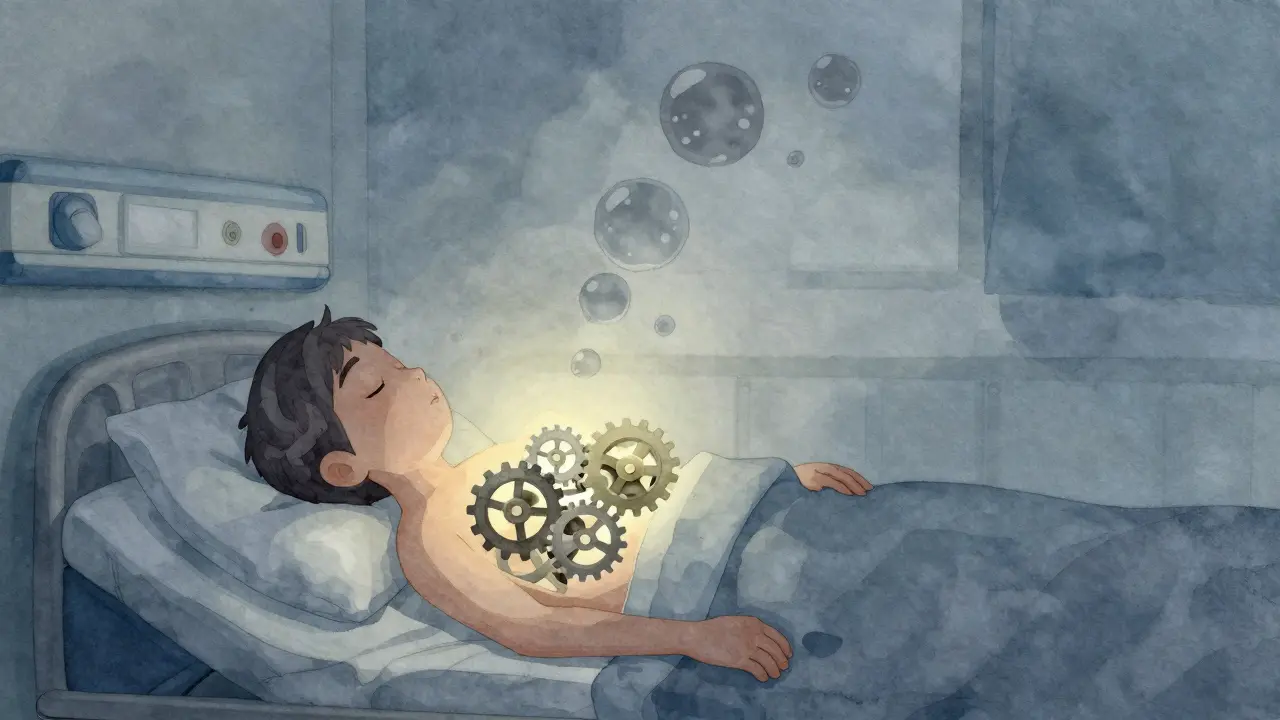
Every year, thousands of patients face a preventable medical emergency that hides in plain sight while they sleep. You might think modern medicine has solved all the problems with painkillers, but the reality is much starker. A patient sitting quietly in a hospital bed can suddenly stop breathing fast enough to sustain life. This isn't just theoretical; recent reports indicate that about 0.5% of patients receiving opioids for acute pain develop severe issues. That number sounds small until you realize how many surgeries happen annually.
The condition we are discussing is known formally as Opioid-Induced Respiratory Depression, often abbreviated as OIRD. It occurs when the brain's drive to breathe slows down dangerously due to medications. In the worst cases, this leads to oxygen levels dropping low enough to cause permanent brain damage or death. The good news is that this event is largely predictable and manageable if staff and caregivers know what to look for.
Defining the Physiology of Respiratory Depression
To understand the danger, you need to know how your body normally handles breathing. Your brainstem acts as the engine, constantly sending signals to breathe based on carbon dioxide levels in your blood. When strong painkillers enter the system, they dampen these signals. It’s like pressing the brake pedal on a car while trying to move forward.
Clinically, we define severe respiratory depression using two hard numbers: a respiratory rate below 8 breaths per minute and an oxygen saturation below 85%. However, relying solely on oxygen numbers can be tricky. If a patient is on supplemental oxygen, their blood might show normal oxygen levels even though they are retaining too much carbon dioxide. This creates a false sense of security where the patient looks stable but is actually struggling chemically.
Recognizing Critical Signs Beyond Breathing Rate
Waiting for a patient to stop breathing completely is too late. You need to spot the subtle warning signs before they become critical. One study highlighted by the Cleveland Clinic identified that slow breathing appears in 100% of confirmed cases, making it the most reliable indicator. But it doesn't always look obvious.
Look for these specific clusters of symptoms:
- Altered Mental Status: Confusion or extreme lethargy is reported in over 70% of cases.
- Physical Signs: Nausea and vomiting occur in roughly 65% of incidents.
- Vital Changes: While breathing slows, heart rate might actually speed up (tachycardia) in response to stress.
- Pattern: Breathing becomes shallow and irregular rather than deep and steady.
A patient who is difficult to wake or responds slowly to conversation is exhibiting early warning signs. Even if their oxygen reading looks okay, that sluggish reaction time matters more. Dr. Matthew B. Weinger notes that untreated severe cases are dangerous precisely because they progress silently during routine checks.
| Metric | Normal Range | Warning Zone | Critical Limit |
|---|---|---|---|
| Respiratory Rate | 12-20 breaths/min | 8-10 breaths/min | < 8 breaths/min |
| Oxygen Saturation | 95-100% | 90-94% | < 85% |
| Carbon Dioxide (EtCO2) | 35-45 mmHg | 45-50 mmHg | > 50 mmHg |
Understanding High-Risk Patient Profiles
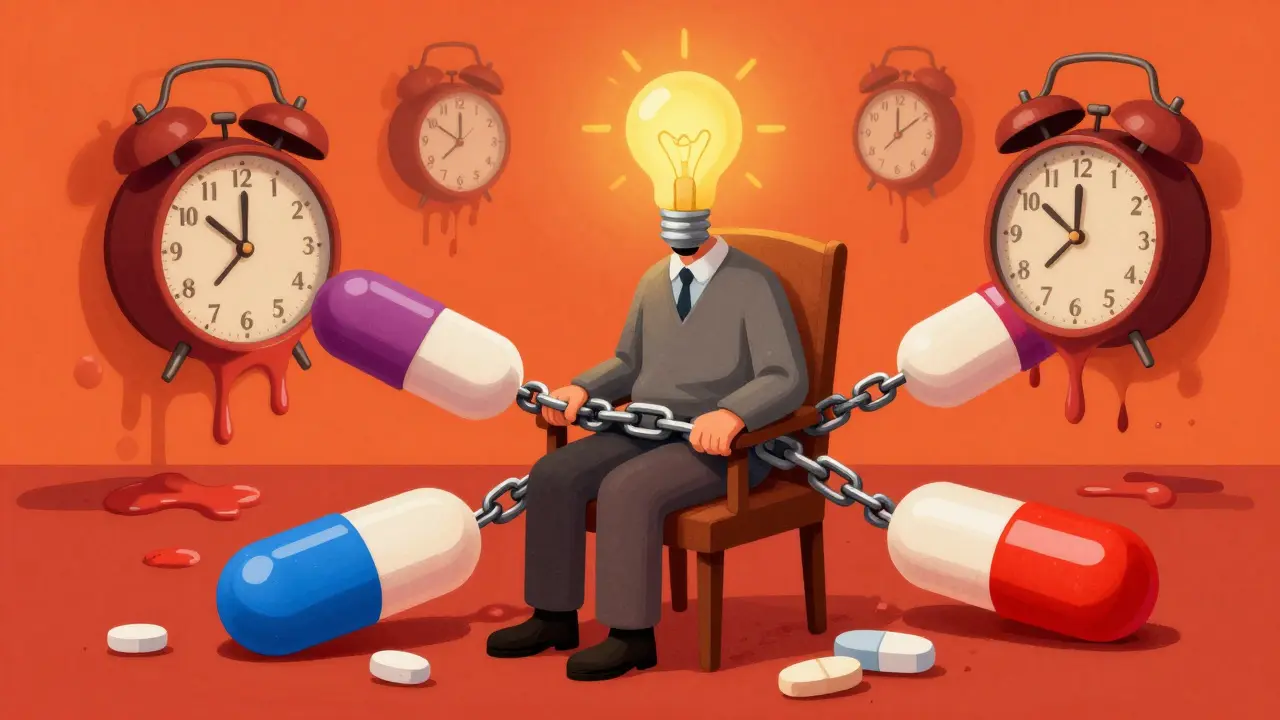
Not every person taking opioids will develop this issue, but certain characteristics drastically increase the odds. Age is a major factor. Patients over 60 years old face a 3.2 times higher risk compared to younger adults. Their metabolism clears drugs slower, and their bodies are less tolerant to changes.
Gender also plays a role, with female patients showing a 1.7 times higher susceptibility. Perhaps the biggest risk multiplier involves combining medications. If a patient takes Benzodiazepines alongside their pain medication, the risk skyrockets by more than 14 times. These drugs work together to depress the central nervous system, creating a compounded effect that overwhelms safety margins.
New patients with little exposure to these drugs are also vulnerable. Someone described as "opioid-naïve" has no tolerance built up, meaning standard doses can have massive effects. Always ask about other sedatives, including alcohol use, before assuming safety. Recent guidelines emphasize checking comorbidities; having multiple chronic conditions increases risk by nearly threefold for each added condition.
Monitoring Tools: Oximetry vs. Capnography
Hospitals rely on technology to catch problems before they escalate, but choosing the right tool depends on the patient's situation. Most common is pulse oximetry, the clip that goes on a finger. For patients not on extra oxygen, this device is quite reliable, catching about 89% of depression events. However, it struggles when supplemental oxygen is involved.
When a patient receives oxygen through a mask or cannula, capnography becomes the superior choice. This measures carbon dioxide exhaled at the end of a breath. Data shows capnography detects 94% of cases in these scenarios. The American Society of Anesthesiologists recommends setting alarms for end-tidal CO2 values exceeding 50 mmHg or rates dropping below 10 breaths per minute.
The challenge remains alarm fatigue. Staff often ignore alarms that ring too frequently for non-critical reasons. Despite advanced systems promising predictive analytics, only about 22% of hospitals have fully implemented comprehensive prevention protocols. Continuous monitoring should be mandatory for anyone identified as high-risk.
Treatment Protocols and Reversal Agents
If a patient crosses into severe respiratory depression, time is critical. The primary treatment remains Naloxone, a medication that reverses the effects of opioids. However, giving a full dose immediately can be dangerous. If the reversal happens too fast, the patient suffers severe withdrawal symptoms and intense pain, which can spike blood pressure and heart rate dangerously.
Medical standards require careful titration-starting with tiny amounts and increasing slowly until breathing improves. This preserves some pain relief while ensuring the patient can breathe adequately. In postoperative settings, the goal is to wake them up just enough, not necessarily to zero out all pain control.
Prevention strategies are proving just as important as treatment. Pharmacist-led dosing protocols have reduced incidents by nearly half in leading facilities. Mandatory training ensures nurses can identify the signs during the critical two-hour window after a dose is given. Verifying tolerance status before starting any regimen helps avoid overdosing patients who cannot metabolize the drug quickly.
The Economic and Safety Landscape
This issue carries significant financial weight beyond patient harm. Regulatory bodies now classify severe events as "never events," meaning hospitals lose reimbursement for the care related to the complication. Penalties can cut into annual budget rates significantly. Consequently, there is a growing market for smart monitoring equipment designed specifically for this purpose.
Technological innovation is responding with devices that integrate multiple signals. New FDA-approved calculators can assess individual risk with high accuracy using clinical variables. By 2025, organizations aim for universal implementation of risk-stratified monitoring. These efforts are driven by the need to close the gap between knowing the science and applying it consistently in busy wards.
How do I tell if someone is struggling to breathe?
Watch for a breathing rate below 8 breaths per minute. Look for chest movement that is very shallow. Check responsiveness-if they are hard to wake or seem confused, seek help immediately even if their oxygen reading looks normal.
Is respiratory depression reversible?
Yes, usually with medication like naloxone. However, it requires careful administration to manage withdrawal side effects. Prompt detection is key to preventing lasting brain damage caused by lack of oxygen.
Why is mixing benzodiazepines dangerous with opioids?
Both classes suppress the central nervous system. When combined, they interact synergistically to shut down breathing drives much faster than either drug alone would cause.
Which monitoring method is better, pulse ox or capnography?
Pulse oximetry works well without supplemental oxygen. If oxygen is being delivered, capnography is preferred because it tracks carbon dioxide buildup that oxygen readings miss.
Are older patients at higher risk?
Patients over 60 have a 3.2 times higher risk due to slower metabolism and lower physiological reserves. Extra caution is needed when prescribing strong painkillers to elderly individuals.
Safety improvements depend on consistent application of these principles. Whether you are managing care in a clinic or at home after surgery, recognizing the signs remains your strongest defense against tragedy.
Comments (14)
Debbie Fradin
Most hospitals claim to care but cut corners on monitoring systems constantly. It feels like profit matters more than preventing simple tragedies. People trust the staff completely until something goes wrong under their noses.
Jonathan Alexander
The panic when you realize the patient stopped breathing is unmatched in medical settings. You stare at the flatline and wonder why you didn't catch the slower rate earlier. It haunts everyone involved for years after the shift ends.
Charles Rogers
Staff negligence is the real killer here not the drugs themselves. Cutting corners on checks costs lives unnecessarily.
Adryan Brown
We really need to focus on prevention strategies immediately. Most hospitals ignore the early signs completely. Nurses are often too busy to notice changes in behavior. They miss the subtle indicators of distress during rounds. Confusion is a significant red flag for deterioration. People think it is fine if oxygen saturation looks normal on the screen. But carbon dioxide builds up silently in the blood stream. We saw a tragic case last year nearby in the ward. It happened during routine evening checkups while we were distracted. The patient seemed stable initially on paper records. Then the heart rate spiked suddenly without warning signs. By the time we realized damage was already done to the brain tissue. Staff absolutely need better training protocols implemented today. Proper protocols reduce serious incidents significantly according to data. We must prioritize safety margins always in wards.
Christopher Curcio
EtCO2 monitoring is critical for detecting hypercapnia before desaturation occurs in sedated populations. Relying solely on SpO2 creates a false negative window during high FiO2 delivery. Continuous wave capnography provides superior sensitivity for apnea events. Clinical thresholds suggest alarms should trigger well before metabolic acidosis sets in.
Angel Ahumada
it is truly tragic how ignorance permeates the field of medicine these days. one would think basic physiology would be mastered by professionals. but the data shows otherwise regarding implementation
dPhanen DhrubRaaj
in my experience many patients just die quietly without fanfare. family members never see the buildup happening slowly
Vikash Ranjan
actually i think pulse ox is enough for most cases without capnography equipment cost is too high for budget. simpler solutions work better in rural areas sometimes
RONALD FOWLER
safety checks save lives. we should all support better staffing ratios
Biraju Shah
you need to enforce strict protocols now or people keep dying preventable deaths are unacceptable. stop making excuses about budgets and fix the system immediately
Cameron Redic
this article misses the nuance of tolerance variability in chronic pain management. assuming standard risks ignores the individual metabolic differences. lazy analysis leads to bad policy decisions everywhere
Marwood Construction
structural implementation of guidelines remains low despite evidence availability. regulatory frameworks need to mandate specific devices in post-op units.
William Rhodes
we can fix this with technology and smart alarms. innovation will eliminate human error eventually so stay hopeful. progress is being made in predictive analytics software.
Dan Stoof
Staying vigilant saves countless lives every single day!!!!!!!!!!